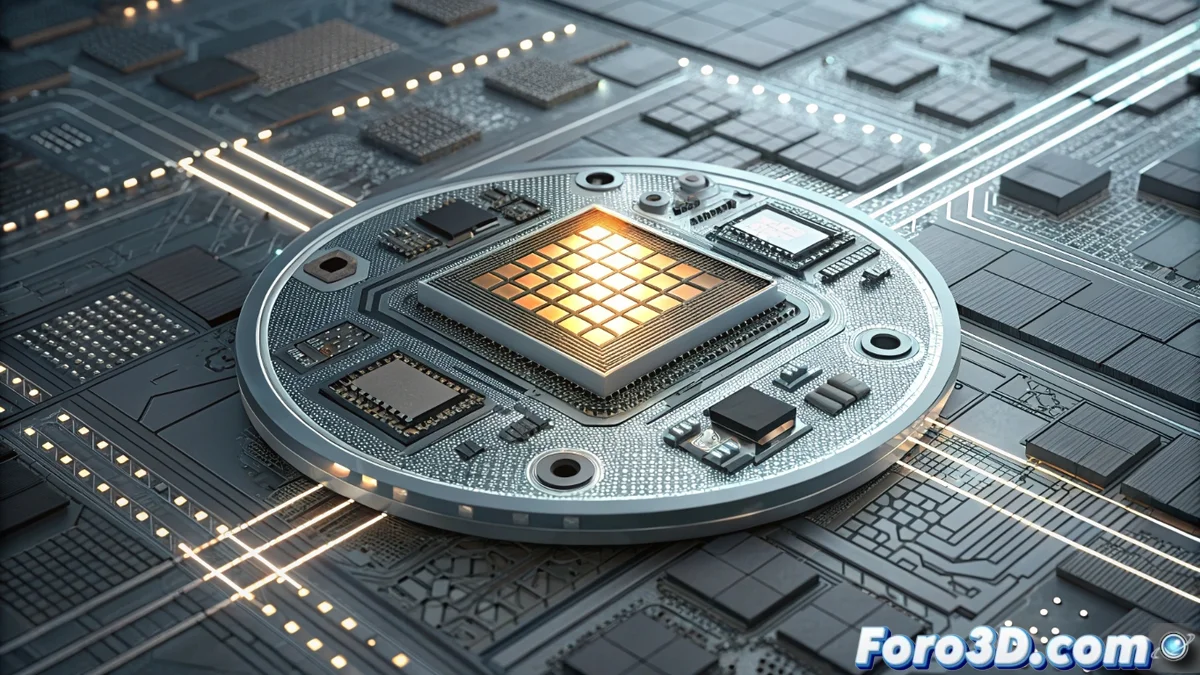
Co-Packaged Optics Integrates Optical and Electronic Components
The technology known as co-packaged optics (CPO) represents a fundamental shift in how network interconnections are designed. Instead of using separate optical transceivers, this architecture places the optical modules directly next to the switch chip or AI processor in a single package. This method eliminates the traditional front panel interface of a switch. 🚀
How Does CPO Integration Work?
By co-packaging optics with electronics, the distance that high-speed electrical signals need to travel is minimized. Shortening this path is the principle behind its main benefits. The signal no longer has to travel outside the chip through connectors and cables, transforming system efficiency.
Main Advantages of CPO:- Reduce latency: Signals take a more direct path, reducing system response time.
- Reduce power consumption: Transmission losses over long distances are avoided, achieving power savings that can exceed 30% compared to decoupled optical designs.
- Increase port density and bandwidth: Integration enables a more compact design, facilitating the construction of systems with greater connection capacity.
Repairing an integrated optical module can be as complex as performing brain surgery on a supercomputer... with gardening tools.
Application in AI and HPC Infrastructures
This technology is emerging as the solution for communicating within advanced data centers. For large-scale artificial intelligence clusters, where performance and heat management are critical limits, CPO efficiency is decisive. It enables the design of more compact and powerful network infrastructures capable of supporting high-performance computing workloads.
Challenges Facing CPO:- Manufacturing complexity: Integrating optical and electronic components with precision requires advanced and costly production processes.
- Long-term reliability: Ensuring that integrated components operate stably for years is an engineering challenge.
- Repair difficulty: Such tight integration makes replacing or fixing a faulty component an extremely delicate operation.
The Future of Interconnection in Data Centers
Although co-packaged optics promises to revolutionize data center design, its widespread adoption depends on overcoming current technical obstacles. Its ability to improve bandwidth and optimize energy use makes it a fundamental pillar for the next generation of infrastructures demanded by AI and big data. The path is marked toward even deeper integration between light and electrons. ⚡