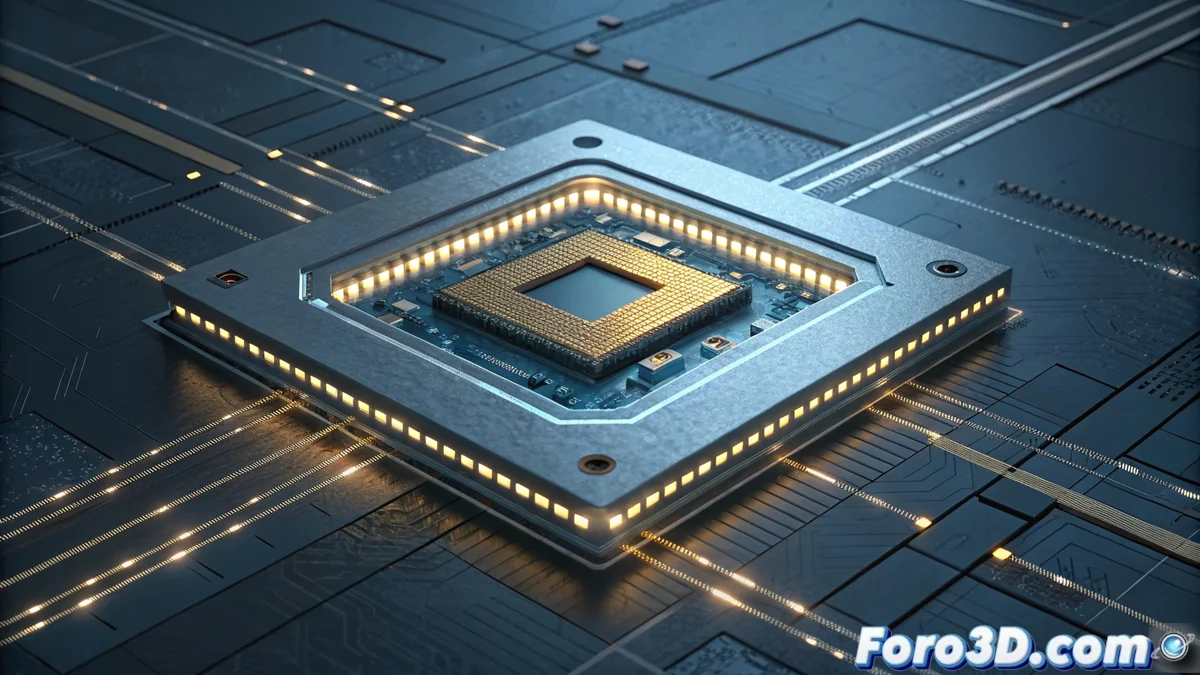
Co-Packaged Optics Brings Light to the Chip Core
Co-packaged optics (CPO) represents a fundamental shift in how chips communicate. Instead of using separate optical transceivers connected with electrical cables, this technology places the light modules directly next to the processor or ASIC within the same unit. This physical approach eliminates copper links, which become a limit for speed and efficiency. 🚀
Key Advantages for Large-Scale Computing
The main benefit of integrating optics is twofold: it reduces signal latency and consumes less power. In systems where thousands of processing units, such as in AI clusters or supercomputers, need to exchange data constantly, these factors are decisive. Traditional electrical links dissipate a lot of energy as heat and limit available bandwidth, creating a bottleneck.
Impact on infrastructure:- Lower latency: Optical signals travel shorter distances within the package, accelerating communication between cores and between chips.
- Significant energy savings: High-power electrical drivers needed to push signals through long cables on the motherboard are eliminated.
- Higher bandwidth density: Allows connecting more chips at higher speeds in the same physical space, essential for scaling performance.
Integrating optics into the chip package is the inevitable path to continue Moore's Law in the field of interconnections.
The Obstacles to Implementing This Technology
Although its advantages are clear, bringing CPO to mass production is not straightforward. It requires overcoming several engineering challenges that combine microelectronics with photonics.
Main challenges to overcome:- Complex package design: Silicon electronics and sensitive optical components must be packaged together, handling different materials and tolerances.
- Critical thermal management: Integrated lasers generate heat, and dissipating it along with the main chip's heat requires innovative cooling solutions.
- Lack of standardization: The industry needs to agree on common interfaces to ensure chips and optics from different suppliers work interoperably.
The Future of High-Speed Data Processing
Co-packaged optics is not a distant concept, but a necessary evolution. As bandwidth demand grows in data centers, electrical links become unsustainable due to their consumption and physical limitations. Advancing in this integration will enable building more powerful and efficient systems, where light handles communication directly where information is generated. The ultimate goal is to prevent cables from becoming a burning limit for progress. 🔦