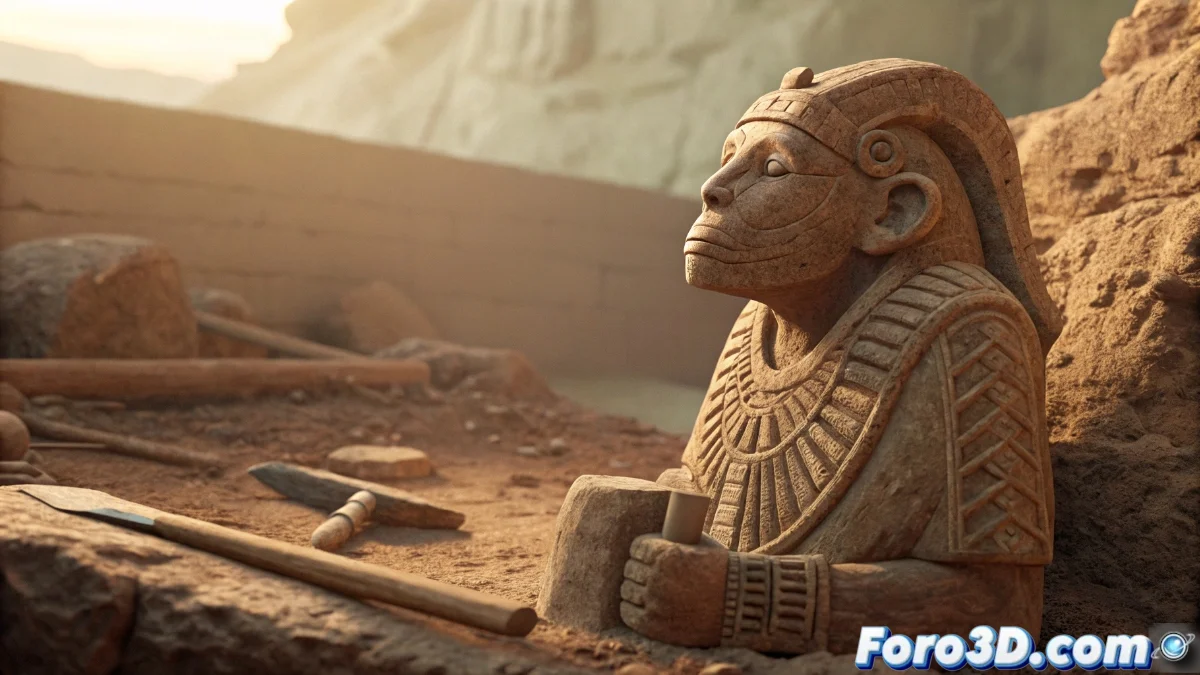
Clay Figurine Reveals Change in Prehistoric Narrative
An extraordinary archaeological discovery in Turkey is revolutionizing our understanding of the origins of human narrative. This small clay figure, miraculously preserved for 12,000 years, demonstrates that Neolithic societies possessed much more sophisticated visual communication skills than previously believed 🏺.
Redefining Ancestral Narrative Capacity
The Neolithic figurine, which measures approximately 15 centimeters, exhibits a unique combination of human and animal features carved with extraordinary precision for its time. Researchers have identified what appear to be sequential scenes meticulously engraved on its surface, indicating a primitive but intentional form of storytelling through visual symbols.
Revolutionary Features of the Artifact:- Exceptional preservation allowing the study of minute details
- Innovative combination of anthropomorphic and zoomorphic elements
- Engraved narrative sequences suggesting knowledge transmission
This level of artistic complexity represents a milestone in our understanding of human cognitive evolution and the early development of symbolic thinking.
Impact on the Chronology of Cultural Evolution
The finding fundamentally challenges established theories about when humans began using symbols to convey structured narratives. The evidence suggests that the transition from basic communication to more complex forms of narration occurred several millennia earlier than estimated, positioning the Anatolia region as a pioneering center of symbolic innovation.
Implications of the Discovery:- Revision of the cognitive capacities of Neolithic societies
- Reevaluation of prehistoric art as a vehicle for cultural transmission
- New perspective on the origins of complex visual communication
Repercussions in Contemporary Archaeology
This transformative artifact not only enriches our knowledge of early narrative development, but also sets a precedent for reinterpreting other archaeological findings in a new light. Experts now consider that even in the Neolithic there were sophisticated forms of cultural "spoilers," although carved in clay rather than disseminated through modern technologies 📜.