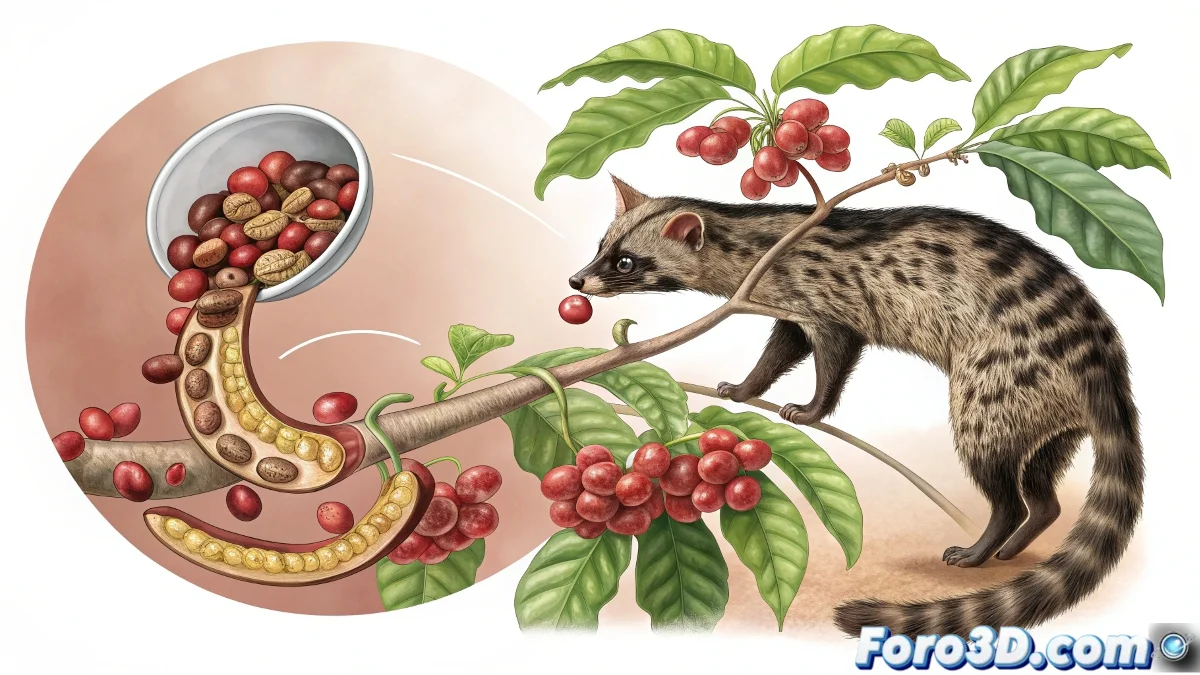
Civet Coffee: The Exotic Luxury Between Digestive Chemistry and Ethical Controversy
The world's most expensive coffee hides a fascinating biochemical transformation within the digestive system of a small mammal. The unique fermentation process that occurs in the civet transforms ordinary beans into an extraordinary gourmet experience, though not without controversy ☕.
Chemical Transformation During Digestion
The civet's digestive enzymes and gastric acids act on the proteins and polysaccharides of the coffee bean. This natural fermentation breaks down bitter compounds like chlorogenic acids, resulting in a smoother, more complex flavor profile with fruity and chocolatey notes.
Key Chemical Modifications:- Reduction of up to 70% in bitter compounds through enzymatic hydrolysis
- Generation of aromatic precursors that develop during roasting
- Modification of the protein structure that affects the final extraction
The civet does not choose beans at random - it instinctively selects the ripest and highest quality coffee cherries, initiating a natural selection process
Ethical Controversy in Production
The growing global demand has led to captive breeding practices that compromise animal welfare. The inadequate conditions in many plantations where civets are kept in cages generate significant concerns about animal suffering and sustainability 🐾.
Documented Ethical Problems:- Confinement in small cages that prevent natural behaviors
- Force-feeding to increase bean production
- High mortality due to stress and unhygienic conditions
Sustainable Alternatives and the Future of Specialty Coffee
Scientific research seeks to replicate the fermentation process through laboratory techniques that mimic the civet's digestive action. These ethical alternatives could offer similar flavor profiles without the environmental and moral cost associated with traditional production 🔬.