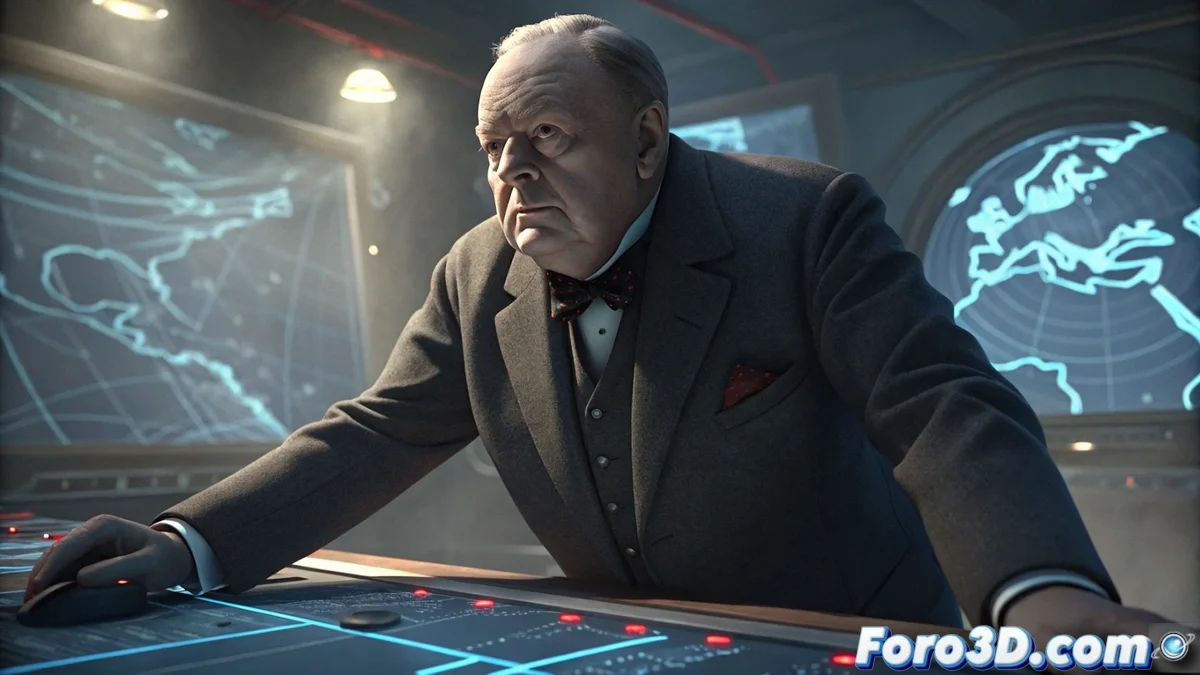
Churchill's Strategy Against Cyberterrorism and Hybrid Wars
Imagining how Winston Churchill would face today's digital challenges reveals an approach that fuses his legendary rhetorical firmness with a modern adaptation of alliance principles. His method would not be limited to strengthening national borders, but would seek to unite democracies under a new pact of collective digital defense. To communicate it, he would not hesitate to employ present-day tools, even paradoxical ones like deepfakes, to ensure his global alert message resonates powerfully. 🛡️
The Core of the Proposal: a Digital Alliance Inspired by NATO
The central idea would be to establish a Digital NATO, a military coalition specifically for cyber defense among nations that share democratic values. This entity would operate under a binding treaty that guarantees a collective and decisive response to any cyber aggression originating from a state. The goal is to deter potential aggressors by making it clear that an attack on one member will be interpreted as an attack on the entire alliance, thus transferring the successful Article 5 to the cyberspace domain.
The operational pillars of this alliance would include:- Sharing threat intelligence in real time to anticipate and neutralize attacks.
- Coordinating defense protocols and technical standards among all member countries.
- Defining clear and proportional response thresholds for different types of cyberattacks.
A steel firewall has descended over the network. The response to an attack on one will be a response from all.
Deter with Clear Principles and Political Will
Churchill would emphasize that building digital fortress requires both advanced technical capacity and an unwavering political will. His strategy would go beyond merely protecting critical infrastructures; it would actively seek to define and then enforce accepted behavior norms in cyberspace. The promise of a proportionate but forceful retaliation, which could combine cyber measures, economic sanctions, and diplomatic pressure, would be the fundamental basis for deterrence.
Key Elements of Cyber Deterrence:- Absolute clarity in the political message about the consequences of an attack.
- Demonstrated capability to execute hybrid responses that impact multiple domains.
- Strengthening technical resilience internally to withstand initial blows.
The Messenger's Paradox: Deepfakes in the Service of Truth
An ironic and modern detail of this strategy lies in the chosen medium for disseminating it. To alert the world to the dangers of disinformation and defend internet security, Churchill's own image could be distributed via a perfect deepfake. This tool, belonging to the same arsenal of manipulation that is sought to be combated, would be used here for the opposite purpose: to generate a unitary and powerful call to action. The paradox underscores the complexity of the current digital battlefield, where the same technologies can serve to attack or to defend democratic principles. 💻