Chris Ware's Building Stories Redefines the Comic Format
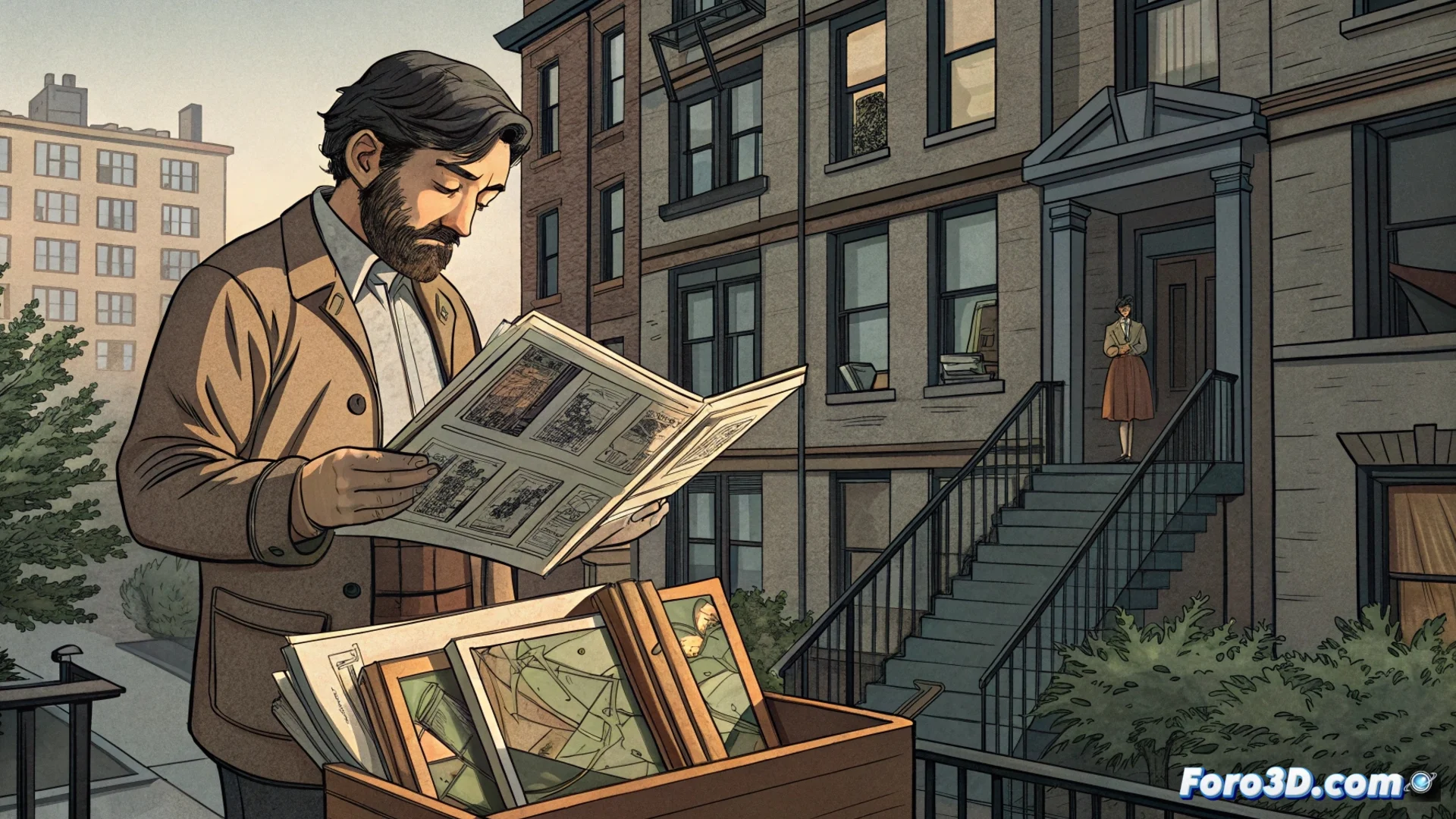
Chris Ware releases Building Stories, a project that completely challenges what we understand by graphic novel. 🧩 Instead of a book, the author proposes a box that holds fourteen independent printed objects, from books in different formats to a large-sized newspaper and a board game. The narrative has no pre-established order; it depends on the reader piecing together the parts to discover the complete story, which unfolds in an apartment building in Chicago.
A Narrative Puzzle to Assemble
The work focuses on the lives of the building's residents, with special attention to a woman who uses a leg prosthesis. The plot emerges from the interaction with the different elements, making the physical act of manipulating them a fundamental part of reading. There is no fixed beginning or end, which reflects how we experience memories in real life.
Key Components of the Box:- Books in various sizes and bindings.
- A large-format newspaper that simulates a real publication.
- Brochures and booklets that expand on story details.
- A board game that adds a playful layer to the experience.
The real puzzle is not in the box, but in deciding what to read after dinner, when all the pieces are scattered on the carpet.
Visual Style as an Emotional Map
Ware takes his characteristic graphic style to a new level. His precise, architectural line works like a diagram that maps the characters' emotional states. 🗺️ The composition of each page, with meticulous use of color and typography, guides the reader's gaze and emphasizes themes like isolation and introspection.
Characteristics of the Visual Language:- Detailed drawing with an almost technical perspective.
- Page composition that controls the reading pace.
- Deliberate color palette to convey moods.
- Typography integrated as a narrative and graphic element.
The Physical Format Explores How We Remember
The physical structure of Building Stories is its central theme. By forcing the choice of where to start and how to relate the fragments, Ware investigates how space and time shape personal memory. The box and its seemingly chaotic content symbolize the way we store and retrieve our memories. The Chicago apartment serves as the physical container for all these experiences. The story is not consumed passively; the reader actively reconstructs it, mimicking the process by which we make sense of our own lives from scattered moments. 📦