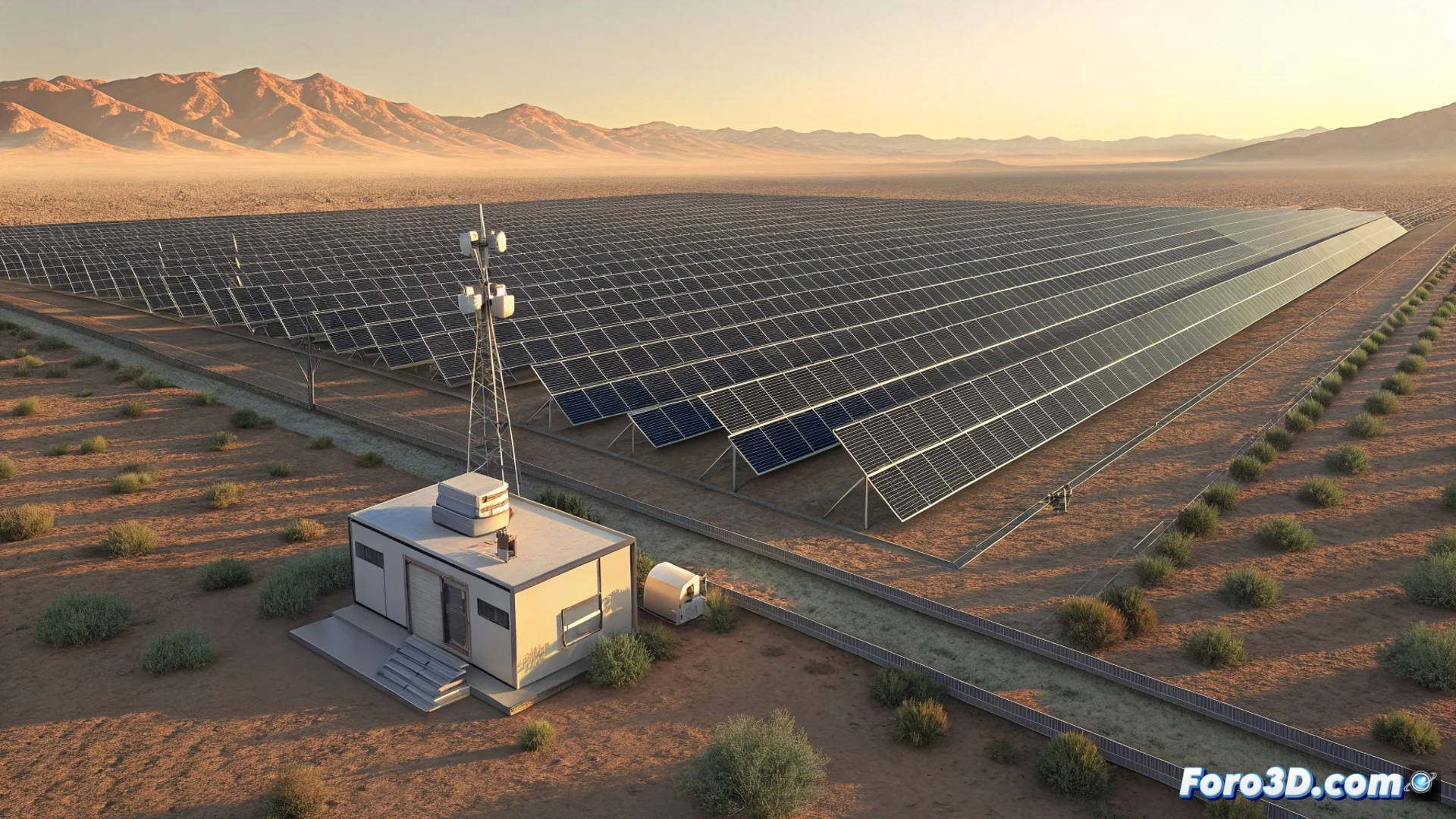
China Studies How Its Largest Solar Plant Affects the Desert
In the vast Xinjiang desert, China has finished building and is already operating the most extensive solar energy facility on the planet. This megaproject not only aims to produce clean electricity, but has also become a gigantic scientific experiment to evaluate how these structures modify fragile arid environments. 🌞
A Giant-Scale Laboratory in the Desert
The plant, located in a desert region with mountainous terrain, is designed to reach a total capacity of 5 gigawatts. In its current phase, it already generates 1 gigawatt, an amount of energy sufficient to supply a small-sized nation. Researchers use the site as an outdoor laboratory, constantly collecting data to understand the interactions between technology and the ecosystem.
Key variables under observation:- Microclimate: They analyze whether the panels reduce wind speed, alter ambient humidity, or modify soil temperature.
- Soil and vegetation: They monitor changes under and around the modules to see if conditions are created that allow more plants to grow.
- Ecological balance: They determine whether the solar farm can help restore damaged lands or, on the contrary, harm the desert environment.
The findings of this study are crucial for planning how to build future solar farms in arid regions of China and the world.
Implications for the Future of Renewable Energy
The information obtained here will have a decisive weight in the design of future clean energy projects. The ultimate goal is to define whether this model can offer a double benefit: generate carbon-free electricity and, at the same time, improve local environmental conditions.
Possible scenarios based on the results:- If the effects are positive, a standard for solar farms that also rehabilitate ecosystems could be promoted.
- If negative impacts are identified, engineers will be able to design measures to mitigate them before building new facilities.
- The data will serve to optimize the location and configuration of future solar parks in sensitive environments.
Beyond Capturing Solar Light
This pioneering project demonstrates that renewable energy infrastructure can play a role beyond simple electricity generation. By integrating environmental research from the beginning, China not only expands its clean energy capacity, but also seeks to understand and manage the ecological footprint of its green transition. The panels in the Xinjiang desert capture the attention of science as much as sunlight. 🔬