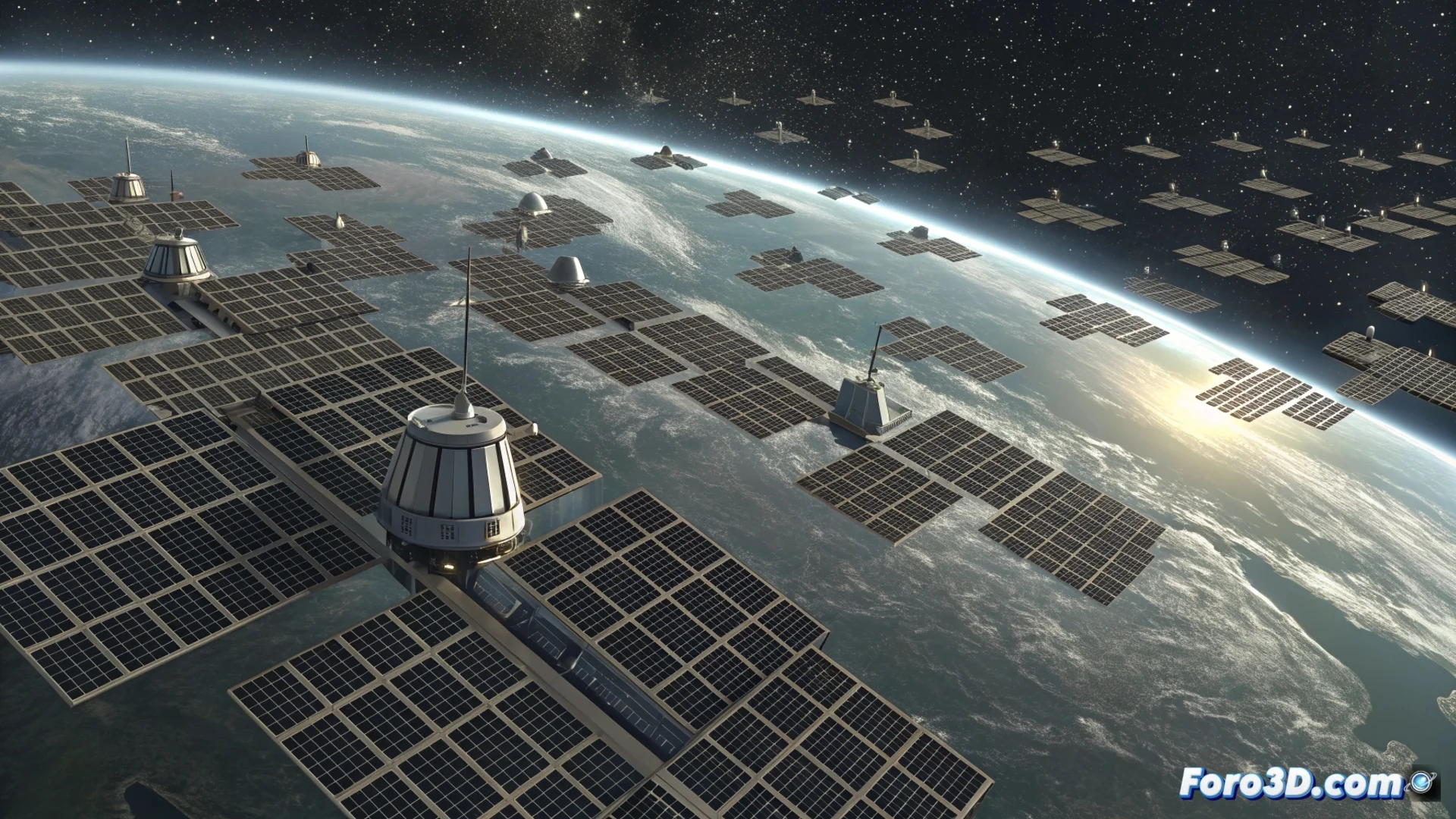
China Requests to Launch a Massive Satellite Constellation
The space landscape could change radically. China has submitted a formal request to the International Telecommunication Union to deploy a satellite constellation exceeding 190,000 units. This figure is overwhelmingly greater than the total number of operational satellites currently in orbit. The initiative, named Guowang, plans to establish a communications network covering the entire planet 🌍.
The Goal: a Global Broadband Network
The core function of the Guowang mega constellation is to provide high-speed internet connectivity on a global scale. The system is designed to serve users in motion, as well as vessels and aircraft. This positions it as a direct competitor to projects like SpaceX's Starlink and Amazon's Kuiper. By placing such a huge number of satellites in orbit, the aim is to reduce signal latency and expand coverage, especially in remote regions and oceans. The technology would also enable connecting Internet of Things devices from any location on the globe 🛰️.
Key Features of the Guowang Project:- Two large separate constellations that will operate on different frequency bands.
- Focused on providing satellite internet for mobile, maritime, and aerial applications.
- Aims to optimize connectivity in areas where terrestrial infrastructure is limited or nonexistent.
The magnitude of the Chinese proposal raises immediate questions about the sustainability of near-Earth space.
Concerns About Earth's Orbit
The scale of the project has triggered immediate alarm in the international community. Experts point to the risks of massively increasing space debris and the likelihood of collisions. There is genuine concern about how to coordinate traffic with existing and planned constellations. The ITU must thoroughly review the request to ensure it does not cause harmful interference with other satellite systems. Some analysts interpret this move as a race to secure strategic orbital positions and valuable frequencies before other global players 🚀.
Main Challenges Identified:- Space traffic management and risk of collisions in an already congested orbit.
- Long-term impact on the generation of space junk.
- Need to coordinate globally the use of the spectr