China Launches First National Artificial Intelligence Competition for Real-Time Graphics
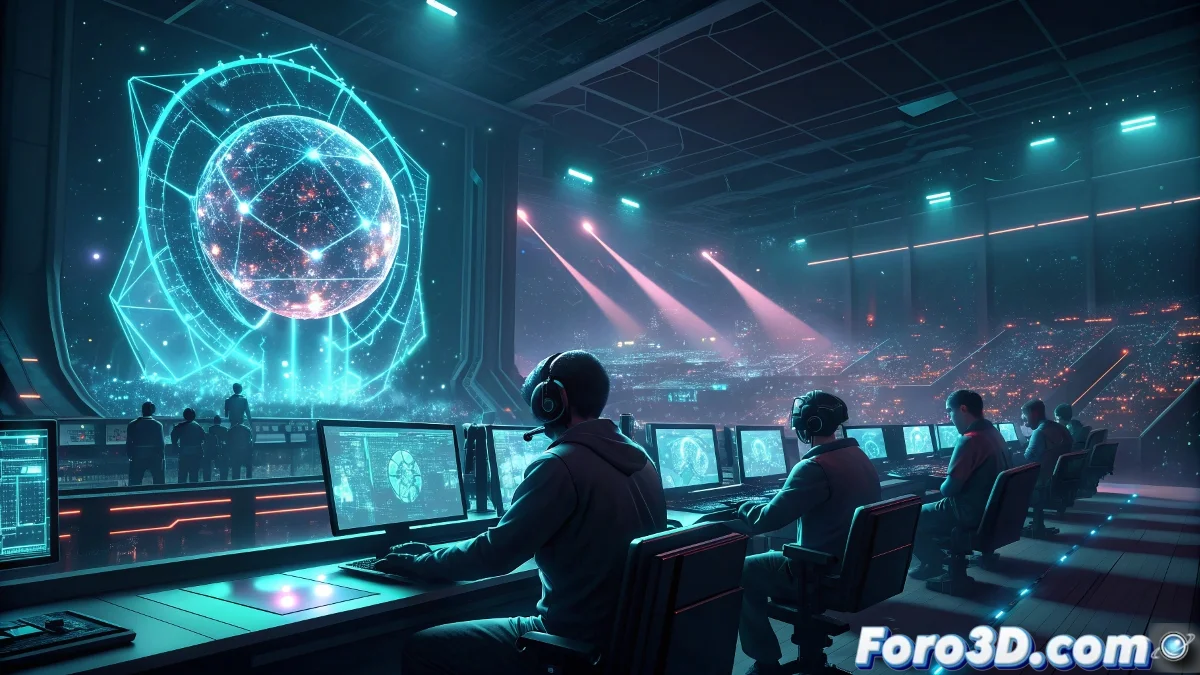
The visual development landscape in China has taken a qualitative leap with the launch of the first national championship dedicated entirely to the application of artificial intelligence in real-time rendered graphics. This pioneering event brings together talented teams of programmers and digital artists who compete by designing interactive experiences using cutting-edge technologies like Unreal Engine 5 and Unity, with special attention to Shader/Compute systems and optimization methods for virtual reality environments. The initiative underscores China's growing commitment to establishing itself as a global reference in immersive technologies, aligning with its expansion into global video game and professional simulator markets. 🚀
Technologies and Competitive Modalities
Participants demonstrate their skills in four fundamental categories that define the state of the art in interactive graphics. Each team must overcome specific technical challenges within tight deadlines, using updated graphics engines and specialized machine learning libraries. Judges evaluate both visual quality and technical efficiency, rewarding those solutions that can be scaled to large-scale commercial projects.
Main Competition Categories:- Real-time rendering with ray tracing to achieve hyper-realistic lighting and shadows
- Artificial intelligence applied to the procedural generation of environments and dynamic assets
- Advanced particle systems for complex visual effects and physical simulations
- Exhaustive optimization for mobile devices, ensuring smooth performance on limited hardware
This competition sets new technical standards for Chinese development studios competing internationally, serving as a platform for talent detection and academic updating.
Impact on the Visual Development Industry
The tournament functions as a showcase for new talent and as a barometer of China's technological evolution compared to traditional powers like the United States and South Korea. Leading companies such as Tencent and NetEase participate as sponsors, identifying potential hires among the most outstanding competitors. Simultaneously, local universities leverage the presented projects to modernize their training programs, narrowing the gap between academic theory and the practical demands of the labor sector.
Immediate Consequences of the Event:- Recruitment of specialized talent by major development studios
- Updating of educational institution curricula based on real projects
- Establishment of technical benchmarks for the national real-time graphics industry
Repercussions and Future Expectations
While the organizers promise that the winning algorithms will revolutionize the industry, the developer community on specialized forums maintains a healthy skepticism regarding the documentation and stability of these projects created under pressure. The event not only measures technical capabilities but also reflects the maturity of China's visual development ecosystem and its readiness to compete at the global forefront of immersive technologies. 🔮