China Faces Limits to Increase Its Oil Production
Recent decisions by Donald Trump regarding two key trading partners of China have made the Asian nation's energy exposure more visible. Producing oil within its borders has stalled in recent periods, but the need to consume it keeps growing. This pushes China to rely more on crude arriving from abroad to meet its demand, a delicate balance where any problem in the supply flow can generate major impacts. ⚠️
The Oil Giants Age and Their Performance Declines
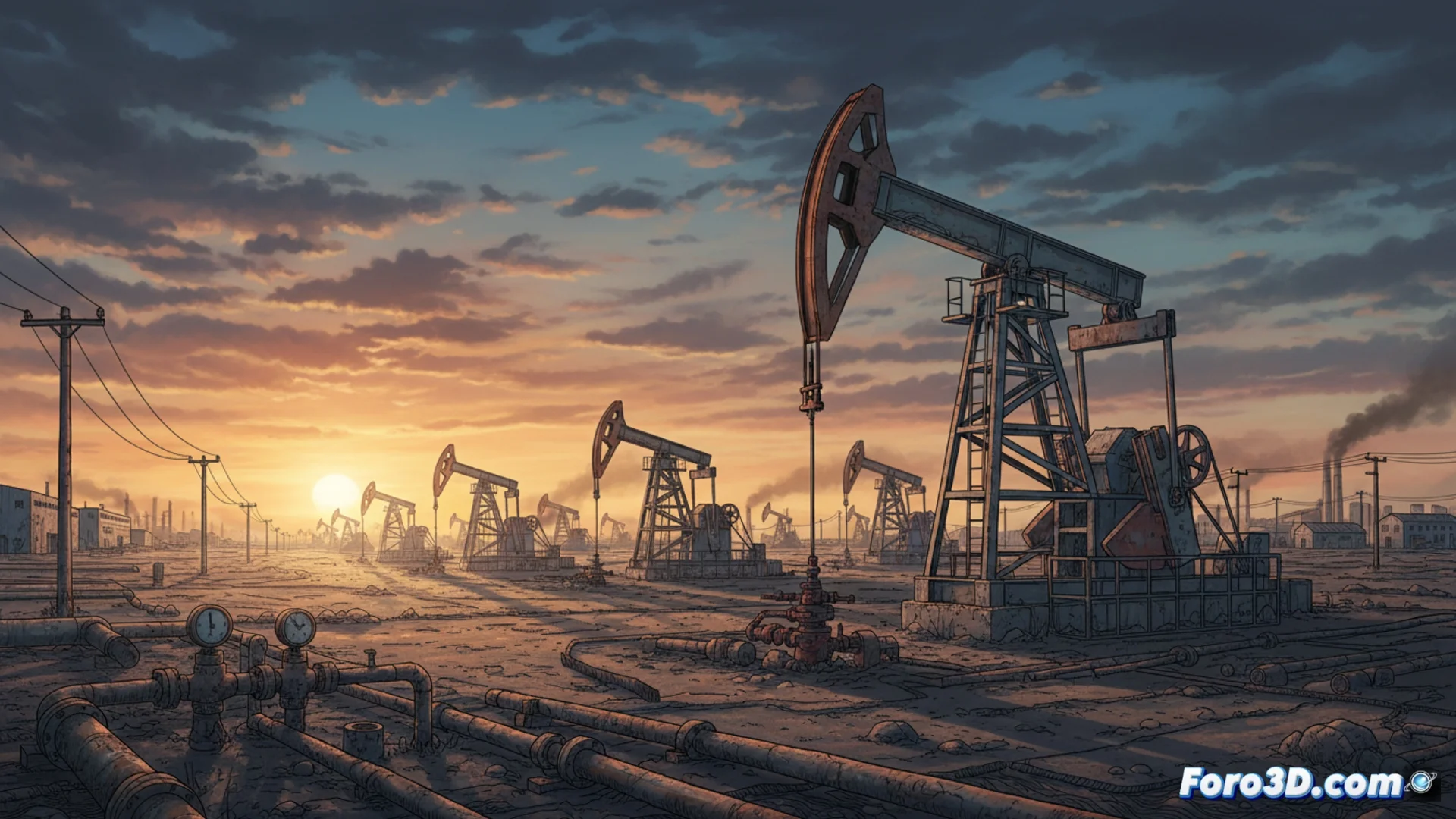
The country's most important fields, such as Daqing and Shengli, have been operating for many years and are now experiencing a natural decline. Extracting oil from them becomes a more complex and expensive task over time. The remaining reserves are of poorer quality or trapped in rocks with difficult formations. Investing capital in advanced technology to extract the remaining crude does not guarantee a significant recovery in total volume.
Key Problems in Mature Fields:- Extraction costs rise steadily.
- The quality of the remaining crude is inferior.
- Technological investment requires large sums without clear guarantees of return.
The local industry clings to old giants that now extract more water than oil, a paradox for a country that prioritizes its energy security.
The Future of Growth Depends on Exploring New Frontiers
The real possibility of increasing production lies in unexplored areas, such as deposits in deep waters of the South China Sea or shale resources onshore. However, exploiting these resources involves enormous technical obstacles, very high costs, and, in some cases, conflicts over territorial boundaries. Progressing in these projects is slow and unlikely to counteract the decline in traditional fields in the short term. The immediate tactic remains expanding the sources of imports and storing crude in emergency reserves.
Challenges in New Exploration Areas:- High technical and engineering barriers.
- Massive and risky financial investments.
- Geopolitical disputes that can delay projects.
A Complex Energy Landscape
In summary, China navigates a complex energy scenario. The combination of depleted fields, rising domestic demand, and external geopolitical pressure creates a critical dependence on imported oil. While seeking to develop alternative and costly sources, its economy remains vulnerable to disruptions in global supply. The quest for security in a volatile market becomes its main strategic challenge. 🔗