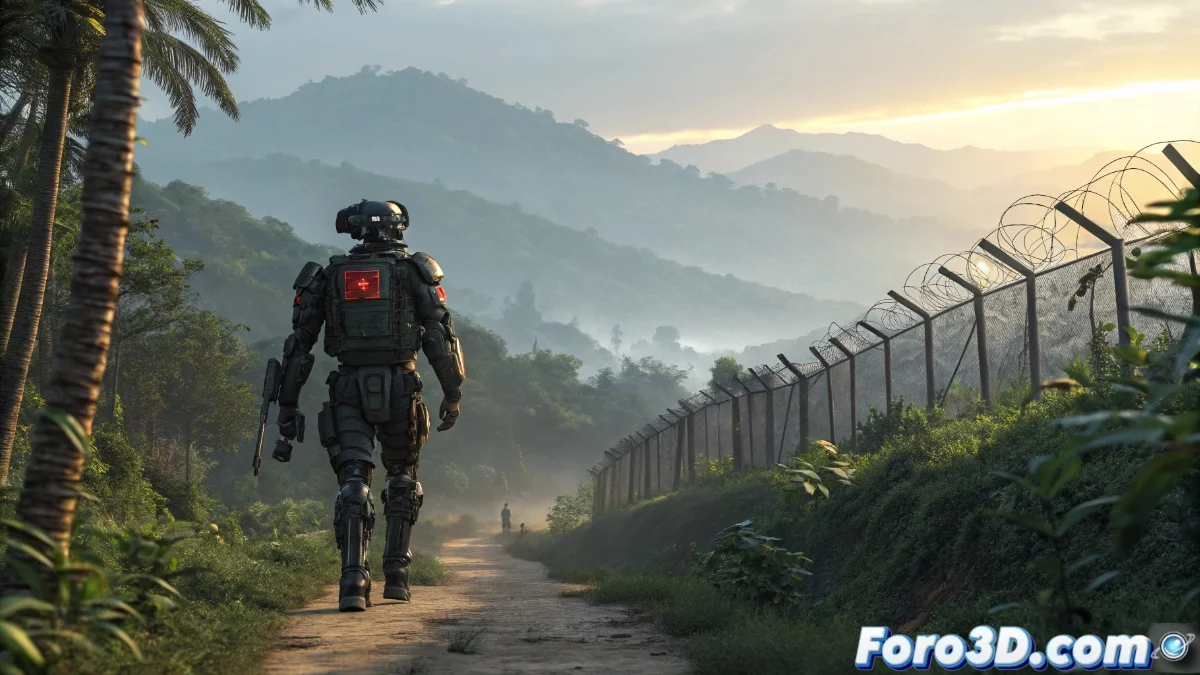
China Deploys UBTECH Humanoid Robots on Vietnam Border
After a prolonged strategic evaluation, the Chinese government has selected its southern border with Vietnam as a pioneering scenario for a revolutionary technological program through the implementation of latest-generation androids developed by UBTECH. These robotic units are being assigned to surveillance and reconnaissance functions in one of the country's most delicate borders, establishing a historic precedent in the application of artificial intelligence for national security 🤖.
Technical Specifications of the Border Androids
The deployed models integrate computer vision systems with motion detection capabilities at distances exceeding 2 kilometers, natural language processing for communication with civilians, and machine learning algorithms that optimize their performance with each operational cycle. Their biomimetic architecture facilitates agile navigation through complex topographies including mountainous and forested areas, far surpassing the limitations of conventional surveillance mechanisms.
Main Operational Capabilities:- Long-distance motion detection with identification of suspicious patterns
- Fluent verbal interaction through advanced linguistic processing
- Autonomous adaptation to irregular terrain thanks to its anthropomorphic design
This implementation constitutes the culmination of years of research in autonomous robotics applied to border protection
Strategic Repercussions of the Implementation
The technological initiative symbolizes the materialization of decades of development in autonomous systems for perimeter protection. Chinese authorities estimate that the use of these robotic units significantly reduces the exposure to danger of human personnel in areas of potential confrontation, while establishing a new technological paradigm in border administration. The specific choice of this territorial boundary is due to its geographical complexity and regional geostrategic relevance.
Documented Operational Advantages:- Significant reduction of risks for human security personnel
- Establishment of new technological protocols in border management
- Optimization of resources in geographically challenging territories
Impact on Conventional Operations
The traditional border personnel will be able to redirect their tasks toward activities such as infrastructure maintenance or intelligence analysis, while a debate arises about the labor rights of these new metallic incorporations. These automated recruits present the additional advantage of not being affected by the extreme weather conditions of the region nor requiring contractual improvements, although their implementation generates important ethical reflections on the future of automated security 💡.