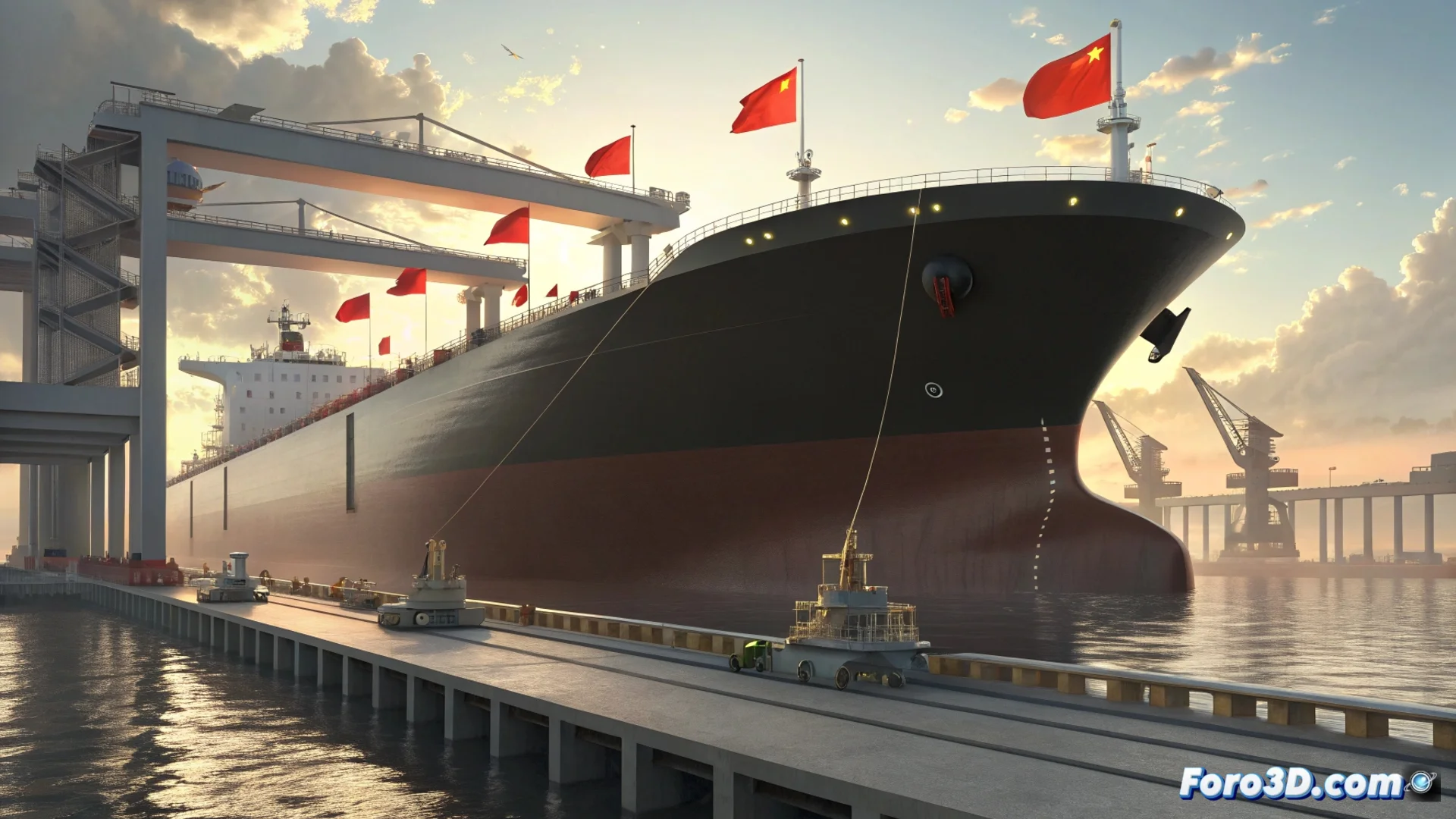
China Delivers the World's First Intelligent Dual-Fuel Methanol Supertanker
The global shipbuilding industry marks a milestone with the official delivery of the Kaituo. Designed and built independently by CSSC Dalian Shipbuilding, this Very Large Crude Carrier (VLCC) tanker is the first in its class to adopt a dual methanol/fuel oil propulsion system and incorporates a full suite of intelligent technologies. This advance represents a crucial step toward decarbonizing long-distance maritime transport. 🚢
Dual Propulsion: A Leap Toward Green Shipping
The heart of the Kaituo's innovation lies in its ability to burn both green methanol and traditional fuel oil. This flexibility allows it to drastically reduce sulfur oxide (SOx) emissions and particulate matter. Its design prioritizes optimizing energy consumption and features tanks with capacity to store approximately 9,900 tons of methanol.
Key advantages of the dual system:- Extended range: The alternative fuel capacity allows it to cover the full round trip route between the Persian Gulf and the Far East using methanol primarily.
- Emissions reduction: Switching to methanol enables compliance with stricter environmental regulations and reduces the carbon footprint of operations.
- Operational flexibility: It can operate with the most available or economical fuel at each port, ensuring continuity.
This vessel represents the eighth generation of VLCC tankers, setting a new benchmark standard in sustainable naval engineering.
Onboard Intelligence for Real-Time Decision Making
Beyond its propulsion, the Kaituo stands out for integrating a sensor and software ecosystem that continuously collects and analyzes data. This system helps the crew make informed decisions to improve safety and efficiency during the voyage.
Main functions of the intelligent systems:- Monitor machinery status: Supervises the performance and health of main equipment to predict and prevent failures.
- Analyze fuel consumption: Provides real-time data to adjust speed and route, achieving maximum energy efficiency.
- Evaluate navigation conditions: Integrates weather and sea state data to suggest the safest and fastest trajectories.
A Design that Cuts Through Water and Pollution
The Kaituo's hull features an advanced hydrodynamic design that seeks to minimize forward resistance, directly translating to lower fuel consumption. This project not only demonstrates China's technological capability but also points the way forward for heavy maritime transport: one where power and performance align with environmental responsibility. The future of the sector may smell less of heavy fuel and more of sustainable innovation. 🌊