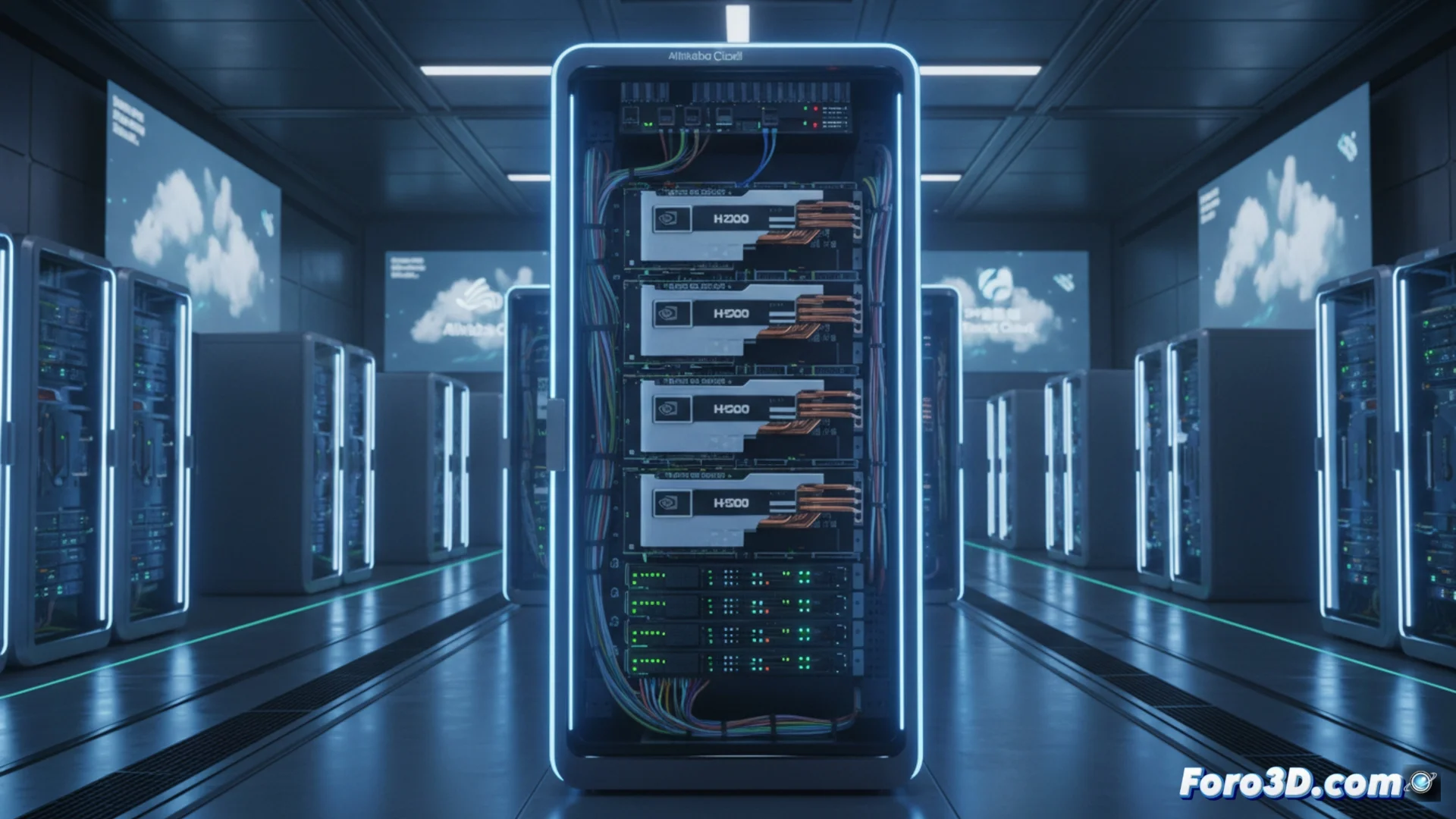
China Authorizes Its Cloud Giants to Purchase Nvidia H200 Accelerators
The debate over whether United States would allow the shipment of Nvidia H200 accelerators to Chinese territory generated much discussion late last year. However, the position from the Asian side remained in the realm of speculation. Now, new reports indicate that Chinese authorities have given permission to their main cloud service operators to begin preparations to order these powerful GPUs. 🚀
Chinese Tech Companies Receive Green Light to Plan
According to the Bloomberg agency, giants like Alibaba and Tencent have received instructions to organize their future purchases of H200 accelerators. This development resolves a point that until now only circulated as an unconfirmed rumor. The approval does not mean that transactions will be executed immediately, but it does allow the firms to advance in their logistical and financial planning to obtain this hardware when the situation permits.
Key Details of the Authorization:- Companies can now organize and structure their future acquisitions.
- The permission facilitates internal preparation before any actual purchase.
- It clears up uncertainties about China's official stance on these restricted technologies.
The permission does not mean that transactions will be executed yet, but it does allow companies to advance in their planning.
The Geopolitical Scenario Dictates the Timelines
This progress occurs within a context marked by U.S. limitations on exporting advanced semiconductor technology to China. The H200 chips, designed for artificial intelligence and high-performance computing, are highly sought-after components. If confirmed, China's authorization shows a path for its corporations to access this technology within the margins set by international regulations, although the final process of purchasing and shipping still depends on many regulatory factors.
Factors Influencing the Process:- International trade rules and U.S. restrictions.
- The complexity of the global supply chain for critical components.
- China's need to boost its cloud computing and AI infrastructure.
Between Regulations and End-User Expectations
While experts analyze intricate trade regulations, many end-users simply hope that their cloud services will respond with greater agility, for example, in generating multimedia content more quickly. This move underscores the tension between technological development, global policies, and practical market demands. 🔌