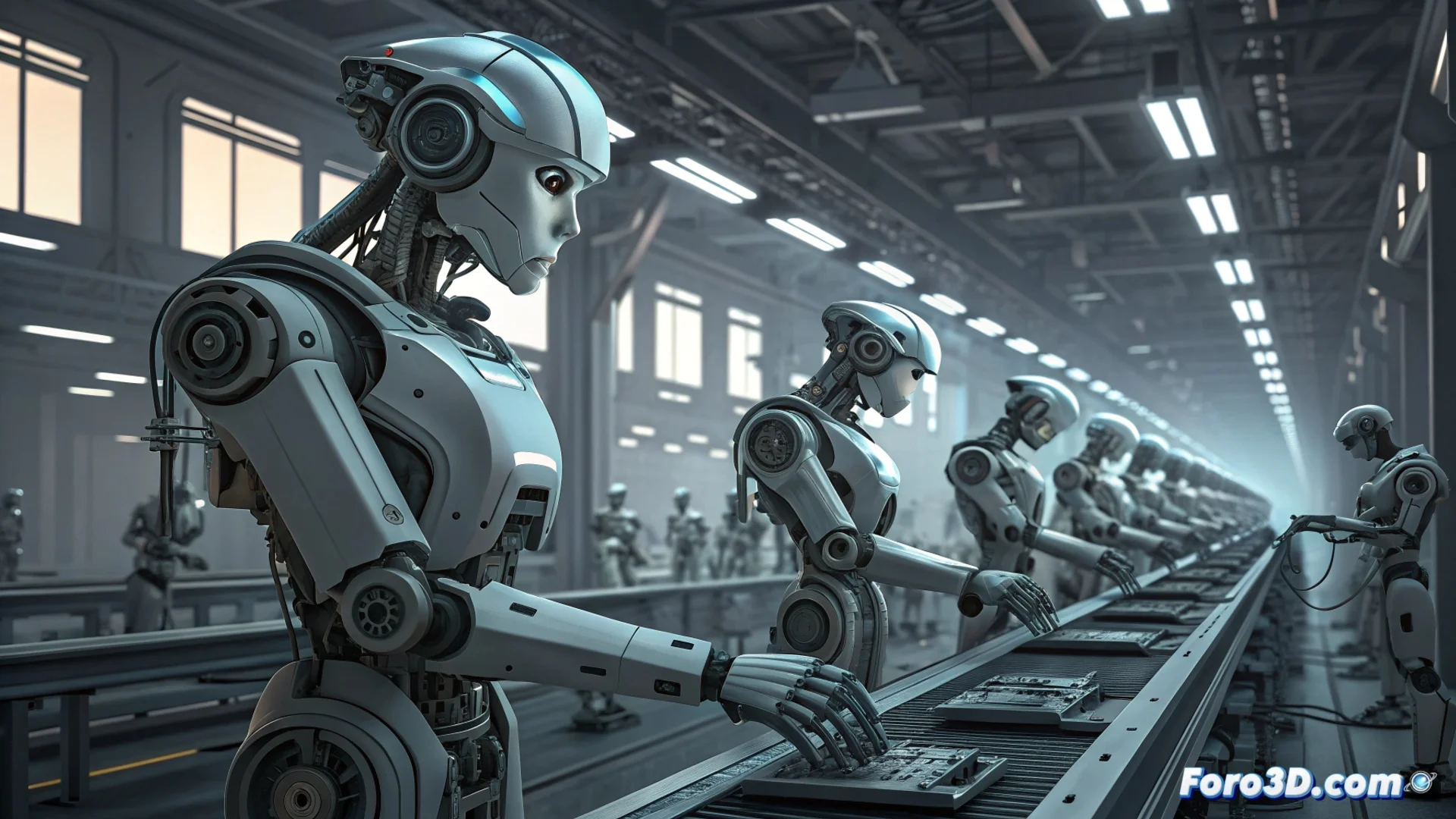
China Advances to Adopt Humanoid Robots Before the United States
China positions itself at the forefront in the race to implement humanoid robots on a large scale, strategically overtaking the United States. The government turns this goal into a national priority, driven by an aging population, reduced worker availability, and the need to maintain its technological leadership. Analysts confirm that the country already surpasses its rival in the initial stage of commercializing these machines. 🤖
Industrial Boost and Accelerated Manufacturing
The Chinese industrial plan seeks to foster local supply chains, provide financial support, and achieve mass production. Companies like UBTech, Unitree, and Xpeng are already manufacturing more units. Their goal is to capture a substantial portion of the global economic value projected for humanoids, which some estimate could exceed 60% by mid-century. This mobilization reflects a bet on dominating a key sector for the future of manufacturing, providing services, and caring for people. 🏭
Key strategies of the Chinese plan:- Develop national supply chains to reduce external dependencies.
- Grant subsidies and tax incentives to manufacturers and researchers.
- Achieve economies of scale to lower costs and penetrate international markets.
The rapid growth of the sector raises concerns about a possible market bubble, where investor enthusiasm outpaces real technical advances.
Obstacles on the Path to Mass Adoption
Despite the strong momentum, the path is fraught with significant challenges. Producing these robots remains extremely expensive. There are persistent technological limitations, such as a critical dependence on advanced chips that may be difficult to acquire due to trade restrictions. Additionally, basic functionality, like navigating domestic environments without stumbling, still consumes the efforts of many engineers. ⚠️
Main challenges to overcome:- High production costs that hinder mass sales and profitability.
- Dependence on advanced semiconductors subject to geopolitical tensions.
- Gap between futuristic expectations (robotic butlers) and current technical reality.
Conclusion: A Defining Technological Race
China advances with determination to lead the era of humanoid robots, using a combination of aggressive industrial policy and manufacturing capacity. While Chinese companies aim for the global market, they must resolve fundamental issues of cost and technology. This competition not only defines the future of automation but also the global technological power balance for the coming decades. 🌍