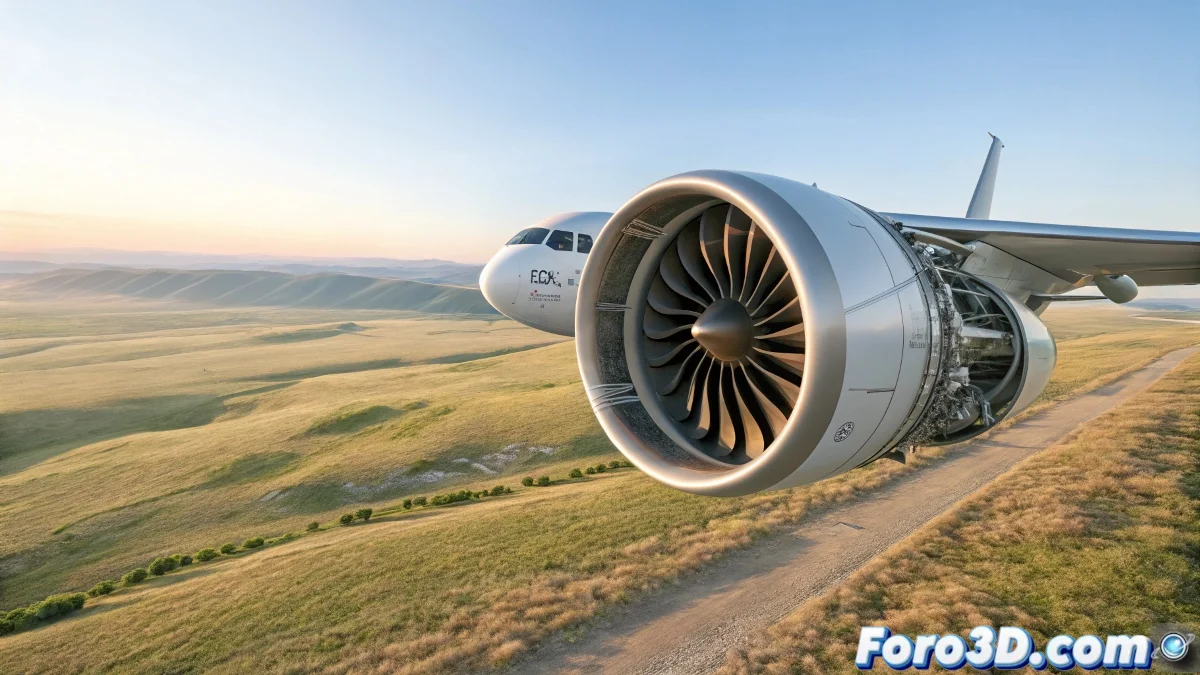
When 3D Printing Literally Takes Flight: China Marks an Aeronautical Milestone
The Chinese state-owned company AECC has just made history: its fully 3D-printed turbojet engine completed its first real flight, reaching an altitude of 4,000 meters. With 160 kg of thrust, this engineering marvel demonstrates that additive manufacturing is no longer just for prototypes, but for engines that actually fly ✈️.
"We optimized every last gram, because in the air every milligram counts" — AECC Engineer.
Topological Design: Where Engineering Becomes Art
This engine is a masterful example of generative design:
- Internal structures optimized by algorithms
- Multifunctional parts that reduce assemblies
- Geometries impossible to manufacture conventionally
Tests That Prove the (Almost) Impossible
The results are impressive:
- 4,000 meters of altitude reached
- Stability in real flight conditions
- Reliability comparable to traditional engines
Minimalism That Astonishes
AECC's "Lightweight Minimalist" philosophy involves:
- Weight reduction without sacrificing strength
- Fewer parts = fewer points of failure
- Greater energy efficiency
The Irony Every 3D Artist Will Understand
While this engine:
- Flies at thousands of meters without crashing
- Handles extreme temperatures
- Operates with 3D-printed parts
We are still struggling with:
- Blender closing unexpectedly
- Fluid simulations that crash
- Renders that take longer than a transatlantic flight
Maybe we should ask China to print us a stable software as a gift... meanwhile, we will continue to admire how 3D printing no longer just models objects, but the very future of engineering 🚀.