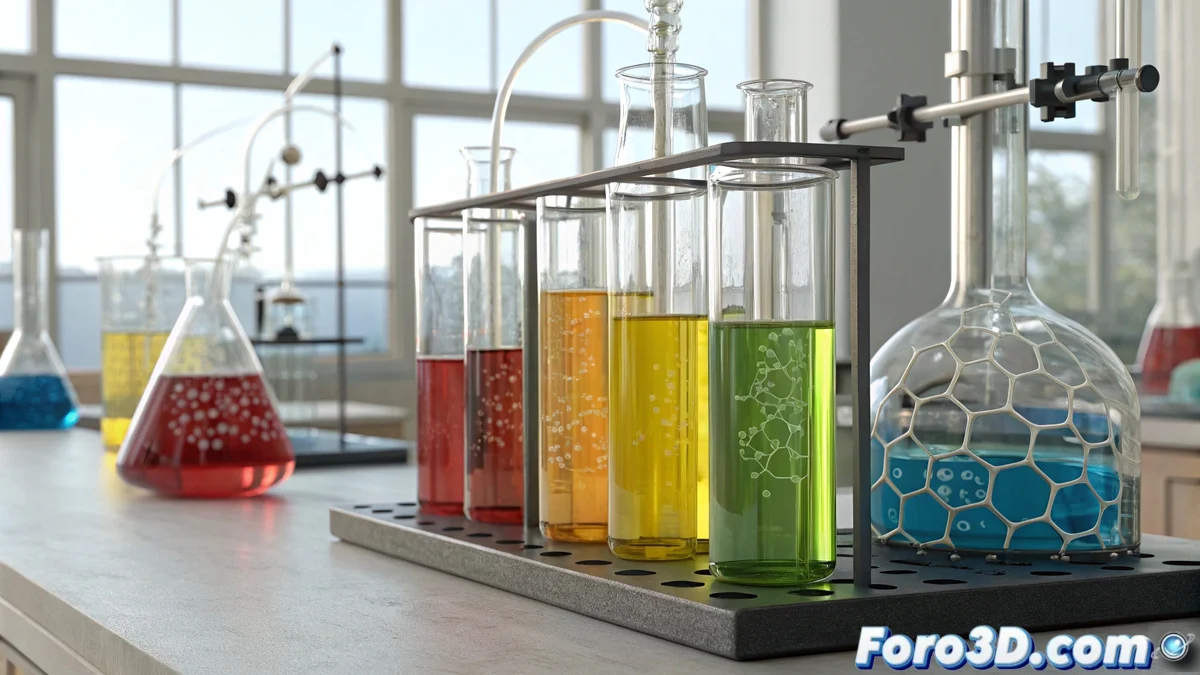
Chemical Computing: Revolutionary Molecular Processing
A scientific team has created a radically different computational system that uses chemical reactions instead of conventional electrical signals to process information. This molecular computer operates through controlled interactions between chemical compounds in solution, where variations in concentrations and reactions represent logical operations and complex calculations. The architecture enables massively parallel processing where multiple operations occur simultaneously in the same liquid medium, overcoming the sequentiality constraints inherent to traditional electronic systems. 🔬
Pattern Recognition Through Advanced Molecular Dynamics
The system excels exceptionally at complex pattern recognition tasks, where natural chemical interactions allow for identifying spatial and temporal configurations without the need for explicit programming. The molecules in solution spontaneously self-organize forming patterns that correspond directly to computational solutions, emulating processes observed in biological systems such as embryonic development or intercellular communication. This intrinsic emergent capability enables solving optimization and classification problems that are extremely complex for conventional algorithms. 🧪
Notable Applications of the Molecular System:- Medical diagnostic systems that analyze multiple biological markers simultaneously
- Design of smart materials with computation capability embedded directly in their structure
- Real-time environmental data processing with high tolerance to extreme conditions
The distributed nature of chemical processing offers significant advantages in scenarios where fault tolerance and adaptability are critical, opening possibilities for computing in extreme conditions or integrated into structural materials.
Transformative Potential in Adaptive Computing
The potential applications range from medical diagnostic systems that analyze multiple biological markers simultaneously to the design of smart materials with embedded computing capability, and real-time environmental data processing. The distributed nature of chemical processing provides decisive advantages in scenarios where fault tolerance and adaptability are critical, expanding horizons for computing in extreme conditions or integrated directly into structural materials. 💡
Innovative Features of Chemical Computing:- Massively parallel processing through simultaneous molecular interactions
- Complex pattern recognition without explicit programming
- Molecular self-organization that emulates natural biological processes
Future Perspectives and Final Reflection
It seems that organic chemistry is finally paying back after all those years of student challenges in university laboratories, conclusively demonstrating that chemical reactions can serve much more transcendent purposes than simply staining lab coats and triggering emergency evacuations. This revolutionary approach represents a paradigm shift in how we conceive information processing, merging the realms of computing and chemistry in previously unimaginable ways. 🌟