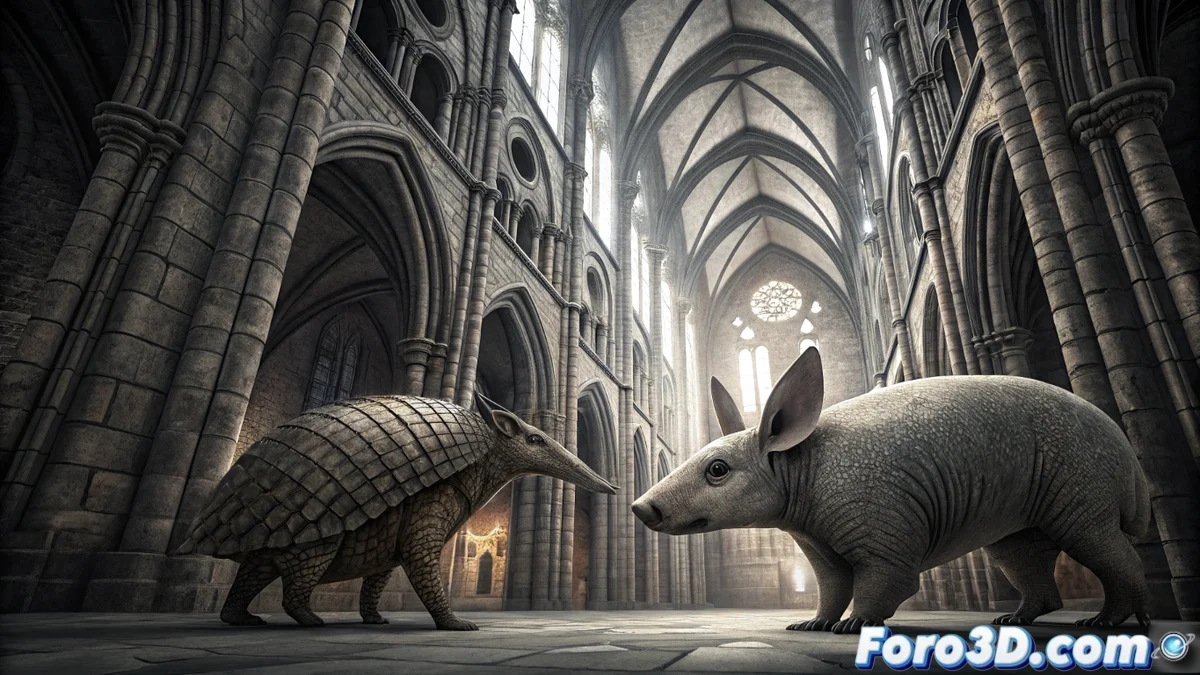
Cerebus the Aardvark: From Parody to Controversial Graphic Epic
In 1977, the world of independent comics witnessed the birth of a work that would challenge all conventions: Cerebus the Aardvark. Starting as a direct satire of sword and sorcery tales, starring a cynical aardvark mercenary, the series embarked on a transformative journey under the unique hand of Dave Sim. What began as a nod to Conan the Barbarian mutated, over 300 issues, into one of the densest and most ambitious graphic novels ever published, using its fantasy to dissect power, faith, and artistic creation. 🎨
An Unprecedented Thematic and Visual Journey
The evolution of Cerebus is a dual phenomenon. Narratively, it abandons simple parody to build a complex philosophical tapestry. Cerebus's world becomes a laboratory where Sim crudely analyzes the mechanics of political power, the foundations of organized religions, and the deeply personal nature of the creative act. This thematic depth runs parallel to a deliberate visual revolution. Sim's art shifts from a loose, caricatured stroke to drawing of obsessive complexity, a process that intensifies with the arrival of background artist Gerhard. ✍️
Pillars of the Artistic Transformation:- Incorporation of Gerhard: Starting from issue 65, his architectural backgrounds of overwhelming realism and geometric precision redefined the series' aesthetic.
- Fundamental Aesthetic Contrast: The dichotomy between the simple-lined character and photorealistic environments creates a unique sense of immersion and, at times, narrative claustrophobia.
- Formal Experimentation: The work dares with non-linear narrative structures, extensive internal monologues, and innovative use of page space.
"Cerebus is the comic that proves even a bearded aardvark can star in the most complex and debated epic of the ninth art."
The Legacy: An Uncomfortable and Indispensable Monument
The technical achievement and ambition of Cerebus the Aardvark are undeniable. Maintaining an uninterrupted monthly publication for 26 years and completing a story planned on such a scale is a milestone in independent comics. The series is studied for its risky narrative and masterful graphic evolution. However, its legacy is inextricably linked to controversy. Dave Sim's personal stances, particularly his views on gender and femininity that permeated the second half of the saga, generated intense ethical debate. 🏛️
Dimensions of the Debate and Influence:- Separation of Art and Artist: Cerebus forces the reader to confront the dilemma of whether it is possible (or desirable) to dissociate the masterpiece from its creator's controversial visions.
- Influence on Adult Comics: It paved the way for graphic novels addressing political, religious, and metaphysical themes with a depth previously reserved for literature.
- Monument to Self-Publishing: It is a seminal example of independent publishing, fully controlled by its author, serving as inspiration for generations of creators.
Conclusion: An Epic that Challenges the Reader
Cerebus the Aardvark stands as an unparalleled narrative and graphic experiment. It is a fascinating and uncomfortable work, a journey that begins in the tavern of a parody and ends in the halls of power and the most intricate theological debates, all rendered with extreme meticulousness. More than a simple story, it is a cultural phenomenon within the ninth art that challenges, discomforts, and above all, demonstrates the transformative power of comics as a complex and personal medium of expression. Reading it remains an indispensable challenge to understand the limits and possibilities of drawn narrative. 🤔