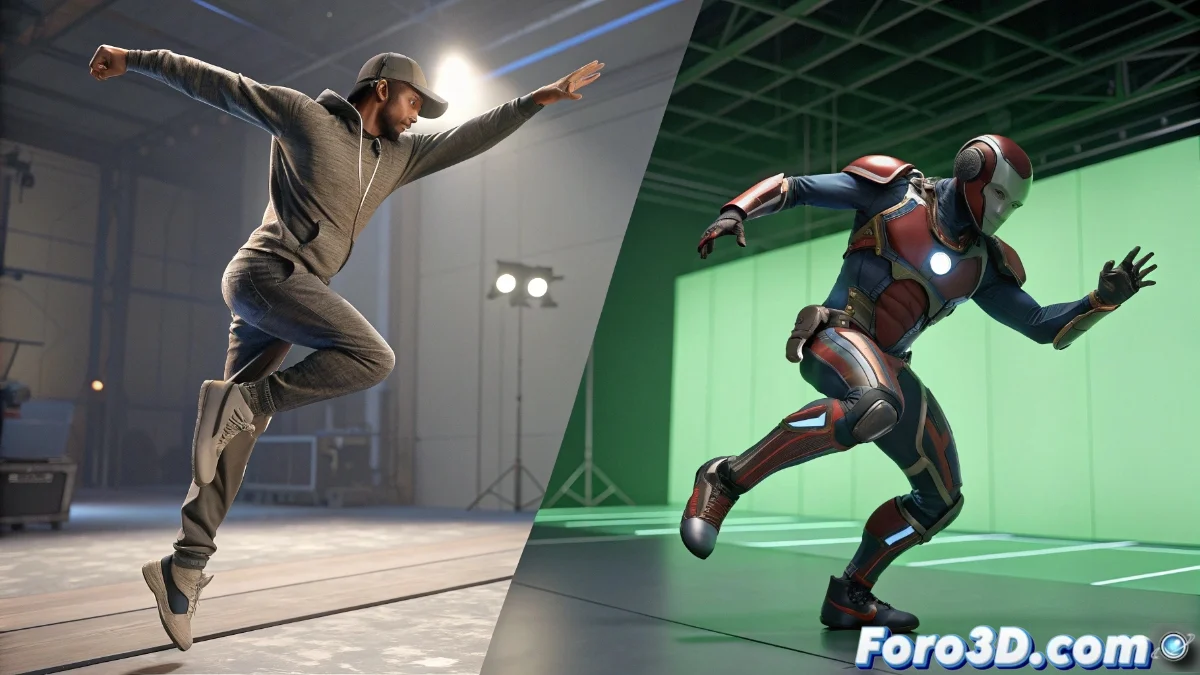
Cascadeur vs MotionBuilder: two approaches in digital animation
The current landscape of digital animation features specialized tools that address different creative needs. In this scenario, Cascadeur and MotionBuilder emerge as complementary solutions but with distinctive work philosophies 🎭.
Physics simulation vs motion capture
Cascadeur, available in a free version, focuses on physics-based animation, automatically calculating weight, balance, and forces to create organic movements. In contrast, Autodesk's MotionBuilder dominates the field of motion capture (mocap) and real-time processing, being essential in professional pipelines that require immediate integration of real performances 📊.
Main features of Cascadeur:- Auto-balancing system that automatically adjusts poses according to physical laws
- Trajectory prediction for jumps, falls, and complex acrobatic movements
- Interface optimized for adjusting poses and transitions between key frames
"Cascadeur transforms animation into an exercise in applied physics, while MotionBuilder turns it into a digital extension of human performance"
Professional integration and workflow
MotionBuilder excels in production environments where iteration speed is crucial. Its ability to visualize, clean, and blend mocap animations in real time makes it indispensable in film and video game studios. Native compatibility with Maya and 3ds Max facilitates a cohesive workflow within the Autodesk ecosystem 🚀.
Key advantages of MotionBuilder:- Advanced tools for debugging and blending motion capture data
- Live collaboration session for instant adjustments during production
- Integrated pipeline with other Autodesk solutions for lossless project transfer
Strategic choice for animators
The decision between these platforms reflects two different creative approaches: Cascadeur offers scientific control over movement physics, ideal for dynamic sequences that require biomechanical authenticity. MotionBuilder provides productive efficiency for projects that prioritize the rapid incorporation of real performances. Both solutions, though distinct in methodology, elevate the creative potential of digital artists according to their specific needs 💡.