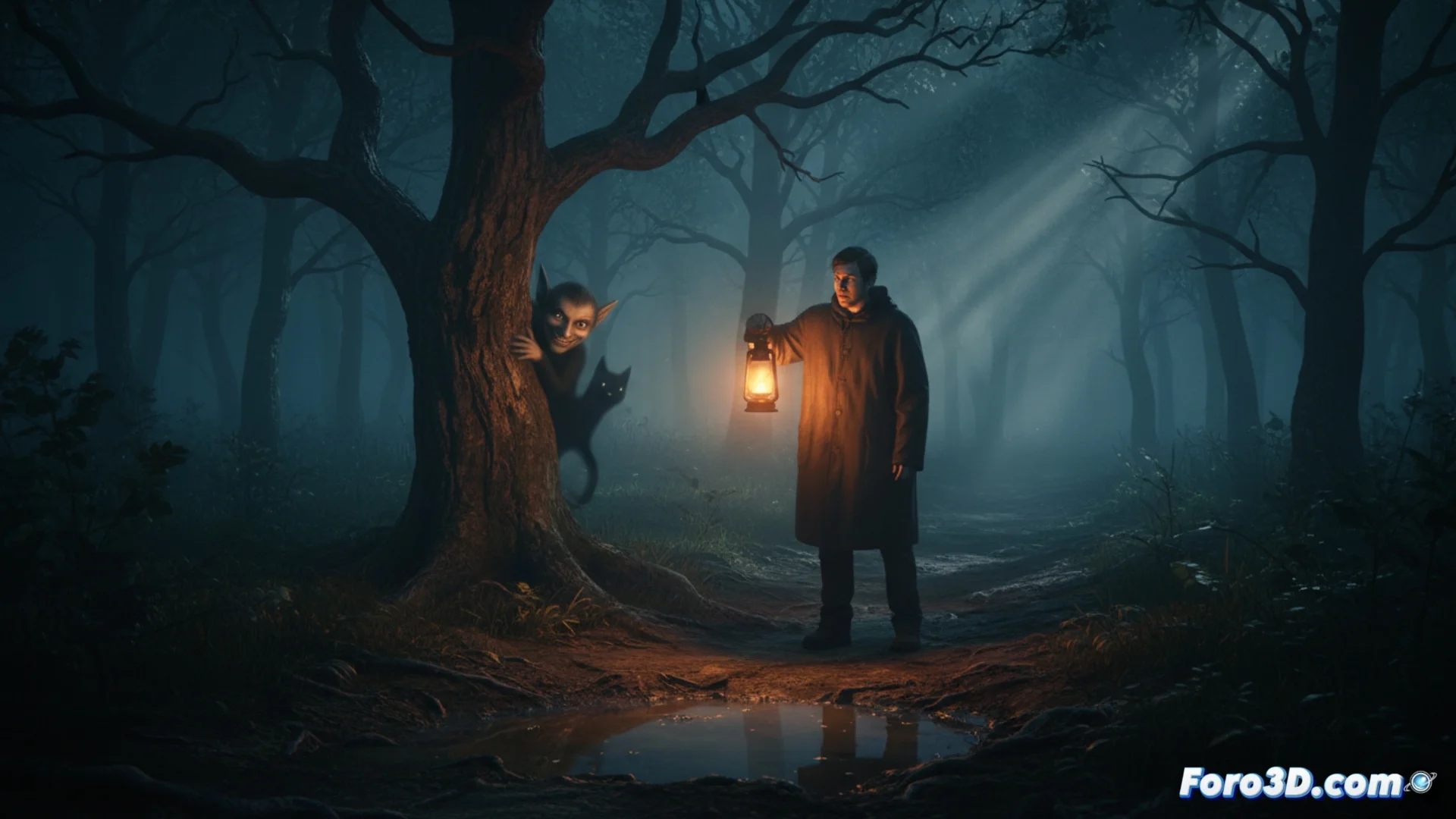
The Diañu Burlón of Carreño: a mischievous goblin from Asturian folklore
In the dark paths of the Asturian council of Carreño, a small entity awaits those who venture to travel at night. Known as the Diañu Burlón, this being does not intend to physically harm, but finds pleasure in organizing confusing skirmishes and deceptions. Its main goal is to mislead and annoy, using the gloom and isolation of these places to carry out its mischief. 👹
The goblin's tricks and metamorphoses
This little devil has the power to transform its appearance, often taking the form of a pet, such as a feline or a dog. With this ruse, it seeks to lead people down wrong paths, diverting them from their correct route. It can also imitate sounds of familiar voices, calling from the vegetation to lure its targets toward risky areas like swamps or cliffs. Another of its favorite strategies is to make pedestrians fall by tripping over obstacles hidden in the darkness.
Its most common deception methods:- Shapeshifting to appear as a domestic animal and misguide.
- Imitating known voices to lure people toward dangerous terrain.
- Placing tripping hazards with roots or stones in total darkness.
"Some say that if you hear a stifled laugh after stumbling... recognize that the goblin has achieved its purpose and continue on your way, toward the light."
The nature and motive of its acts
Unlike other more harmful mythological beings, the Diañu Burlón is driven by a perverse and childish sense of humor. It does not want to cause permanent harm, but to sow chaos and benefit from the fear that the night provokes. Its figure in traditions serves to explain minor mishaps, temporary disorientations, or the feeling of being watched in the Asturian countryside. It symbolizes the risks and disorientation that come with traveling without clarity in a rugged landscape.
What this creature represents:- A spirit of twisted humor, not absolute evil.
- The folkloric explanation for small accidents and losses in the countryside.
- The personification of the dangers of traveling at night over uneven terrain.
Living with the mischief
The legend suggests that if you perceive a muffled laugh after an unexpected stumble, there is no need to get angry. It is enough to accept that the goblin has fulfilled its objective and continue on, ideally in the direction of a place with more light. This entity, at heart, reminds us of the dangers of darkness and the importance of staying calm and on course in the face of the unexpected. 🌌