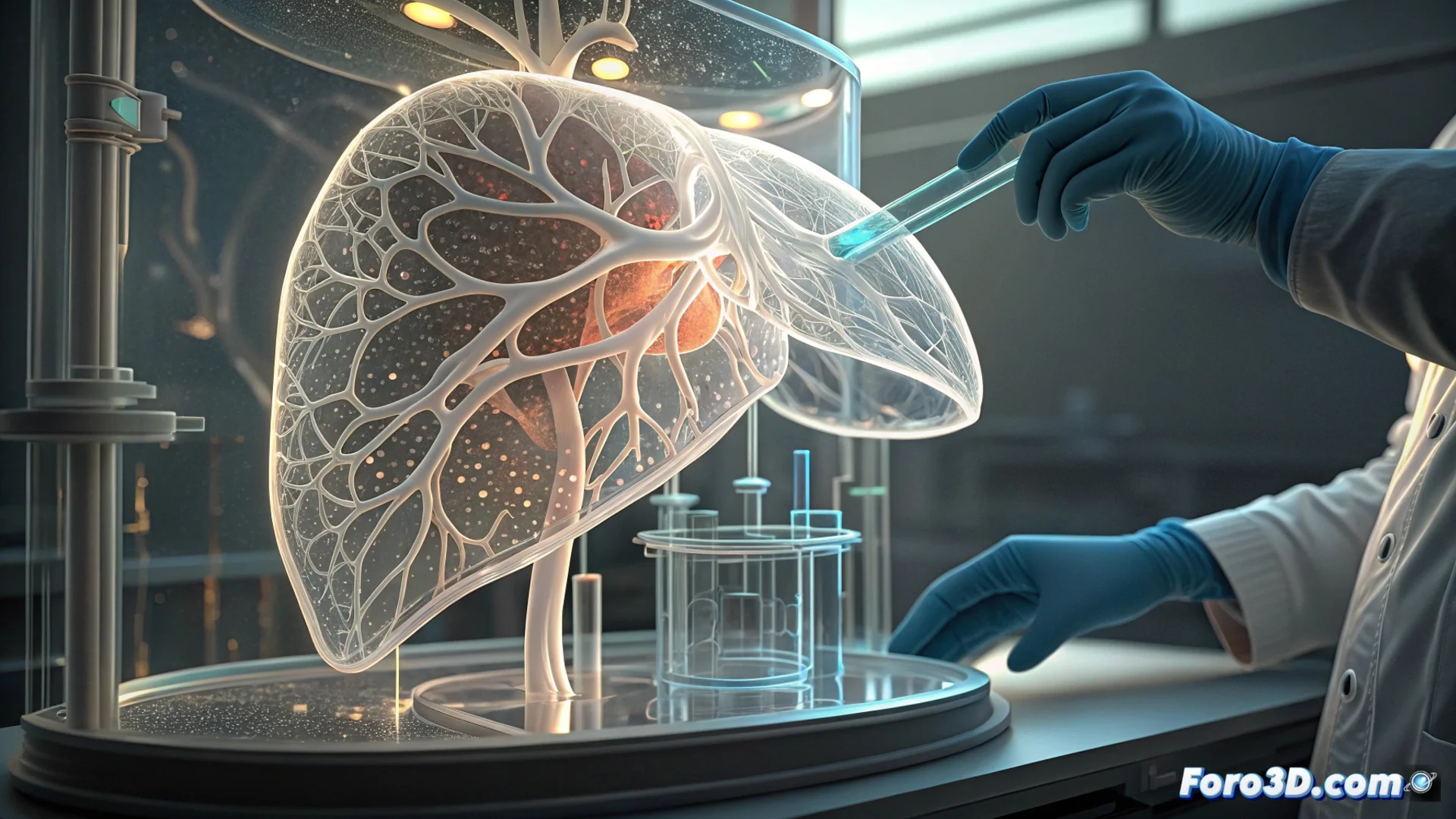
Carnegie Mellon Leads Project to Bio-print Regenerative Livers
The Carnegie Mellon University is leading a scientific alliance that has secured funding of 28.5 million dollars. This investment, provided by the ARPA-H agency, aims primarily to manufacture human livers using 3D bioprinting techniques that can regenerate damaged tissue. The focus is on combating metabolic fatty liver disease, a condition with increasing incidence. The ultimate vision is to produce a fully functional biohybrid organ compatible with the human body 🧬.
The PHOENIX Consortium Merges Cutting-Edge Disciplines
Under the name PHOENIX, this effort brings together specialists in bioengineering, materials science, and immunology. The central strategy employs 3D bioprinting to build support structures or scaffolds that house human liver cells. These scaffolds replicate the complex natural architecture of the liver and are designed to promote self-development and organization of the tissue. In parallel, the team is researching how to protect the implant from the recipient's immune system attack, one of the biggest obstacles in any transplant.
Fundamental Pillars of the Project:- Biofabrication: Use high-precision 3D printing to structure scaffolds with living cells.
- Tissue Regeneration: Design supports to foster autonomous growth and organization of liver tissue.
- Immunological Compatibility: Develop methods to prevent rejection of the bio-printed organ by the patient's body.
The goal is not only to replace, but also to stimulate the patient's liver to repair itself. This is the core of the regenerative approach.
A Response to the Critical Organ Shortage
Achieving this breakthrough could offer a viable alternative to conventional liver transplants, which rely on donors and are insufficient to meet global demand. The organ created through bioprinting seeks not only to replace lost liver function, but also to act as a catalyst that drives the patient's original liver to regenerate. This method represents a qualitative leap forward compared to current treatments for advanced liver diseases, which are mainly limited to managing symptoms.
Potential Impacts of Success:- Drastically reduce waiting lists for liver transplants.
- Offer a curative and regenerative treatment, not just palliative, for fatty liver disease.
- Lay the technological foundation for bio-printing other vital organs in the future.
The Future of Regenerative Medicine
This project envisions a horizon where printing a replacement for a vital organ could become a more accessible procedure. Although the protocols, "warranty," and instruction manuals for these organs will be infinitely more complex than for a mechanical part, the principle of on-demand manufacturing could revolutionize medicine. The PHOENIX initiative positions 3D bioprinting and regenerative biology as key tools to address some of the most urgent health challenges of our era 🔬.