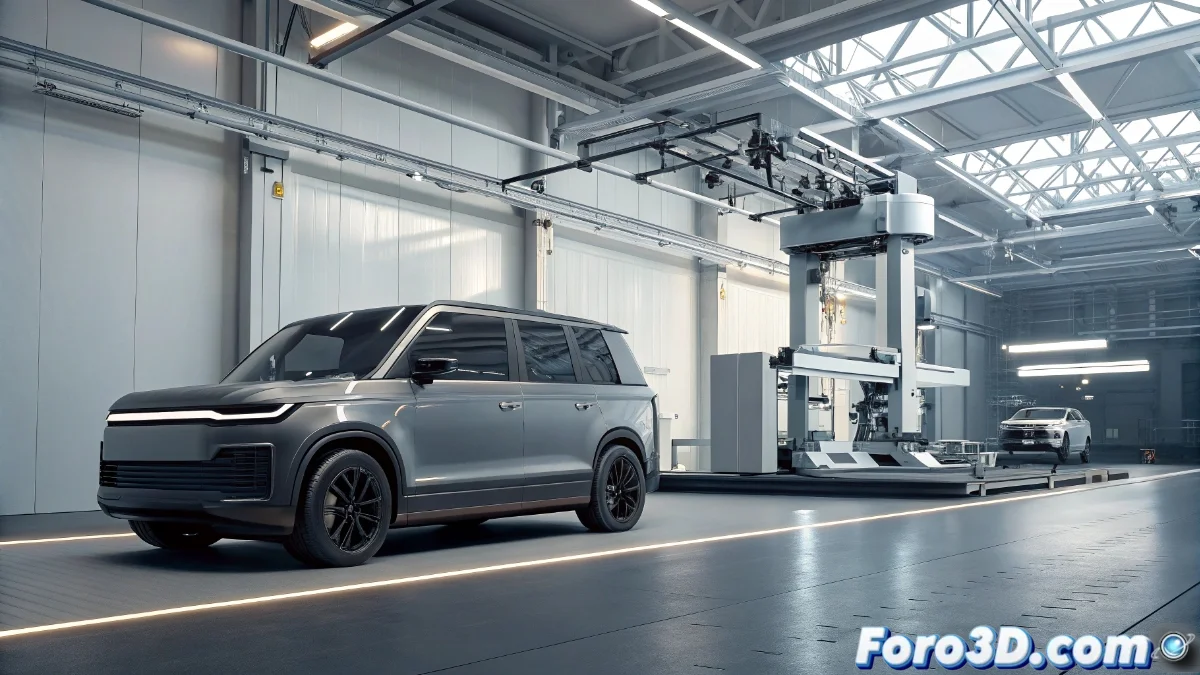
Canoo Lifestyle Vehicle and the Impact of 3D Printing on Electric Mobility
The electric mobility revolution finds in the Canoo Lifestyle Vehicle a paradigmatic example of how additive manufacturing is transforming automotive development processes. This startup has integrated 3D printing as the backbone of its production strategy, allowing it to create everything from structural parts to complex body components with unprecedented efficiency 🚗.
Strategic Advantages of Additive Manufacturing
The implementation of 3D printing technologies provides Canoo with extraordinary operational flexibility. The ability to produce short runs of critical components and large-format tooling significantly accelerates design iteration cycles. This methodology enables early engineering validations and the detection of potential improvements before committing resources to mass production, optimizing both costs and the final product's quality.
Key Applications in Vehicle Development:- Manufacturing of functional prototypes for chassis modules and cabin elements with full testing capability
- Production of specialized tools and large-dimension tooling for assembly lines
- Creation of structural components and body panels in limited runs for technical validation
3D printing acts as a catalyst in the transition towards more sustainable and customizable vehicles, eliminating traditional barriers in automotive development
Acceleration of Time-to-Market
One of the most significant benefits of additive manufacturing lies in its ability to compress commercialization timelines. Canoo has demonstrated how representative prototypes created via 3D printing facilitate regulatory approvals and design validations in a fraction of the time required by conventional methods. This agility is crucial for emerging companies competing in the dynamic electric vehicle market, where the speed of innovation determines competitive positioning.
Measurable Impacts on the Development Cycle:- Drastic reduction of time between concept and market through accelerated validations
- Improved adaptability to design changes without significant time or cost penalties
- Agile response to consumer trends and specific sustainable mobility requirements
Realities and Perspectives of Additive Manufacturing
Although 3D printing may seem like a magic wand that materializes complex ideas, the technology still faces operational challenges such as material jams and print failures that remind us of its practical limitations. However, its integration into companies like Canoo shows how these technical barriers are progressively being overcome, consolidating additive manufacturing as a fundamental pillar in the automotive sector's fourth industrial revolution. The combination of modular electric vehicles with smart manufacturing processes points the way towards truly sustainable and adaptable mobility 🔋.