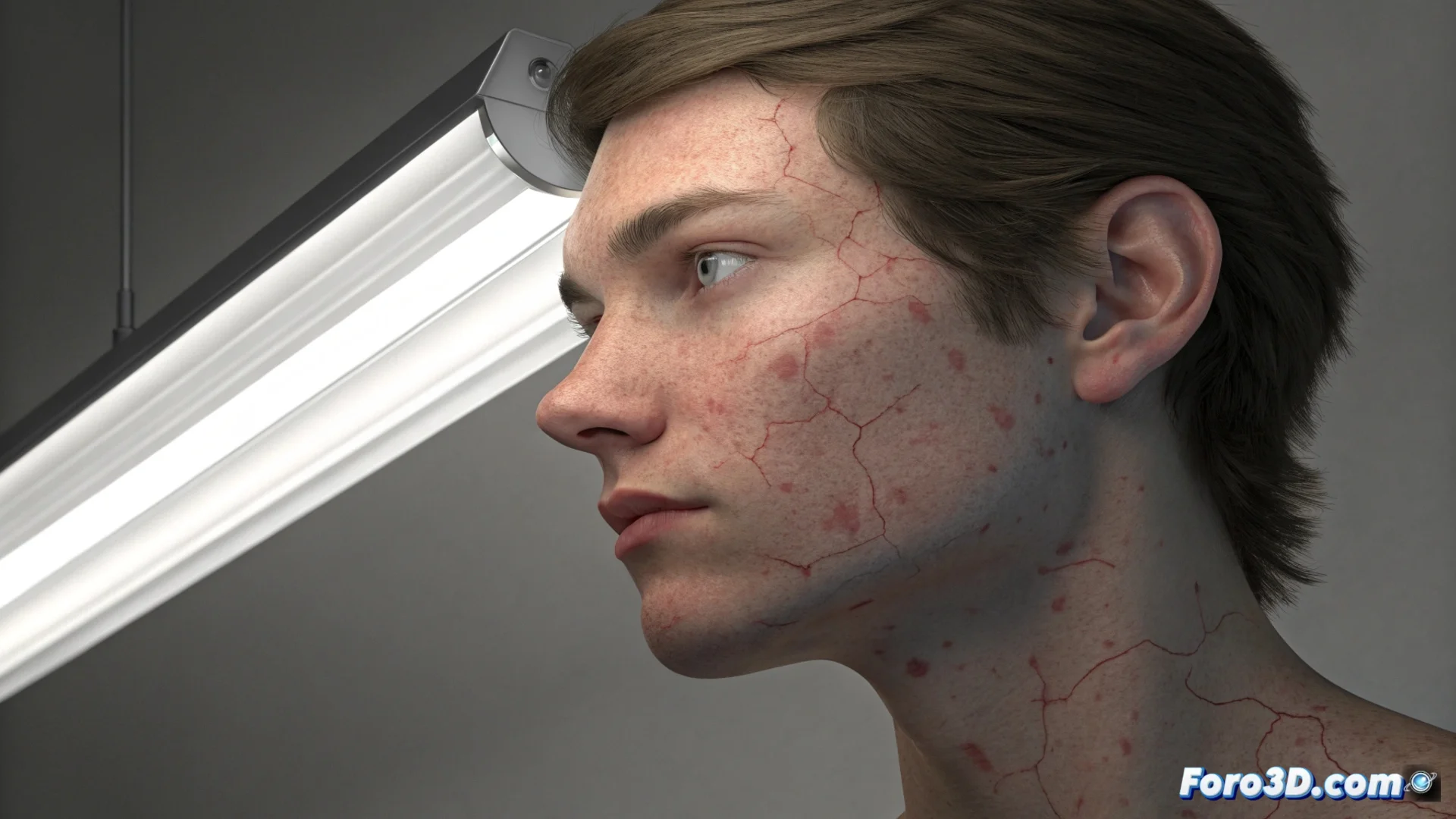
Can Fluorescent Lamps Affect Photosensitive Skin?
There is an uncommon concern about whether certain fluorescent lamps can emit ultraviolet radiation and affect specific health conditions. This scenario, although theoretical, is mainly linked to very old, low-quality, or damaged equipment. Current technology and manufacturing standards make this risk almost nonexistent for most people. 🔍
The Theoretical Link with Skin Conditions
In exceptional cases, a defective fluorescent lamp could leak tiny amounts of UV radiation. For the general population, this emission poses no problem. However, those suffering from certain diseases where the skin reacts exaggeratedly to light, such as lupus, should be aware of this theoretical possibility. In these conditions, even minimal exposure to UV rays could trigger a flare-up or worsen symptoms. Therefore, specialists recommend consulting about any source of artificial light in the environment. 🩺
Factors that Minimize the Risk Today:- Filters and Standards: Modern lamps are manufactured with materials that actively block UV radiation, complying with strict safety regulations.
- Physical Barrier: The plastic diffuser covering the lamp in most luminaires acts as an additional protective layer.
- Real Comparison: The amount of UV that could leak in an extreme case is insignificant compared to natural sun exposure in just a few minutes.
The most important measure is always to follow the dermatologist's recommendations, who can assess each person's specific risks.
Safe Lighting and Practical Alternatives
For everyday use in offices, homes, or businesses, fluorescent lamps are a safe and widespread option. Social alarm is not justified. However, those who wish to take extreme precautions due to diagnosed extreme photosensitivity have several options available. 🛡️
Lighting Options for Maximum Caution:- LED Lighting: Opt for full-spectrum LED lamps, which do not generate ultraviolet radiation when operating.
- Traditional Bulbs: Classic incandescent bulbs are another UV-free alternative.
- Maintenance: Check that luminaires and their diffusers are intact and, if necessary, use opaque diffusers for greater shielding.
Conclusion: Knowledge Without Alarmism
In summary, the possibility of a fluorescent lamp affecting the skin is an exceptional scenario linked to equipment in poor condition. Modern lighting technology provides sufficient guarantees for the general population to use these lights with complete peace of mind. For those managing delicate skin health, such as in cases of lupus, knowledge allows them to make informed decisions and opt for alternative light sources. So, as long as your biggest concern under a fluorescent light is a pale skin tone on screen, you can rest easy. 😌