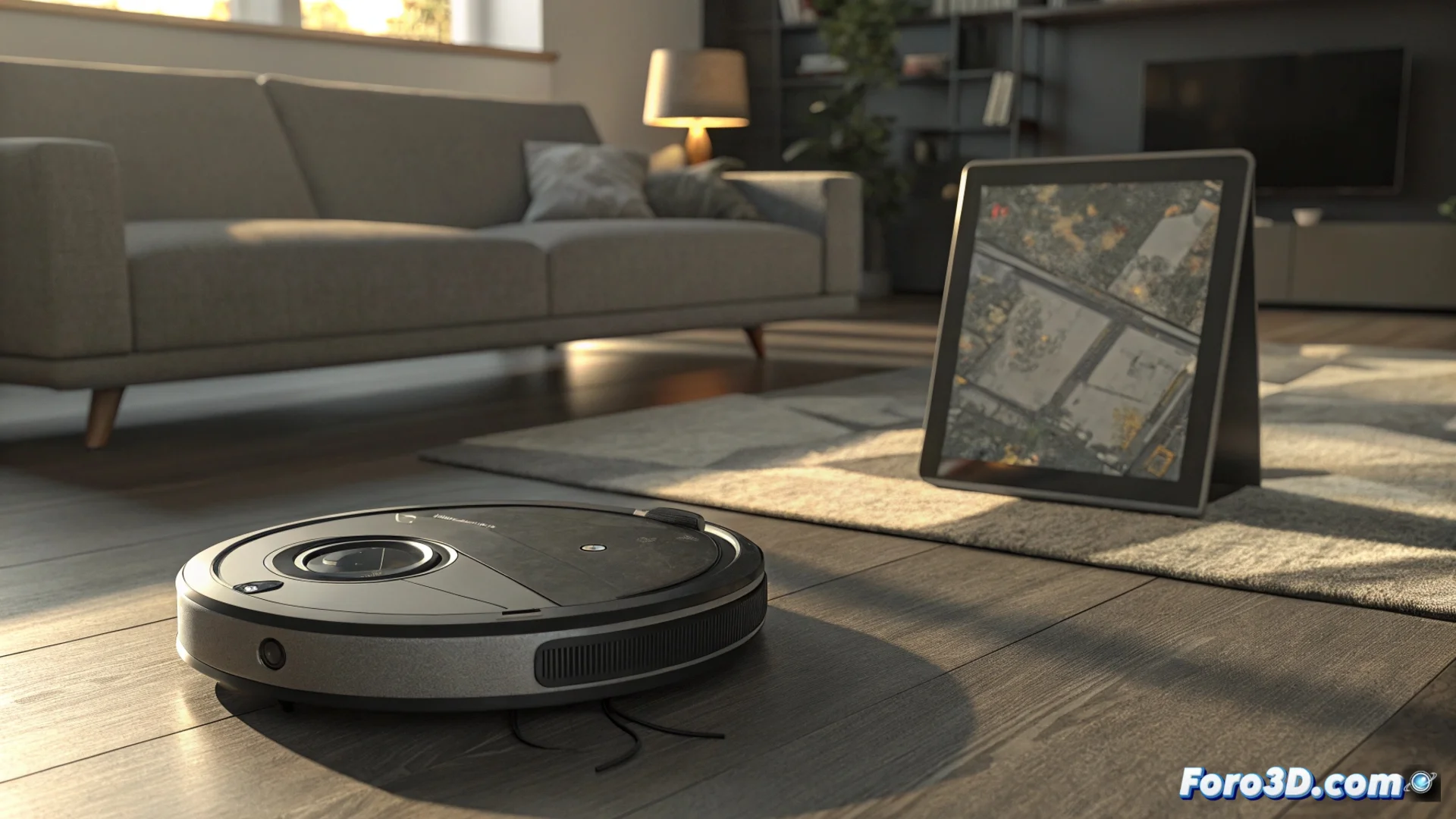
Camera Navigation in Robot Vacuums Faces Planned Obsolescence
A growing problem affects robot vacuums that rely on a camera to see: their computer vision software stops receiving long-term support. Manufacturers prioritize new models, abandoning algorithm improvements for previous devices, condemning the robot to operate with fixed and outdated intelligence. 🤖➡️🗑️
The Freezing of Computer Vision Software
When support ceases, the robot's digital brain stagnates. It cannot learn to identify new obstacles or optimize routes with modern methods. While robots with LiDAR use a stable geometric map, those with only a camera need to interpret images in real time, a task that becomes clumsier and slower if its logic does not evolve.
Direct consequences of not updating:- The robot processes its environment with obsolete algorithms, reducing its cleaning efficiency.
- The probability increases that it becomes disoriented or lost in spaces it previously recognized without issue.
- It cannot adapt to changes in the home, such as new furniture or objects left on the floor.
Over time, your technological helper may behave as if it needs new glasses, bumping into furniture it has known for years.
Progressive Degradation of the Experience
The user begins to notice failures: the robot takes longer to complete its work, repeats unnecessary areas, or skips others. The maps it generates lose precision and it may have difficulty returning to its charging base. This breaks the expectation of a device that should maintain or even improve its performance through updates.
Clear symptoms of obsolescence:- Completing cleaning requires more time than usual.
- Saved maps show errors or become inconsistent.
- The device gets stuck or "lost" more frequently.
An Uncertain Binary Future
This scenario raises a critical reflection on the software lifespan in smart home devices. The promise of continuous improvement through firmware fades, leaving the user with equipment that, physically intact, becomes less competent. Dependence on a navigation software that is not renewed turns these robots into premature candidates for recycling, questioning the sustainability and long-term value of vision-based technology. 🤔⚙️