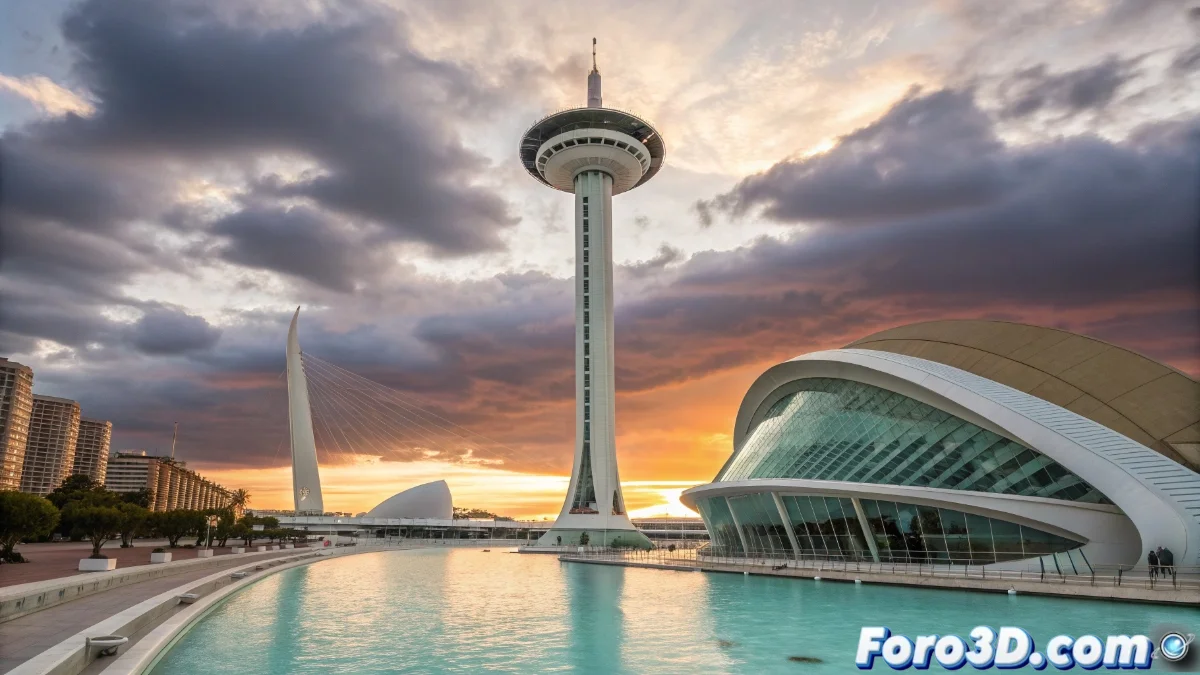
Calatrava's Unfinished Tower in the City of Arts and Sciences
In the heart of Valencia's most emblematic architectural project, Santiago Calatrava conceived a colossal structure that would have redefined the city's urban profile. Popularly known as the Finger of God, this communications tower aspired to exceed 300 meters, integrating art, science, and technology into a unique vision for the cultural complex 🏗️.
The Visionary Design That Never Saw the Light
Calatrava's proposal represented an unprecedented architectural milestone in the Valencian Community. His characteristic style, with organic forms and futuristic lines, employed materials like white concrete and steel to create a sensation of movement and structural lightness. The tower was intended to house telecommunications antennas and panoramic viewpoints offering spectacular views of the Mediterranean 🌊.
Main features of the project:- Height exceeding 300 meters with organic and futuristic design
- Integration of telecommunications antennas and tourist viewpoints
- Use of white concrete and steel to maintain coherence with the existing complex
"Budgetary limits can alter even the most ambitious visions of contemporary architecture"
Obstacles That Truncated the Project
The economic crisis of the late 2000s and the recurrent cost overruns in the construction of the complex determined the tower's fate. Authorities prioritized the completion of already initiated works, such as the science museum and the palace of the arts, relegating this ambitious project to the urban planning archives 💸.
Determining factors in its cancellation:- Spanish economic crisis that affected the financing of cultural projects
- Accumulated cost overruns in the construction of the City of Arts and Sciences
- Political decisions that prioritized the operativity of existing facilities
The Legacy of What Could Have Been
Although the debate about its construction occasionally resurfaces, the tower remains a symbol of truncated projects due to economic realities. Its absence leaves a perceptible void in the Valencian skyline, reminding us how even the most innovative visions must face practical limitations. The final reflection invites us to consider how the balance between creative ambition and economic viability defines the urban landscape we ultimately build 🏙️.