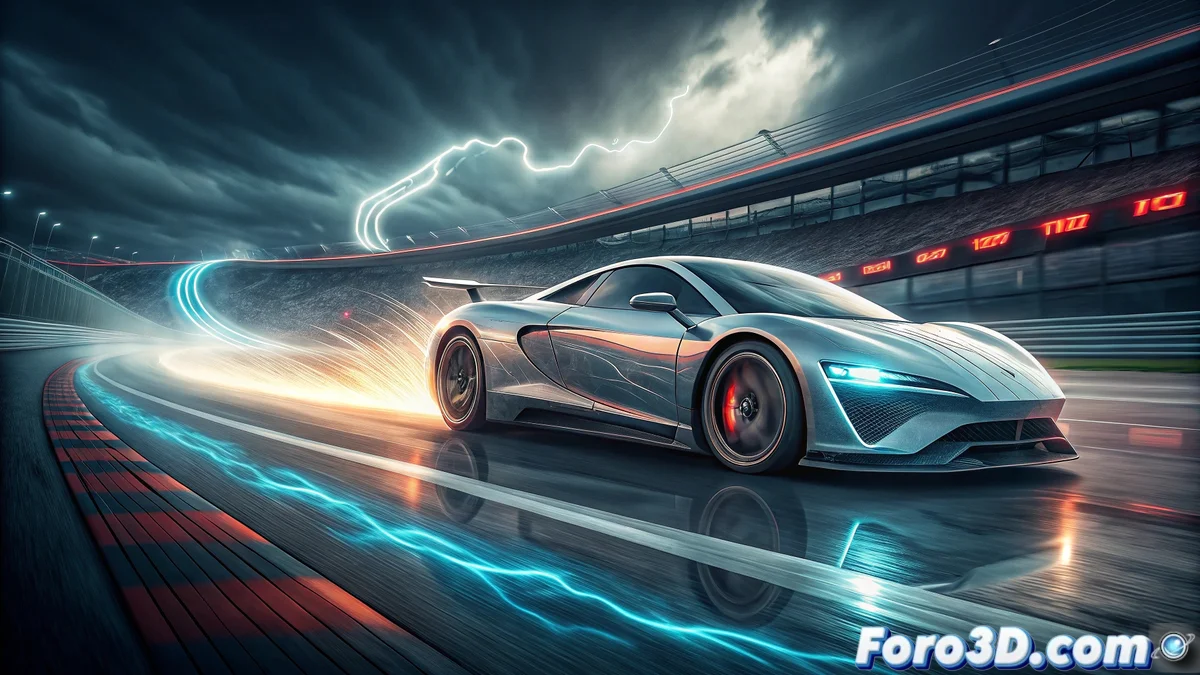
When Electric Mobility Breaks All Speed Limits
BYD has reached a monumental milestone in electric mobility with the announcement of a vehicle capable of nearing 500 km/h, surpassing traditional icons like Bugatti in speed. ⚡ This new electric car combines cutting-edge battery and motor technology with extreme aerodynamic design, definitively proving that electric propulsion can not only compete with but surpass traditional combustion engines in the realm of extreme performance. This achievement represents a turning point in the perception of what electric vehicles can accomplish.
The model incorporates high-energy-density batteries and a state-of-the-art dual electric motor system, optimized to deliver maximum power with precise control. 🔋 Its lightweight and aerodynamic architecture radically reduces air resistance, allowing it to reach speeds close to 500 km/h, while advanced cooling systems maintain thermal stability even under the most demanding conditions. This combination of technologies positions the vehicle as an immediate benchmark in the emerging category of electric hyper-sports cars.
A reminder that the future of speed doesn't smell like gasoline but like electric innovation.
Technologies Redefining Extreme Performance
BYD has integrated energy recovery systems and torque vectoring control that enhance both acceleration and track efficiency. 🏎️ Energy recovery during braking helps maintain battery charge even during intense sessions, while torque vectoring allows for millimeter-precise power distribution between axles. These advances, combined with aerodynamics that prioritize stability at extreme speeds, create a technological package that challenges decades of traditional dominance in the hypercar world.
The most notable innovations include:
- Solid-state batteries with superior energy density
- Dual motors with perfect synchronization
- Active aerodynamics that adapt to different speeds
- Immersion cooling systems for the batteries
Impact on the Industry and the Future of Speed
This advancement significantly strengthens the competitiveness of the Chinese electric vehicle industry in the high-performance segment. 🇨🇳 BYD directly challenges historically leading European brands in speed, demonstrating that the transition to electric mobility does not require compromising extreme performance. The achievement also pressures other manufacturers to accelerate their high-performance electrification developments, potentially speeding up innovation across the entire automotive industry.
With such speed, highway radars will have to be updated… and speed limits will have to be reconsidered for an era where electric cars can surpass airplanes on takeoff runways. 🚓 A modern irony where the most sustainable technology also proves to be the most capable of challenging the laws of terrestrial physics, all while emitting zero emissions and sounding like a spaceship rather than an engine exploding fossil fuels.