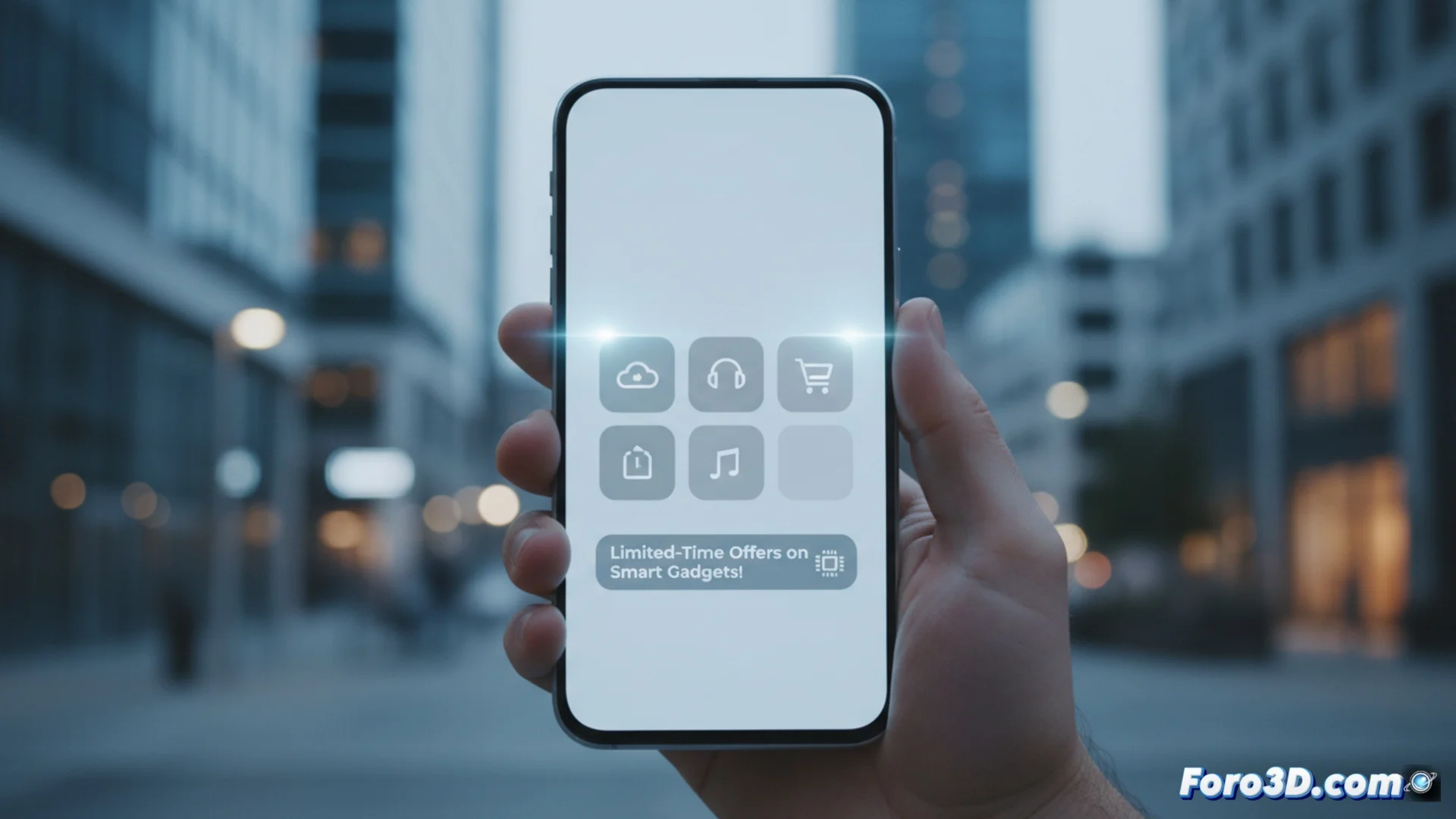
Bureau of Digital Projects proposes funding smartphones with integrated advertising
A Russian agency, Bureau of Digital Projects (BЦП), has devised a business scheme that rethinks how people can get a smartphone. 🧠 The core of the proposal is to eliminate the initial economic barrier: users receive the device without paying money upfront or monthly installments. Instead, the cost of the terminal and mobile data service is covered through a different mechanism that monetizes the owner's attention.
The engine of the system: native advertising in the interface
The model works by deeply integrating promotional content and suggestions within the phone's operating system. These advertising elements are not simple banners in apps, but are displayed as part of the native experience, occupying key spaces in the interface. The revenue generated by these spaces is what covers the price of the hardware and the carrier's fee.
Areas where advertising may appear:- On the lock screen, showing offers or promotional notifications.
- Within the notification center, blending with system alerts.
- Integrated into the app launcher or main device menu.
- In other areas of the user interface considered valuable.
The user implicitly accepts this trade-off by using a device that doesn't cost them money directly.
Critical issues: personal data and usability
This approach immediately opens a debate about its implications. For the advertising to be relevant and effective, the system will likely need to collect and analyze data from phone usage. This directly affects the individual's privacy. 🤔 Additionally, the experience of using the device may change radically if advertising interruptions are constant or if they consume system resources, slowing down its performance.
Controversial points of the model:- Data collection: What information is gathered to segment the ads?
- Frequency and intrusiveness: How often will the recommendations appear?
- Impact on performance: Will the advertising slow down the phone or consume battery?
The final balance for it to work
The viability of this business scheme depends on a delicate balance. The perceived value for the user in obtaining a smartphone and connectivity service without direct monetary cost must be significantly greater than the annoyance they feel from the integrated advertising and the possible surrender of their privacy. The project questions whether it is possible to create an ecosystem where the device, essentially, pays for itself with its owner's gaze. 📱➡️💰