Building Ultralight Furniture with Aluminum and 3D Printing
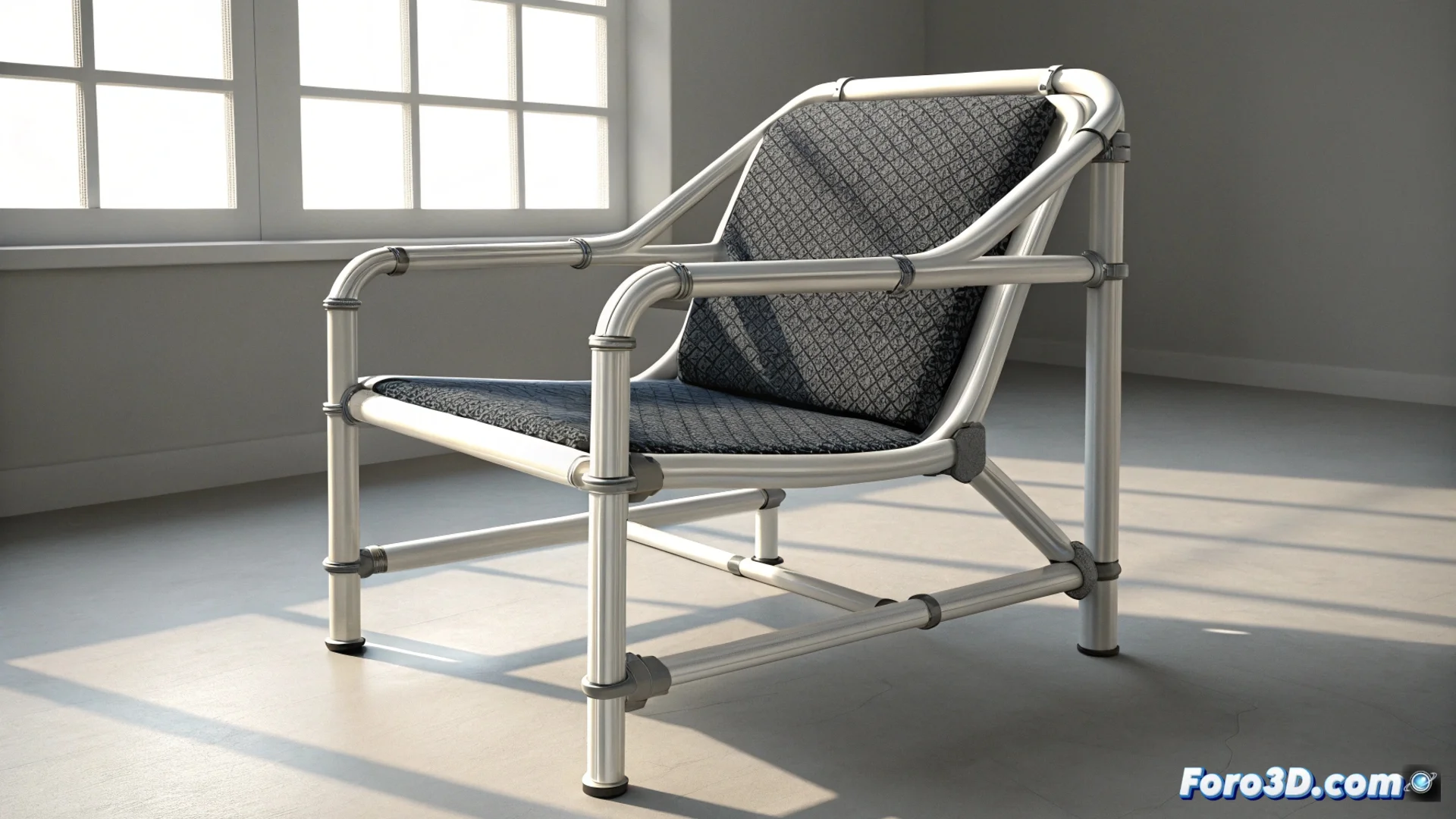
Creating custom furniture now integrates the lightness of aluminum with the flexibility of 3D printing. This approach allows designing chairs and armchairs where the main structure uses aluminum tubes, easy to cut and shape. The joining elements and contact surfaces are manufactured with a 3D printer, enabling adjustment of every dimension and curve to the specific needs of the user. The result is a unique, lightweight, and fully customized piece of furniture. 🛋️
Designing and Producing Structural Connectors
The process begins by 3D modeling the connectors that will join the tubes. These pieces are essential for defining the geometry and ensuring the stability of the entire assembly. They are designed to fit precisely into the ends of the aluminum, allowing for varied angles for organic or rigid designs. For printing them, materials like PETG or reinforced PLA are chosen, capable of withstanding mechanical loads and constant weight.
Key advantages of printed connectors:- They allow creating joints at non-standard angles, unleashing creativity in design.
- They are manufactured on demand, eliminating the need to store spare parts.
- Their production cost is low compared to machining custom metal connectors.
The real challenge is not printing the chair, but convincing your guests that that framework of tubes and plastic is, indeed, furniture.
Manufacturing Custom Ergonomic Cushions
The contact areas, such as the seat and backrest, are resolved with 3D-printed cushions. Their design can be modified to optimally distribute body pressure, integrating lumbar supports or anatomical shapes. They are printed as a single piece or in modular segments that are assembled. To increase comfort, they are covered with layers of foam or fabric that are fixed over the printed rigid base, achieving a perfect balance between structural lightness and comfort.
Features of the cushions:- The ergonomics fully adapts to the body measurements of the end user.
- The printed structure can be hollow or alveolar to save material and weight.
- The printed base surface serves as a firm support for the textile padding.
Integrating the System and the Perceptual Challenge
The final assembly combines the robustness of aluminum with the versatility of printed plastic. The ease of shaping the tubes allows sketching clean or dynamic lines, while the printed connectors ensure the joints. Beyond the technical aspects, this project confronts conventional aesthetic perception, challenging the preconceived idea of how furniture should look. The elegance lies in the honesty of the materials and the pure functionality of a custom design. 🔧