BTF Scanning: The Ultimate Frontier in Digital Material Capture
In the pursuit of absolute photorealism, BTF scanning (Bidirectional Texture Function) stands as the most advanced technology. While conventional methods are limited to static color or relief maps, BTF documents the intricate dance between light and surface in all its complexity. This technique meticulously records how a material's appearance changes based on the angle from which light arrives and from which it is viewed, capturing visual phenomena that were previously impossible to digitize faithfully. 🎯
Unraveling the Technical Complexity of the Process
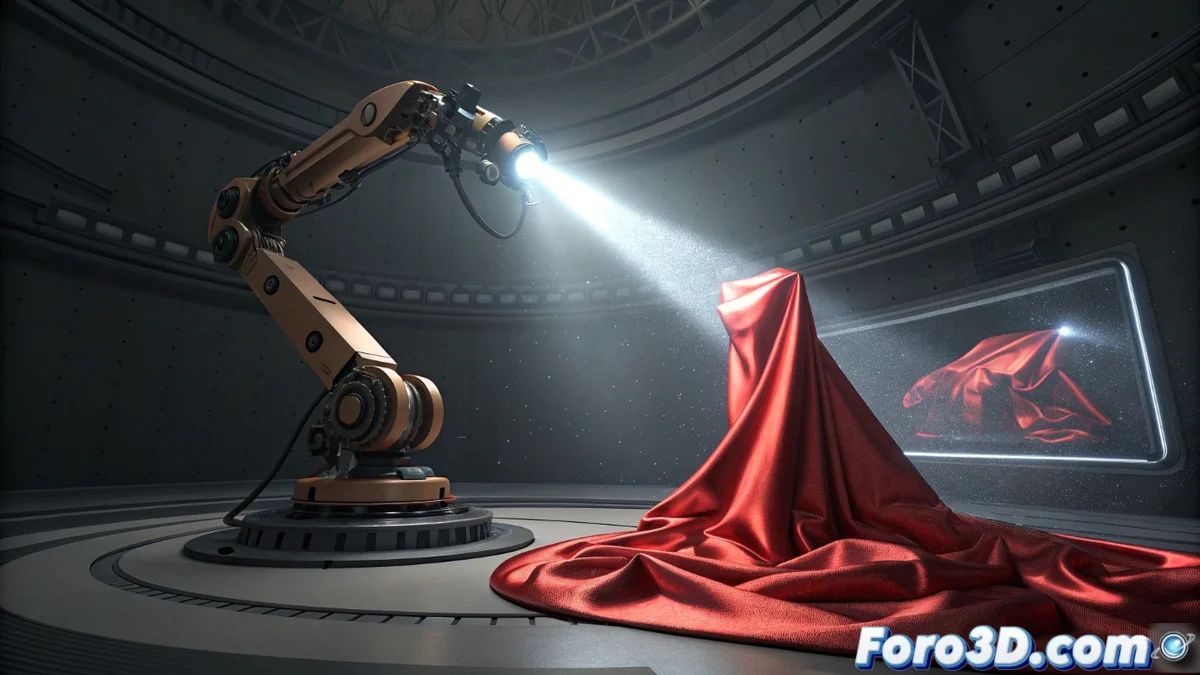
Data acquisition for a Bidirectional Texture Function is no simple task. It requires specialized equipment, such as domes equipped with hundreds of lights and cameras, or high-precision robotic arms. The goal is to photograph the physical sample tens of thousands of times, systematically covering all possible combinations of lighting direction and viewpoint. The result is a colossal data volume (often called a 6D texture) that encodes the exact light response for each texel, including shadow effects, occlusion, interreflections, and micro-relief detail.
Key Challenges in BTF Capture:- Specialized Infrastructure: Robot-controlled measurement devices or domes with programmable lighting are needed.
- Massive Data Acquisition: The process generates tens of thousands of images, resulting in multi-terabyte datasets.
- Intensive Processing: Compiling and calibrating the photographs to create the unified BTF volume requires considerable computational power.
The promise of BTF is a digital asset that behaves identically to its physical counterpart under any lighting and viewing conditions.
Practical Applications in the Digital Industry
This level of detail is indispensable for digitizing materials with non-Lambertian optical behaviors and complex microstructures. It is the ideal solution for accurately representing the velvety depth of a fabric, the changing reflections of varnished wood, the directional grain of brushed metal, or the iridescence of certain compounds. In practice, raw BTF data is too heavy for direct real-time use, so the current workflow focuses on deriving more efficient representations.
Workflow and Optimization:- Reference Digitization: BTF scanning is used to capture archive materials with reference precision.
- Parameter Extraction: The data is used to fit analytical BRDF/BTDF models that simulate behavior more lightly.
- Complex Map Generation: Advanced parallax occlusion mapping (POM) relief maps or multi-angle texture maps can be synthesized from the BTF dataset.
The Future and BTF Rendering Requirements
The final integration of these ultra-realistic materials is achieved through advanced shaders in rendering engines like Unreal Engine, V-Ray, or Arnold. These shaders interpret the models or maps derived from BTF to calculate appearance in each frame. The main barrier remains computational and storage cost. The true potential of BTF—a digital asset that reacts to light exactly as it would in the physical world—is within reach, provided that hardware resources, from hard drives to GPUs, rise to this formidable technological challenge. 💻