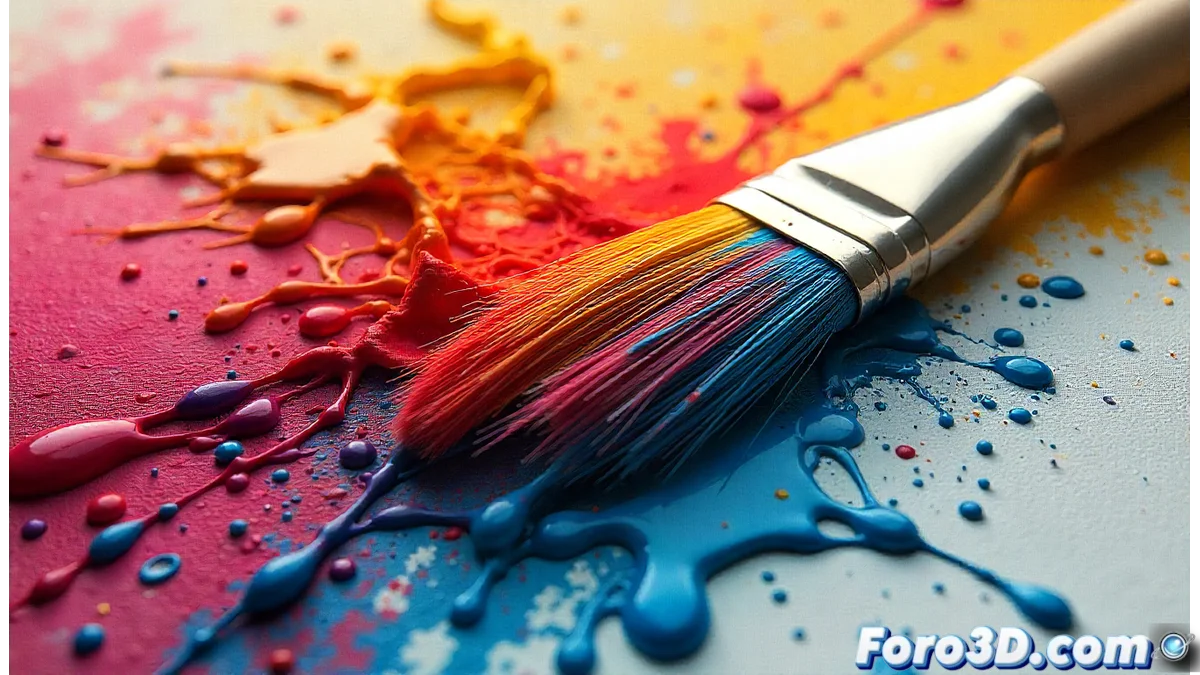
Brush Fracturing: Fragmentation Technique for Realistic Textures
Brush fracturing represents an innovative approach in digital design, where custom brushes are strategically fragmented to produce textures and patterns that combine controlled chaos with organic realism. Digital artists use this technique to mimic natural wear, cracks, and erosion effects while maintaining absolute control over the visual results 🎨.
Implementation in Graphics Tools
To execute brush fracturing, creators set up custom brushes in applications like Photoshop, Substance Painter, or Krita, modifying dispersion, rotation, and texturing parameters. The methodology involves fragmenting the brush footprint into multiple components that are scattered semi-randomly, using opacity masks and displacement maps to preserve structural coherence. This approach ensures that each stroke produces unique variations while maintaining the direction and intensity of the base brush.
Key Configuration Parameters:- Dispersion adjustment to control fragment distribution
- Rotation modification to avoid mechanical repetitions
- Customization of base textures for different materials
The true art lies in explaining to the client that you spent meticulous hours fracturing brushes so their digital wall looks "naturally neglected."
Applications in Visual Projects
This technique finds its greatest utility in visual production for video games, special effects, and digital illustration. Texture artists apply brush fracturing to develop believable surfaces in materials like stone, metal, and wood, eliminating repetitive patterns that detract from authenticity. In three-dimensional environments, shaders can emulate this behavior through procedural noise nodes, although the manual version provides more direct artistic control and more customized results.
Main Areas of Application:- Development of materials for AAA and indie video games
- Creation of assets for cinematic visual effects
- Digital illustration with complex organic textures
Technical and Artistic Considerations
Brush fracturing not only solves technical texture repetition issues but also incorporates systematic imperfections that elevate visual realism. Artists must balance randomness and control parameters to achieve natural results without falling into unrecognizable chaotic patterns, making this technique a perfect bridge between meticulous design and spontaneous organic appearance ✨.