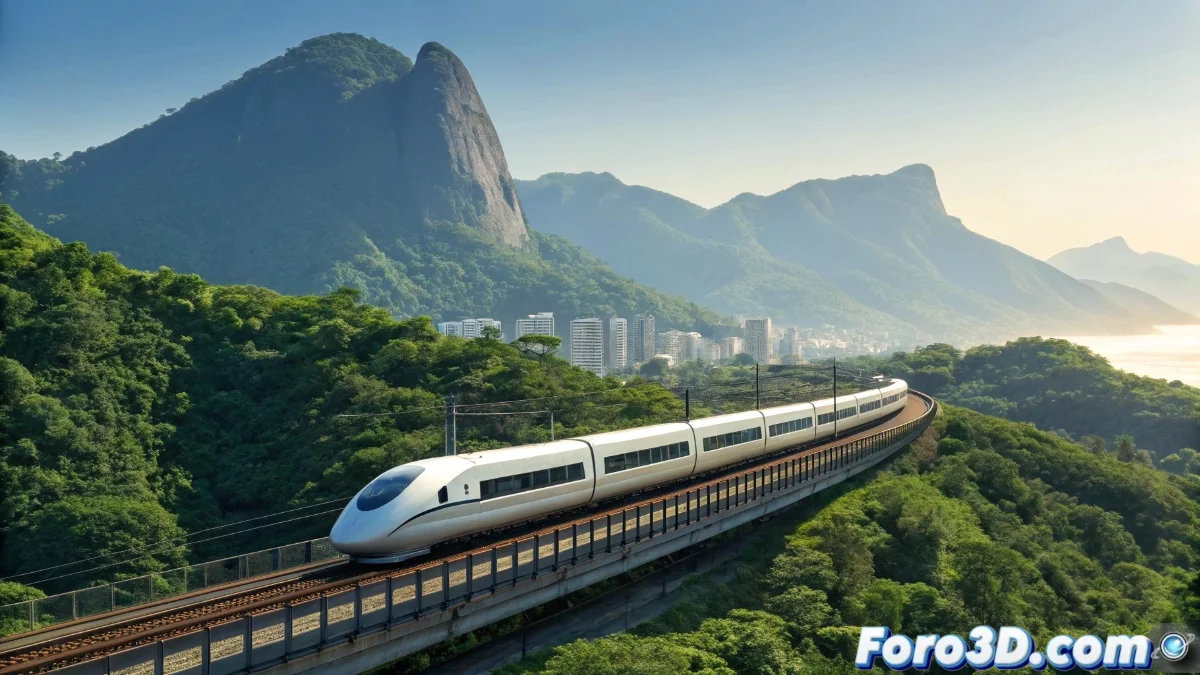
Brazil Advances Its First Bullet Train Between São Paulo and Rio de Janeiro
The Brazilian federal government is accelerating plans to implement the country's first high-speed rail system, specifically designed to connect two of its main urban centers. This pioneering initiative aims to offer a transportation alternative that relieves saturation at airports and highways, with an estimated travel time of just 90 minutes between both metropolises 🚄.
Implementation Challenges in the Latin American Context
Regional infrastructure analysts express well-founded reservations about the real feasibility of the project, noting that similar international experiences have consistently shown execution complications. Land acquisition, intergovernmental coordination, and financial sustainability represent critical obstacles that require specific strategies.
Main concerns identified:- History of operational cost overruns in comparable global railway projects
- Complexities in multimodal integration with existing transportation systems
- Risk of becoming underutilized infrastructure if not accompanied by coordinated urban development
“High-speed projects demand exceptional technical precision and multidisciplinary planning to avoid becoming technological white elephants” - South American transportation specialist
Potential Socioeconomic and Urban Impacts
If successfully materialized, this rail corridor could completely reconfigure the territorial dynamics of southeastern Brazil, generating new urban centers around intermediate stations. A multiplier impact is projected on jobs during construction and permanent operation phases, although debates persist on the optimization of public resources.
Expected areas of influence:- Economic revitalization in currently disconnected intermediate urban corridors
- Strengthening of regional tourism through improved accessibility
- Potential reduction of polluting emissions by shifting travelers from air and road transport
Citizen Perspectives and Implementation Expectations
The Brazilian population watches the development of this initiative with cautious hope, aware of the history of major projects that have remained unfulfilled promises. Success will depend on transparent management and political continuity beyond electoral cycles, transforming this vision into a tangible reality that truly benefits citizens 🎯.