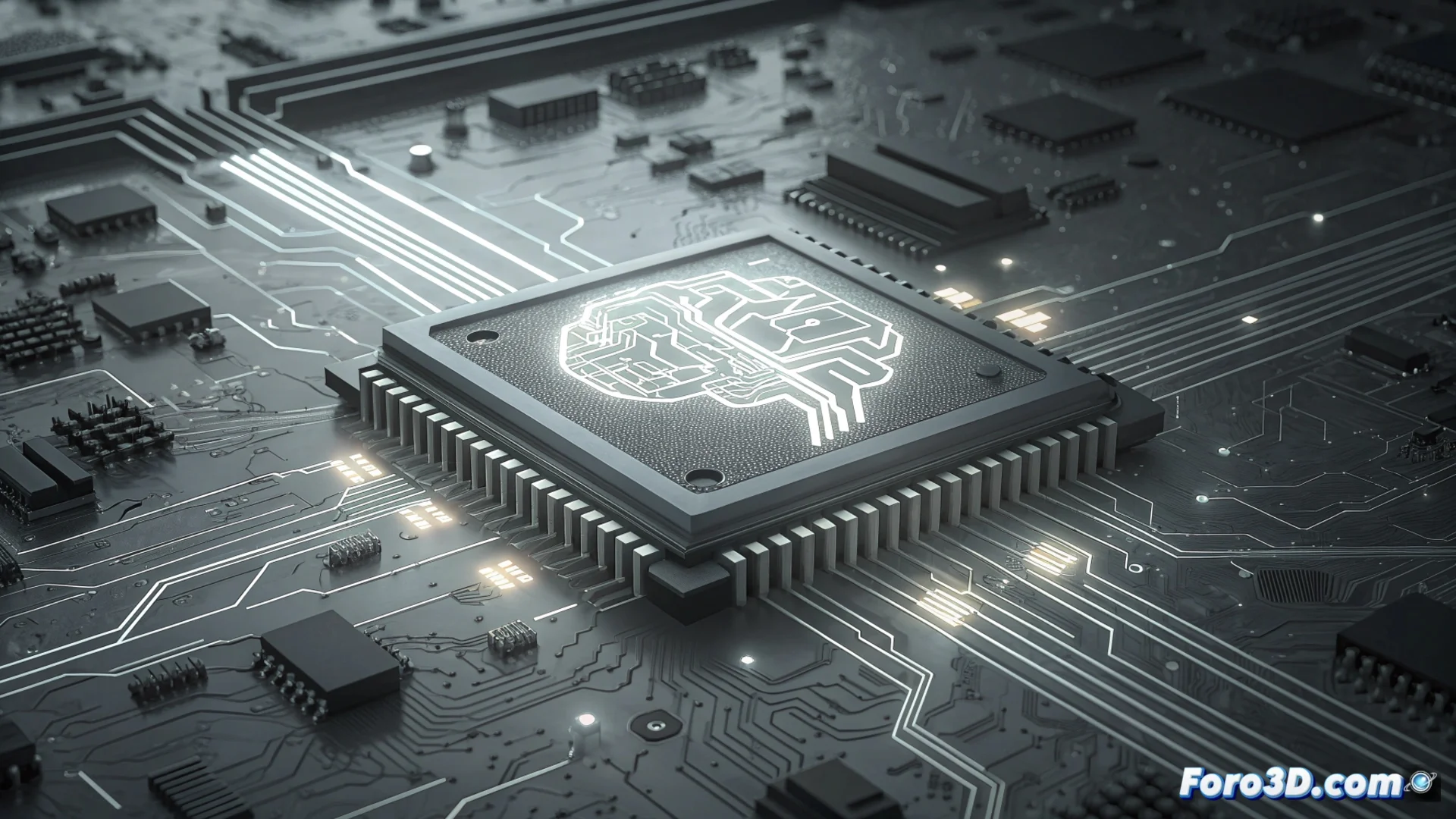
Brainchip Akida: a neuromorphic processor already on the market
Traditional computing faces limits in power and efficiency. Akida from Brainchip proposes a radical change: an architecture that directly emulates the functioning of biological neurons. This chip only activates its circuits when it receives a relevant stimulus, eliminating the constant consumption of clock-based systems. It is the key to bringing artificial intelligence to devices that must operate on battery for years autonomously. 🧠⚡
Architecture that operates with activity spikes
The core of Akida is a sparse neural network. Instead of processing continuous data streams, its artificial neurons remain in a resting state. They only generate a brief spike when the input signal exceeds a specific threshold, transmitting information instantaneously and discretely. This event-based computing model eliminates the need for a global clock that marks constant cycles, drastically reducing internal data movement, latency, and above all, energy consumption.
Key advantages of this approach:- Extreme efficiency: Energy is consumed only during the microseconds of a neuronal spike, not continuously.
- Low latency: The response is almost immediate, as there is no need to wait for a clock cycle to process the information.
- Local processing: Allows data analysis at the sensor itself, without sending information to the cloud.
Akida represents a paradigm shift: moving from thinking in data streams to thinking in discrete event spikes.
Practical applications at the network edge
This technology enables edge artificial intelligence, where devices perceive and decide for themselves. By executing neural network models directly on sensor hardware, privacy, reliability, and real-time response are achieved without constant internet connection.
Implemented use cases:- Computer vision: Security cameras that instantly recognize people, vehicles, or specific behaviors.
- Audio detection: Smart microphones that identify sounds like breaking glass, alarms, or keywords.
- Industrial monitoring: Sensors that analyze vibrations to predict machinery failures before they occur.
The future and the development challenge
Although Akida is already on the market and promises to revolutionize how devices interact with the world, its adoption implies a change for developers. Designing for this architecture requires building or adapting neural network models to operate with activity spikes, an approach different from traditional neural networks. However, the reward is a level of efficiency that allows integrating advanced AI capabilities in previously unthinkable places and devices. The path to truly autonomous and low-power computing is here. 🚀