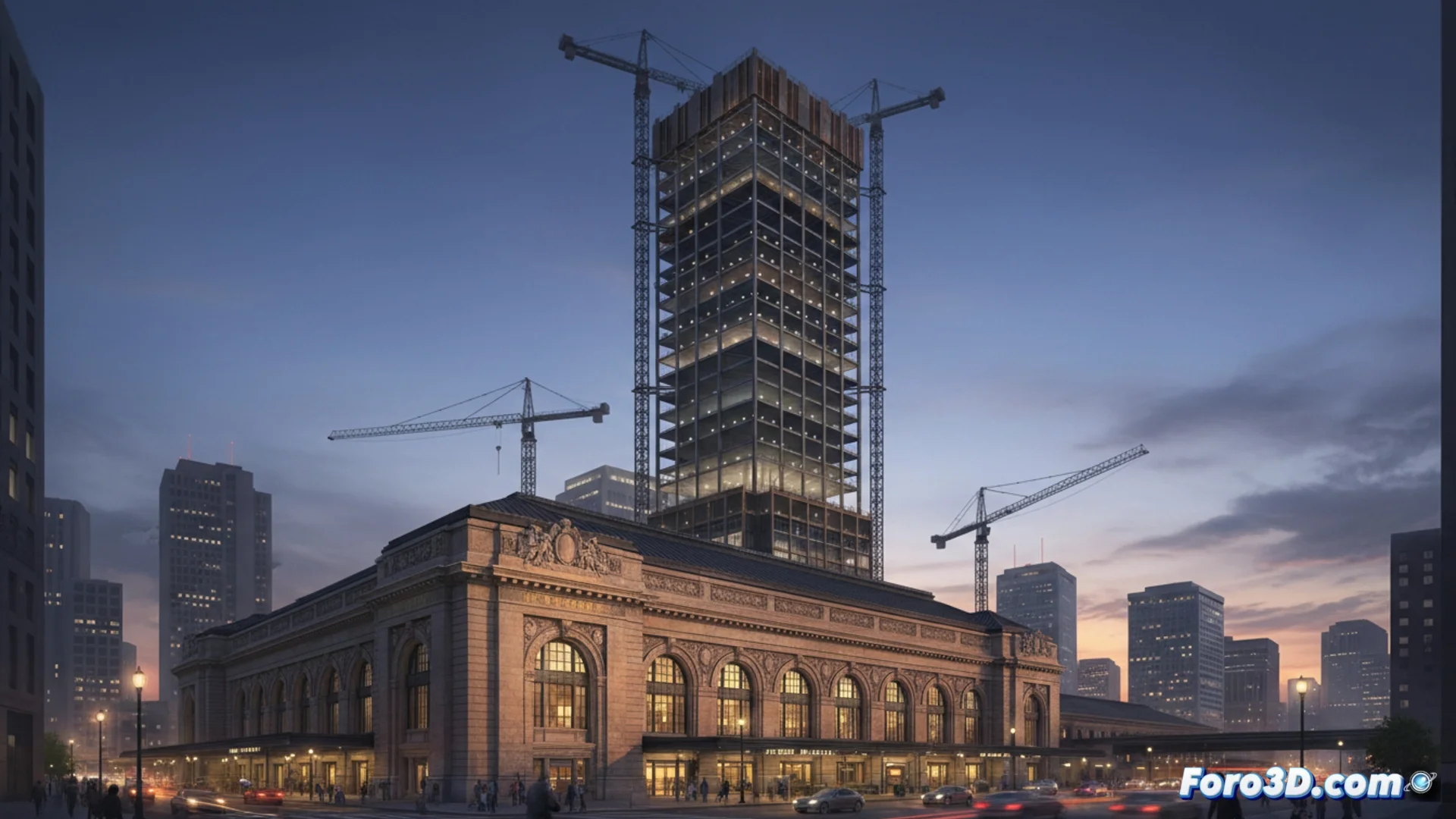
Boston's South Station Tower: a skyscraper in perpetual wait
In the heart of Boston, an ambitious plan seeks to superimpose a 51-story mixed-use tower over the iconic South Station train terminal. This engineering challenge, which aims to fuse the historic with the modern, has taken longer to develop than to build, weaving a complex urban history 🏗️.
A chronology marked by interruptions
The idea of building this skyscraper was conceived in the 1990s, but its materialization has been extraordinarily slow. Developers have had to navigate a maze of design reviews, municipal permits, and the constant search for funding. The biggest obstacle: executing the works without paralyzing one of the busiest train stations in the region, which has forced very specific work phases and slowed visible progress.
Key factors in the delays:- Extreme logistics: Building over a fully operational transportation infrastructure requires planning every move with millimetric precision.
- Fluctuating financing: Project progress depends directly on the economic climate and the ability to secure multi-billion-dollar investments.
- Design adaptations: Plans have evolved over decades to comply with new regulations and optimize available space.
Some neighbors joke that the tower is already a permanent part of the skyline, both in its future form and in its eternal "coming soon" state.
A future hanging by several threads
The final fate of the South Station Tower does not depend solely on finishing erecting its steel and glass structure. Its completion is intrinsically linked to the health of Boston's office real estate market and the persistence of its developers. Meanwhile, the building's half-raised skeleton looms over the financial district, a silent reminder of the complex challenges involved in renewing the urban fabric in such sensitive spaces.
Elements that will define its conclusion:- Commercial demand: The need for high-end office space in the area must justify the remaining investment.
- Operational coordination: Each construction phase must be coordinated meticulously with train schedules to avoid affecting thousands of daily travelers.
- Investors' willingness: Confidence in the long-term project is crucial to unlocking the necessary funds.
A symbol of urban patience
The South Station Tower has become more than a construction project; it is a thermometer of the patience, planning, and economy of a great city. Its slow rise reflects the delicate balance between innovating and preserving, between the ambition for growth and logistical and financial realities. Its eventual completion, always on the horizon, promises to redefine a crucial node in Boston, but until then, it remains the great wait of the skyline ⏳.