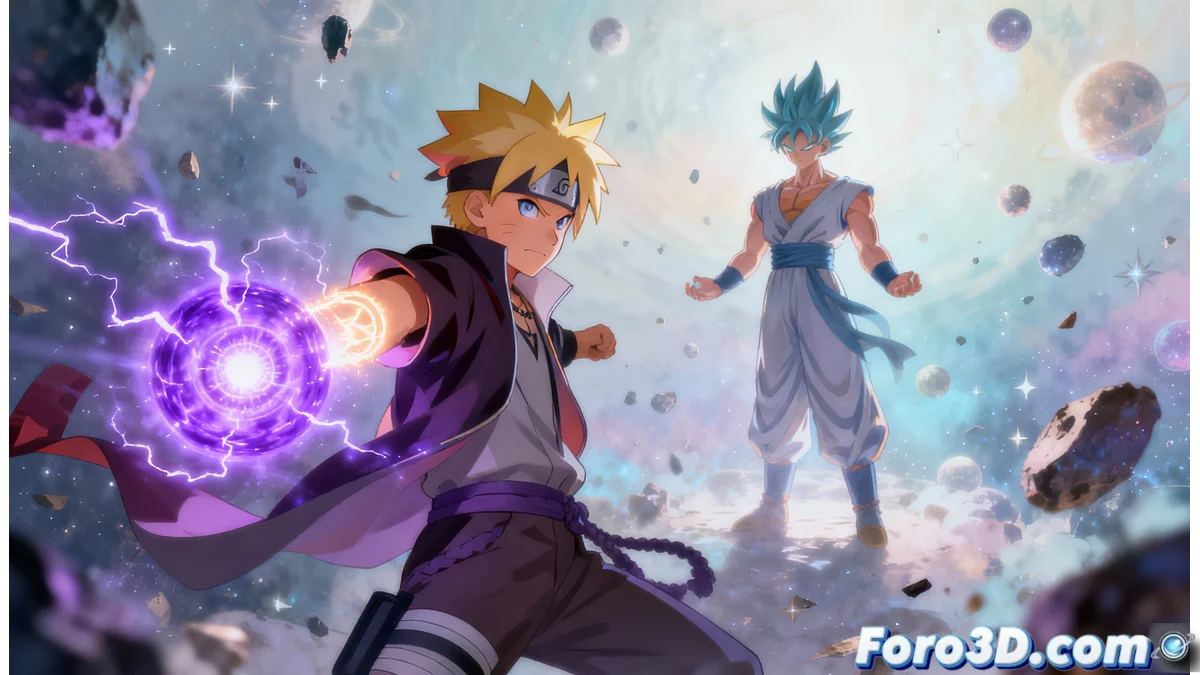
Boruto vs Dragon Ball Super: Analysis of the Evolution of Modern Shonen
The landscape of contemporary shonen is defined by a fascinating dialectical duel between two titans: Boruto: Naruto Next Generations and Dragon Ball Super. While the latter often navigates the familiar waters of scalable power and intergalactic tournaments, the former builds upon the foundations of its legacy to weave a plot that prioritizes strategy, emotional consequence, and a deeper philosophical exploration. This is not a mere popularity debate, but a reflection on the direction of the genre 🌀.
The Essence of the Conflict: Villains with Narrative Depth
The true battle is fought in the conception of antagonism. Dragon Ball Super presents us with cosmic power entities, like Jiren or the Gods of Destruction, whose threat is monumental but whose motivations often revolve around abstract concepts like pride or duty. On the opposite side, Boruto introduces Kara and the Otsutsuki, villains whose objectives are intrinsically linked to the very essence of the ninja world: chakra and forced biological evolution. This connection creates a personal and existential conflict, where the lines between technological progress and moral perdition blur, offering a layer of complexity that transcends mere physical combat.
Key Differences in Antagonist Construction:- Motivation: In DBS, it is often external (fight, destroy, rule). In Boruto, it is internal and philosophical, tied to the essence of the world and its inhabitants.
- Connection to the Protagonist: Boruto's villains, like Kawaki or Code, are directly linked to the hero's destiny and identity, creating more intimate drama.
- Scale of the Threat: While one threatens universes, the other threatens the very nature of humanity and the ninja system, a closer and more reflective perspective.
"The greatness of a hero is defined by the depth of his villain. Boruto understands that a complex enemy forges a memorable conflict, not just a power spectacle." - Shonen narrative analysis.
The Foundations of Power: Rules, Limits, and Personal Costs
Another decisive front is the internal coherence of the power system. Dragon Ball Super, by tradition, has elevated fights to a scale where reality is toyed with, an impressive visual spectacle that, however, can normalize the apocalyptic and reduce narrative tension. Boruto, on the other hand, while introducing high-level elements like Karma or ninja scientific technology, keeps one foot firmly anchored in tactics, teamwork, and, crucially, personal cost. Karma is not a simple booster; it is a curse that consumes the bearer's identity, a constant dilemma that adds dramatic weight and narratively limits the character, forcing creative solutions.
Pillars of the Power System in Boruto:- Defined Consequences: Power always has a price, whether physical, mental, or spiritual (e.g., Karma wear, Sage Mode risk).
- Tactical Anchoring: Despite the scale, battles usually require strategy, information, and cooperation, not just energy explosions.
- Clear Limits: The universe establishes rules (chakra, seals, genetics) that characters cannot arbitrarily transcend, giving credibility to victories and defeats.
Conclusion: Beyond Scale, Narrative Substance
In short, the debate between these two franchises symbolizes two paths for modern shonen. On one hand, Dragon Ball Super offers pure epic, the adrenaline of the incommensurable, and the nostalgia of a proven formula. On the other, Boruto represents a conscious evolution of the genre, betting on a narrative where character growth and the consequences of their actions are as important as their power level. It is not about which is better in absolute terms, but recognizing how Boruto is building on the legacy to explore more complex themes, demonstrating that sometimes, the most intimate and morally ambiguous conflict of a teenager in his village can resonate with a depth that rivals galaxy-shattering battles 🤔.