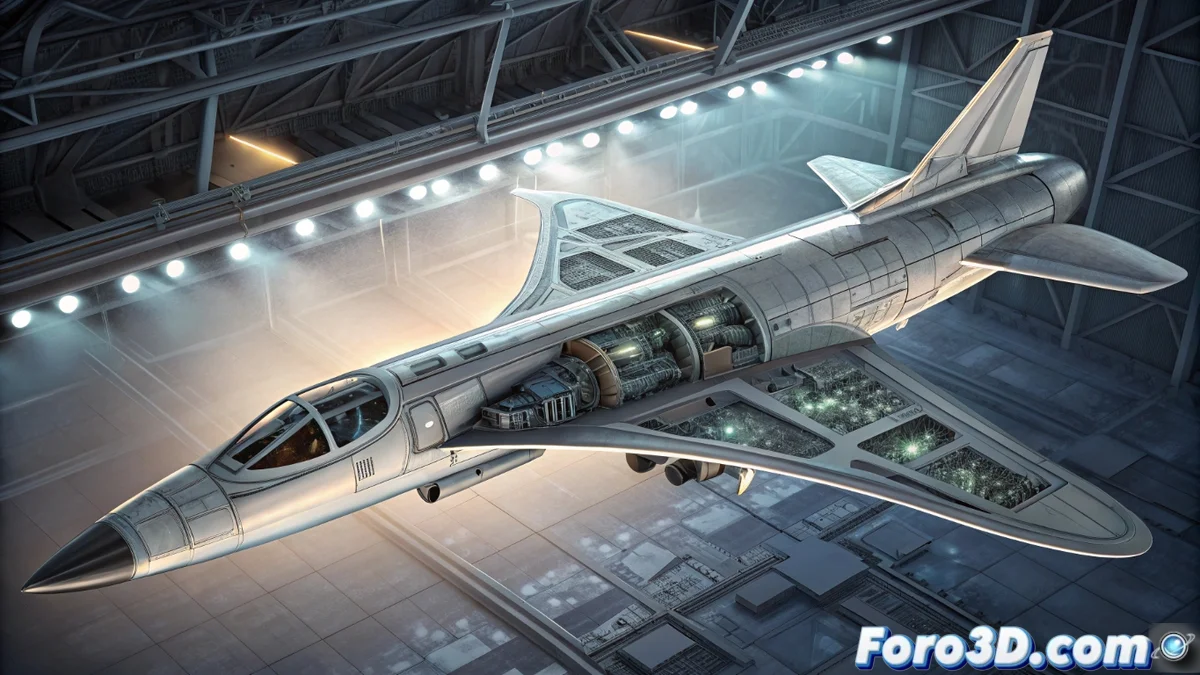
Boom Supersonic's XB-1 Incorporates 3D-Printed Titanium Parts by Velo3D
The race for commercial supersonic aviation takes a technological leap with the XB-1 prototype. This demonstrator, developed by Boom Supersonic as a precursor to the future Overture passenger aircraft, integrates hundreds of components manufactured using titanium 3D printing, a key collaboration with the specialized company Velo3D. This synergy enables the realization of previously impossible designs, marking a milestone in aerospace manufacturing. ✈️
Design and Manufacturing of Critical Components
Additive manufacturing technology is used to create essential aircraft parts, such as elements of the environmental control system and complex fluid ducts. These intricate geometries are optimized to withstand the extreme conditions of supersonic flight: high temperatures and significant pressures. The precision of the process ensures superior performance and perfect integration into the XB-1 structure.
Key Advantages of Additive Design:- Weight Reduction: 3D printing enables the creation of lightweight and optimized titanium structures, eliminating excess material that does not contribute to structural integrity.
- Geometric Freedom: Facilitates the manufacturing of internal shapes and complex channels that are unachievable with traditional machining or casting methods.
- Functional Integration: Multiple pieces can be consolidated into a single printed component, improving reliability and simplifying final assembly.
Metal 3D printing is redefining the limits of what we can design and fly, especially for applications demanding maximum efficiency and safety.
Impact on Performance and Production
The adoption of titanium 3D printing goes beyond design, directly impacting the production phase and the aircraft's capabilities. This technique provides exceptional durability and precision, crucial for overcoming the aerodynamic challenges of supersonic flight speeds. Additionally, it optimizes the workflow, accelerating prototype and initial series manufacturing while minimizing costs associated with errors and material waste.
Operational and Development Benefits:- Cost Control: Reduces time and wasted material in manufacturing critical parts, maintaining project economics.
- Development Acceleration: Enables rapid design iterations and on-demand production of specific components.
- Improved Reliability: Parts printed with controlled parameters offer consistent and predictable quality, combining innovation with operational reliability.
A Curious Technological Contrast
While industrial 3D printing pushes the boundaries of aviation with the XB-1, there is a striking contrast in the domestic realm. Some enthusiasts attempt to replicate parts with home 3D printers, though results rarely exceed the category of model or conceptual prototype. This duality highlights the gap between consumer technology and its professional and certified application in high-risk industries, where precision and materials are determinant for an aircraft not only to take off, but to safely break the sound barrier. 🚀