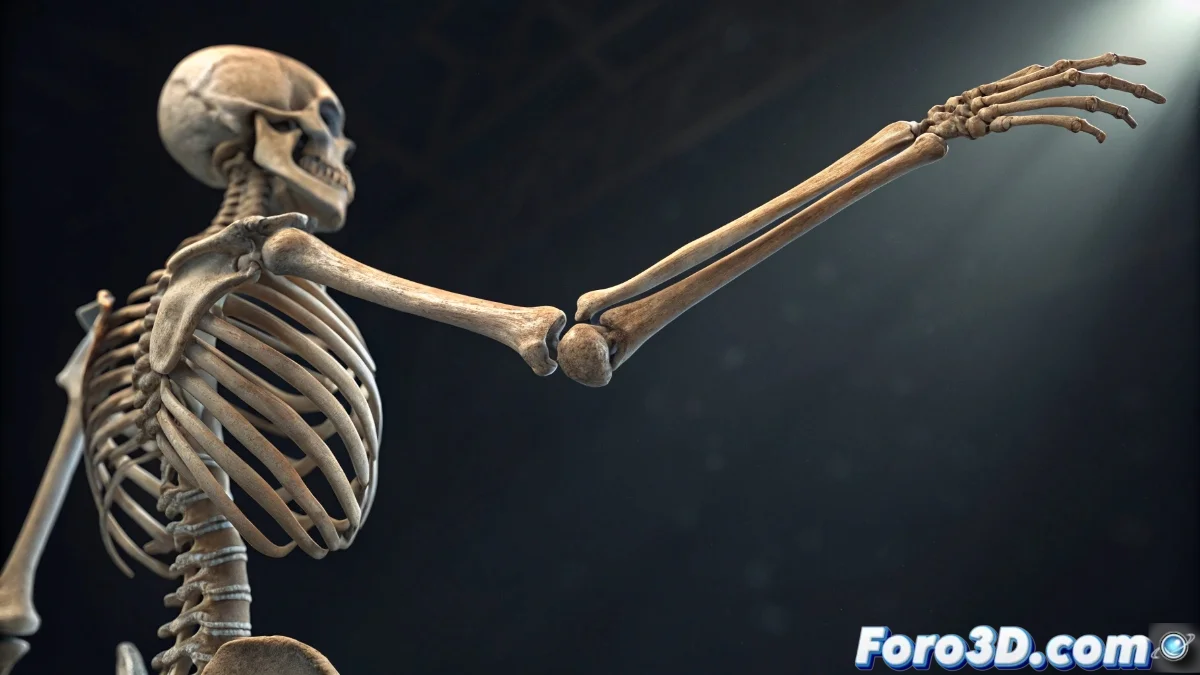
Bone Control with Constraint Bone in Unreal Engine 5
In Unreal Engine 5, the Constraint Bone tool offers detailed control over bone movement, allowing the establishment of rotation and translation constraints that mimic the natural limitations of organic or mechanical skeletons. This is crucial for developing fluid and believable animations, avoiding poses that break user immersion. 🦴
Setting Up Constraints on the Skeleton
To apply these constraints, the target bone is selected in the skeleton | rig and its parameters are adjusted in the details panel. Developers can define rotation limits on the X, Y, and Z axes, controlling the allowed range of rotation. Optionally, translation constraints can be enabled to simulate joints with restricted linear movement, which can be verified in real-time in the viewport. 🔧
Key Steps for Configuration:- Select the bone in the skeleton and access its animation properties
- Adjust rotation limits per axis to control angular movements
- Optional configuration of translation for joints with linear displacement
With Constraint Bone, bones stop moving like at an unsupervised party and become precise, controlled elements.
Integration with Animation Systems
This functionality is combined with systems like control | rig and animation state machines to achieve smooth transitions between poses. When integrated with inverse kinematics, it ensures that automatic movements respect the character's physical rules, preventing errors like elbows bending unnaturally. 🎭
Benefits of Integration:- Creation of realistic animations with smooth transitions between states
- Prevention of impossible postures through defined constraints
- Overall improvement in the quality of games and visual simulations
Practical Applications and Best Practices
Using Constraint Bone not only prevents excessive rotations but also optimizes animators' workflow, allowing them to focus on creativity without worrying about technical failures. It is ideal for human characters and mechanical creatures, where realism depends on movements within logical physical parameters. 💡