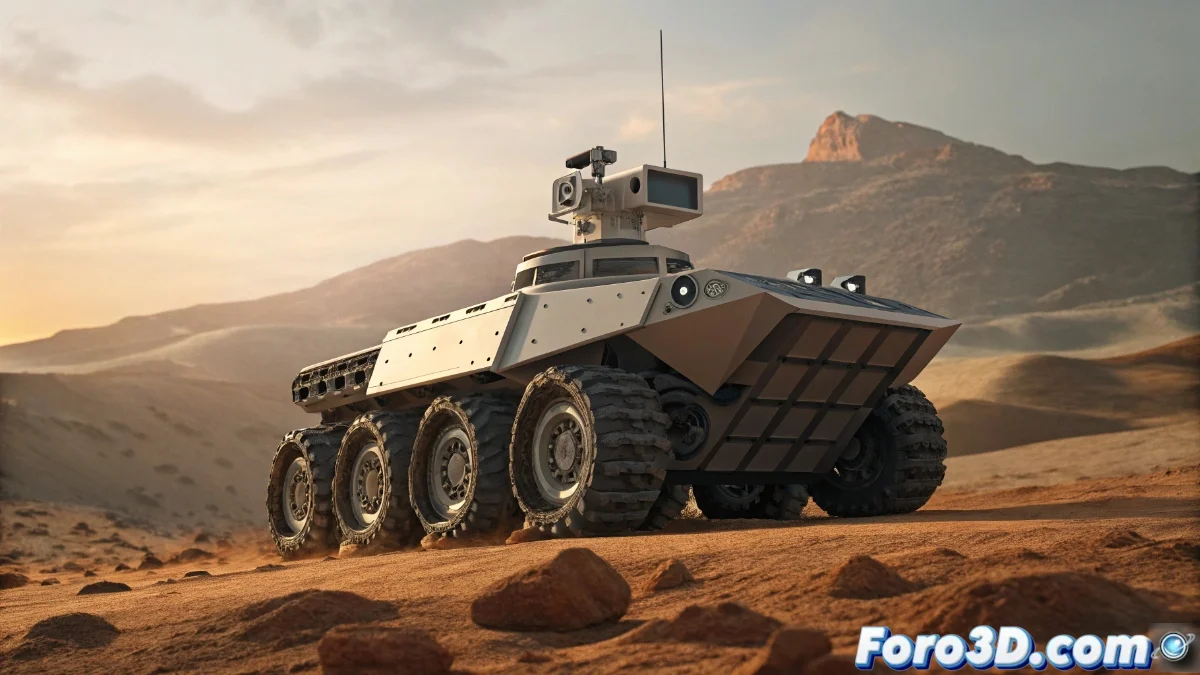
Boeing and 3D Printing in Autonomous Ground Vehicles
Although Boeing is globally known for its dominance in the aerospace industry, its technological expertise expands into the development of unmanned ground vehicles, where 3D printing of polymers and metals constitutes a fundamental pillar. This innovation allows the corporation to manufacture ultralight structural components and sensor housings with millimeter precision, elements crucial for maximizing the operational performance and autonomy of these systems in military and advanced logistics contexts. 🚀
Strategic Applications in Ground Autonomous Mobility
In the specific field of autonomous ground vehicles, Boeing employs additive manufacturing to produce parts that demand excellent mechanical strength and minimal weight, such as structural frames and protections for electronic devices. These components are vital in complex operational scenarios, where durability and energy efficiency become indispensable requirements. The technology not only enhances the functional capabilities of UGVs but also significantly reduces manufacturing costs by minimizing material waste and streamlining assembly processes. 💡
Key Advantages of Additive Manufacturing:- On-demand production of complex parts with intricate geometries
- Rapid customization according to specific operational requirements
- Reduction of development times and prototyping cycles
"The integration of 3D printing into our autonomous vehicle developments represents a paradigm shift in how we approach defense engineering" - Senior Engineer at Boeing
Impact on Advanced Robotic Engineering
The incorporation of 3D printing into robotic vehicle engineering enables Boeing to implement innovations agilely, adapting to the dynamic demands of the global market. Through the use of advanced materials, including specialized metal alloys and high-performance polymers, the company ensures its UGVs can operate in extreme conditions without sacrificing their operational agility or payload capacity. This approach not only consolidates Boeing's competitive position in the defense sector but also lays the groundwork for future advances in ground autonomous mobility. 🔧
Innovative Materials Used:- Titanium and aluminum alloys for critical structural components
- Carbon fiber reinforced composite polymers
- Heat-resistant materials for electronic protection
Future Perspectives and Final Reflections
It is paradoxical to consider that while Boeing builds aircraft that cross continents, it simultaneously designs ground robots whose scale could make them disappear in any user's garden due to a simple navigation error. This technological duality demonstrates the corporation's versatility and the transformative potential of 3D printing applied to different scales and purposes. The future of ground autonomous mobility will undoubtedly be shaped by these developments, where customization, efficiency, and speed of implementation will be the fundamental pillars. 🌍