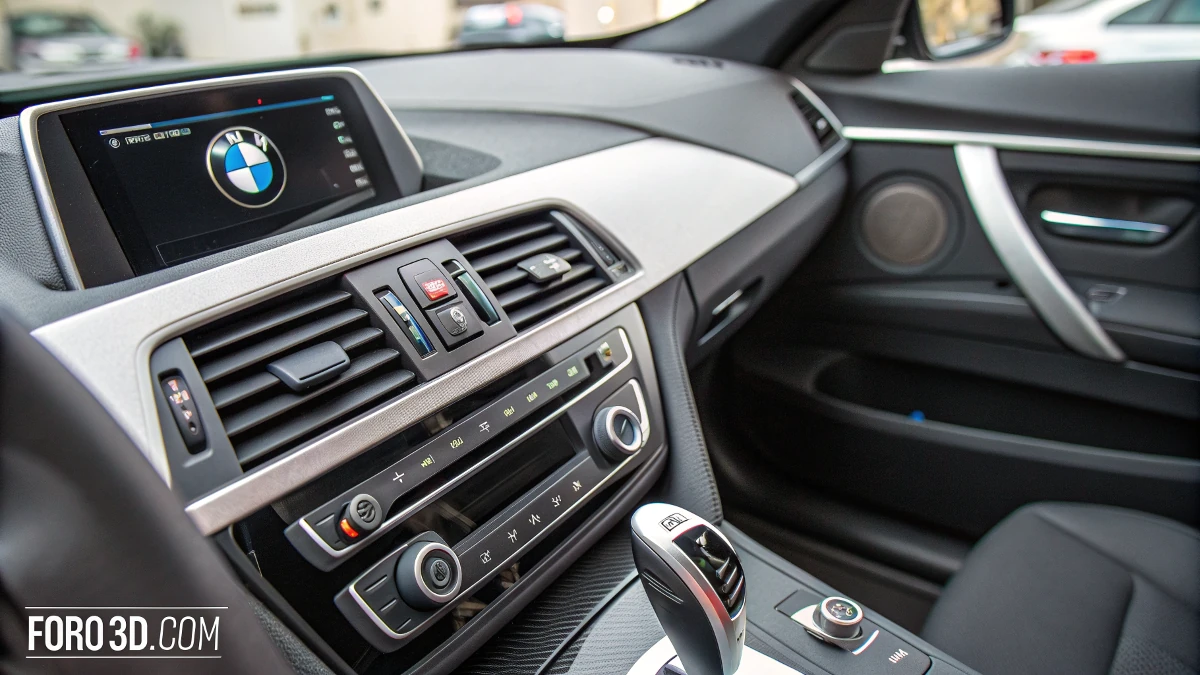
BMW has taken a major step towards the future of car manufacturing by using 3D printing to produce one of the most important parts of its vehicles: the center console. This component, which is normally manufactured using several materials and in different stages, is now created as a single piece thanks to an innovative technology that uses large-format 3D printing.
The Technology Behind the 3D Printed Center Console
The 3D printed center console from BMW is a clear example of how additive manufacturing can simplify processes and make them more sustainable. Instead of using expensive molds and working with small parts that are later assembled, a single piece is now created that includes everything needed, such as air ducts, something that previously required several additional steps. This advance not only reduces production time but also the environmental impact, by decreasing material use and energy consumption.
An Efficient and Sustainable Design
The part is manufactured using special materials that are not only resistant but also lighter than traditional parts. In fact, the printed center console weighs 30% less than previous versions, which translates into an improvement in the vehicle's energy efficiency. Furthermore, a material that includes 40% recycled carbon fiber is used, contributing to the sustainability of the process.
A Look at the Future of Cars
This advance is just the beginning. BMW plans to produce thousands of these center consoles each year for its car model that will hit the market in 2027. Besides being faster and cheaper to produce, these parts can be designed in a more complex way and with customized features, opening up a range of possibilities for the creation of new car components.
Impact Beyond the Automobile
Although this change begins in the automotive industry, what is happening at BMW could transform many other areas of production, as 3D printing technology could be applied to many more parts and in different sectors. This includes everything from construction to the manufacturing of daily consumer products, all with less waste and a greater focus on sustainability.
“Additive manufacturing has the potential to completely transform the automotive industry, reducing costs and production time while improving energy efficiency.”