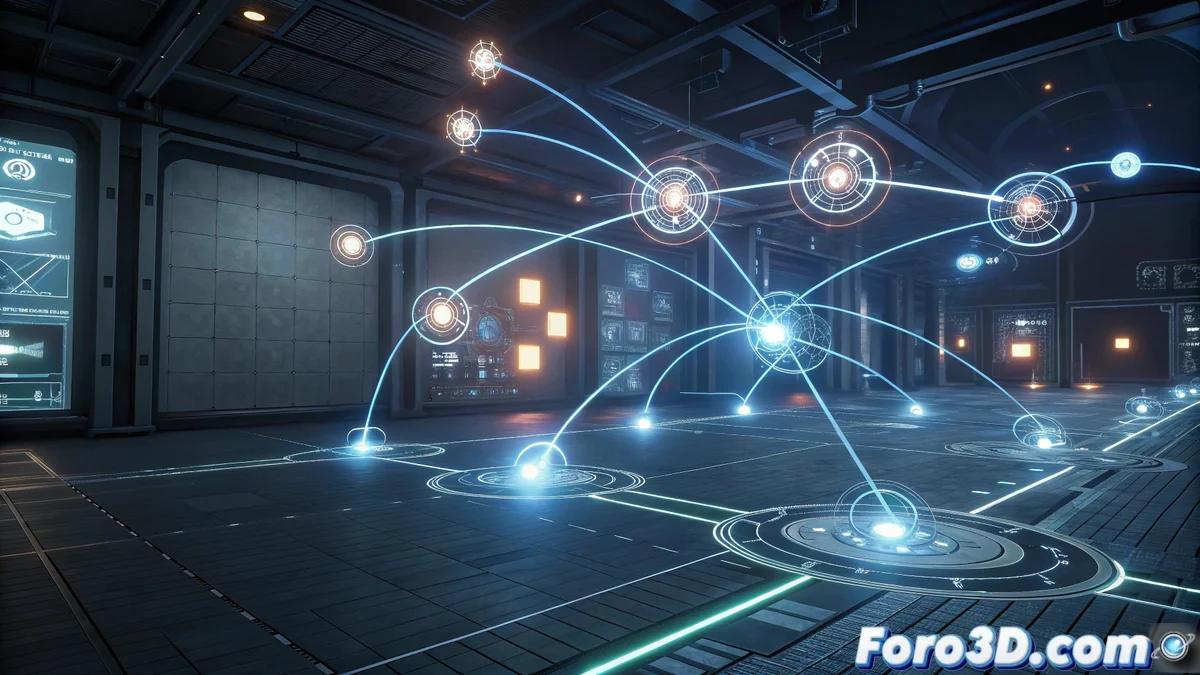
Blueprint in Unreal Engine: Visual Programming for Non-Technical Creators
The Unreal Engine development engine incorporates Blueprint as its revolutionary node-based visual scripting system, allowing the construction of complete interactive logic without writing a single line of traditional code. This visual methodology transforms the creative workflow 🎨.
Democratization of Game Development
The intuitive Blueprint interface removes technical barriers for artists and designers, who can implement complex mechanics through visual connections. This accelerates production cycles and fosters experimentation throughout all project phases.
Key Advantages for Multidisciplinary Teams:- Artists implement interactive visual effects without dependency on programmers
- Designers configure AI behaviors and mission systems using visual logic
- Rapid prototyping that maintains creative team cohesion
Blueprint represents the natural evolution of development, where the visual becomes an accessible programming language
Symbiosis with C++ and Real-Time Efficiency
Although it functions autonomously, Blueprint integrates seamlessly with native C++ code, allowing the creation of custom nodes for specific functionalities. Projects can strategically combine both approaches.
Mixed Implementation Strategies:- Use Blueprint for high-level logic and content configuration
- Implement critical systems in C++ that require maximum performance
- Leverage the engine's optimized bytecode compilation
Visual Craftsmanship in Complexity
Blueprint specialists often develop nodophilia, creating networks of connections so elaborate they rival the complexity of the most advanced textual code. These visual structures demonstrate that graphical programming can achieve levels of sophistication equivalent to traditional languages, generating execution flows that are true works of functional art 🕸️.