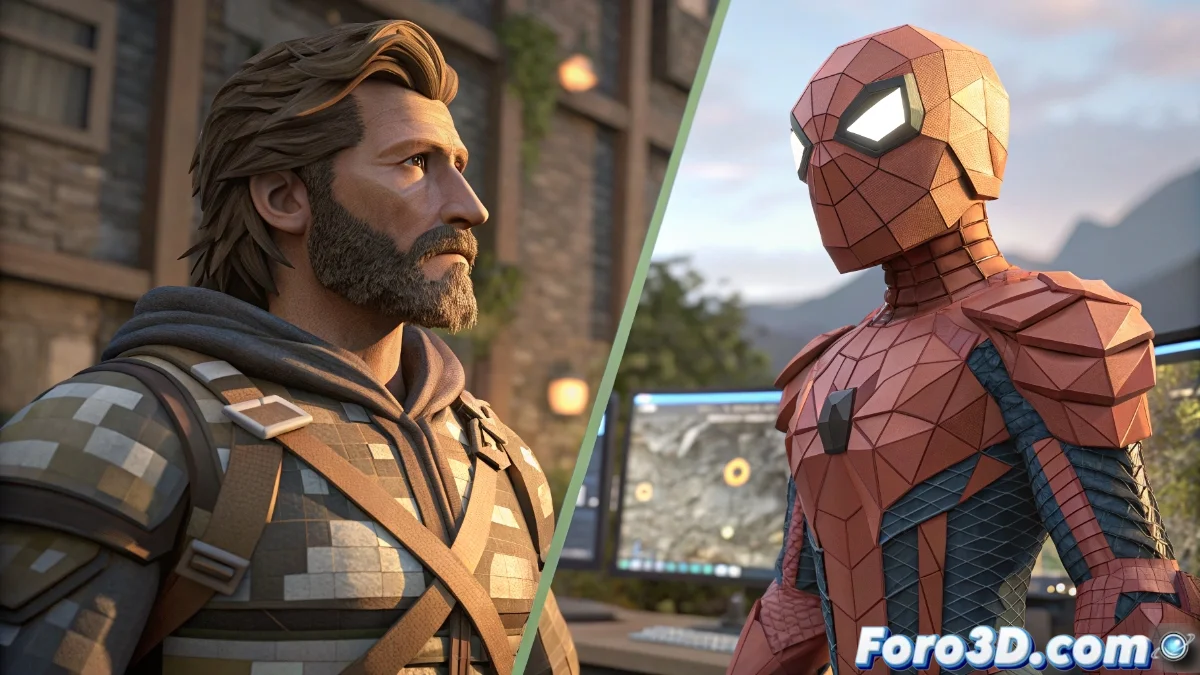
Blockbench vs Professional Software: Comparative Analysis for Low-Poly Modeling
In the universe of 3D modeling, there are tools designed for different levels of demand. Blockbench emerges as a free and specialized solution for voxel and low-poly creation, while software like Maya and 3ds Max represent the professional standard with expanded capabilities 🎯.
Strengths of Blockbench in Specific Environments
The main advantage of Blockbench lies in its simplified approach for projects requiring agility and a particular aesthetic. Its intuitive interface and basic tools allow beginner users to generate functional content quickly, especially in contexts like Minecraft or video games with a voxel style 🎮.
Highlighted Features:- Integrated UV texturing for accelerated workflows
- Basic sculpting tools ideal for low-poly
- Optimized export for game engines
"Blockbench democratizes 3D modeling for specific communities, although it encounters clear limits in advanced production"
Limitations Compared to Professional Solutions
When comparing Blockbench with Maya or 3ds Max, the technical differences become evident. Professional software offers granular control over meshes, complex animation systems, and rendering capabilities that far surpass the basic options of Blockbench 💼.
Aspects Where Blockbench Shows Deficiencies:- Advanced retopology and handling of dense meshes
- Professional rigging and animation systems
- Integration into established production pipelines
Choice Based on Project Context
The decision between Blockbench and professional software depends entirely on the project scope. For rapid prototypes, Minecraft assets, or simple low-poly models, Blockbench proves highly efficient. However, in productions requiring refined detail, complex animations, or integration with multidisciplinary teams, Maya and 3ds Max become indispensable tools ⚖️.