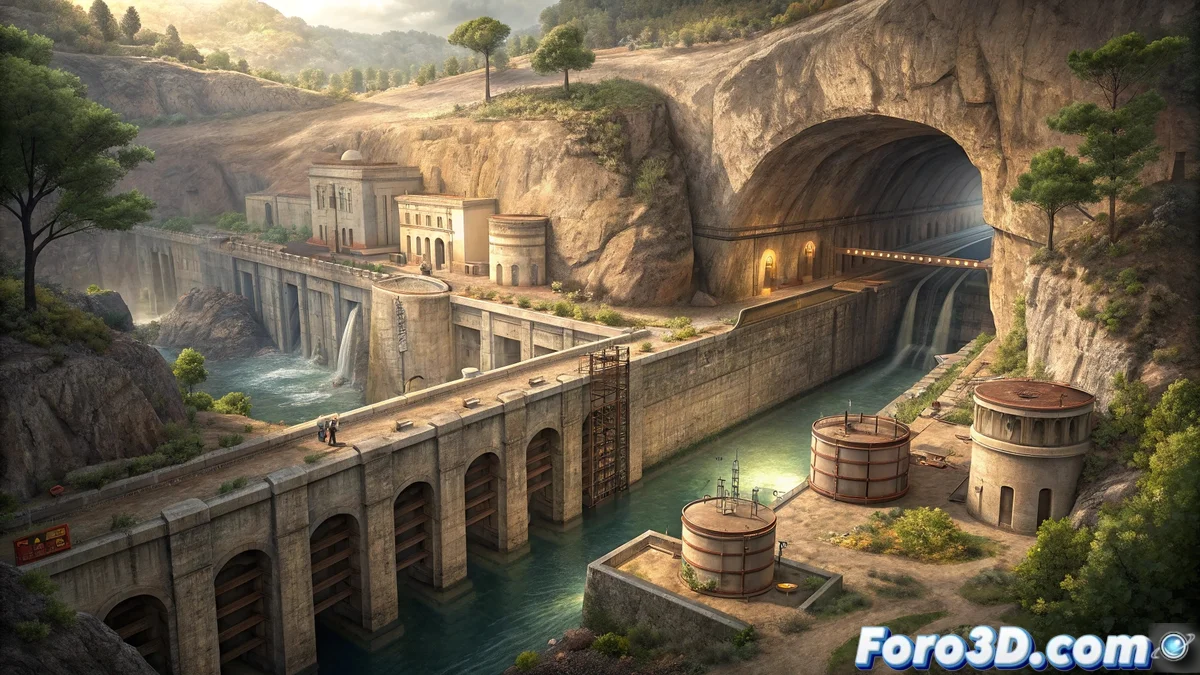
When Water Hides Beneath Our Feet
A surprising discovery has emerged in Valencia: the largest reservoir in the region is completely hidden underground and currently unused. 💧 This underground infrastructure, which has gone unnoticed for decades, represents a water resource of great importance that could have been key in water management for the city and its surroundings. The structure includes channels, gates, and deposits that still retain their original design, although vegetation and the passage of time have marked some areas, creating a time capsule of hydraulic engineering.
For 3D artists and visualizers, this forgotten reservoir offers a fascinating opportunity to explore techniques for recreating infrastructure in Blender. 🏗️ The digital reconstruction of this hydraulic system allows not only documenting its design and dimensions, but also speculating on its original operation and current potential. The combination of precise structural modeling, water simulation, and environmental integration can reveal the hidden complexity beneath the Valencian surface.
A digital window into the hydraulic engineering that time forgot but the earth preserved.
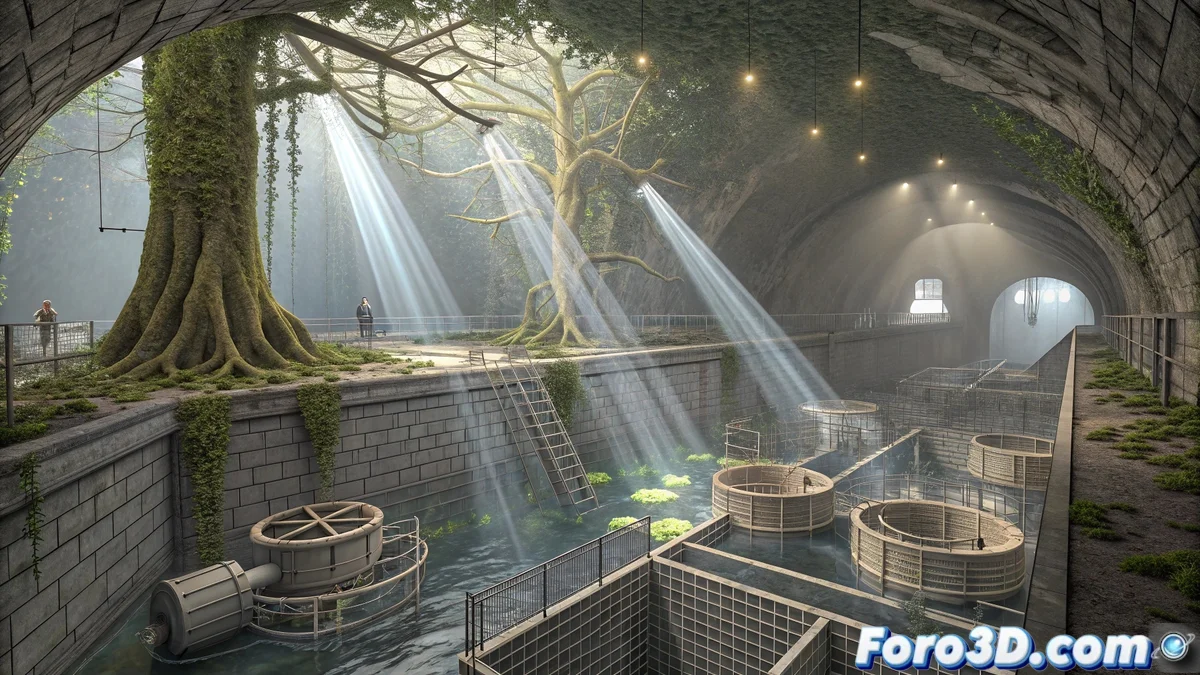
Modeling Techniques for Hydraulic Infrastructure
The recreation in Blender begins with research on historical hydraulic engineering references. 📐 Setting units in meters is crucial to maintain realistic proportions of channels, deposits, and gates. The use of Boolean modifiers creates connections and gaps between underground chambers, while Array and Mirror modifiers allow efficient duplication of repetitive structural elements. The addition of details like beams, stairs, and control mechanisms adds authenticity to the model.
The essential elements for an authentic recreation include:
- Main deposits with realistic storage capacities
- Channel system and distribution tunnels
- Gates and valves with operational mechanisms
- Auxiliary infrastructure such as walkways and control systems
Environmental Integration and Abandonment Effects
Integration with the environment is crucial to convey the hidden nature of the reservoir. 🌿 The application of particle systems and Geometry Nodes distributes vegetation that has penetrated from the surface, while Displace modifiers simulate sediment accumulation and structural wear. Aged concrete materials with roughness and moisture maps create believable surfaces, and the use of water volumes with Subsurface Scattering recreates the liquid presence that could still fill these abandoned deposits.
The funny thing is that we have Valencia's largest water reserve right under our feet and no one is using it… while we keep hearing complaints about drought and seeking complex solutions when the answer could literally be under our heels. 👞 A hydrological irony that demonstrates how sometimes the simplest solutions remain hidden not because of their complexity, but because of our forgetting what already exists and awaits rediscovery and appreciation.