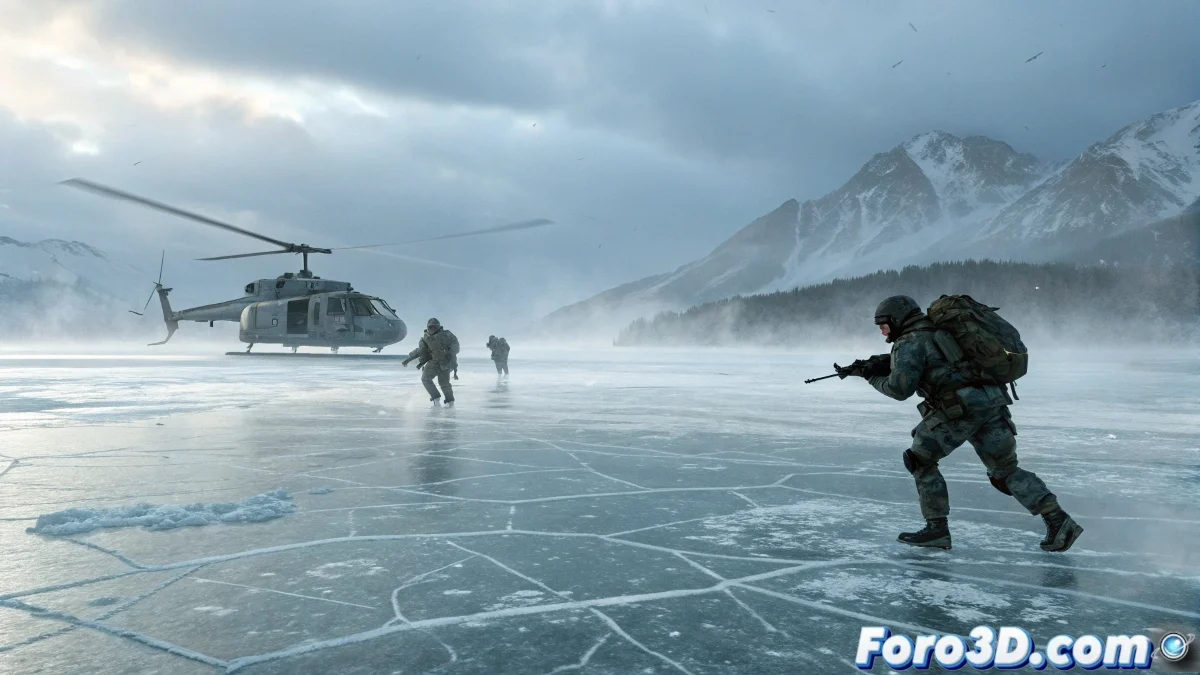
When the Cold Goes Digital ❄️💻
In Black Crab, Nordisk Film Shortcut demonstrated that the best visual effects are the ones you don't notice. Between ice that looks real (but is CGI) and explosions that aim to terrify rather than impress, this breakdown reveals how a frozen apocalypse was built from subtlety.
The Art of Freezing Pixels
70% of the frozen landscape is digital:
- Frozen surfaces in Houdini with procedural fracturing
- Dynamic fog that reacts to character movement
- Snow particles rendered in Arnold for maximum realism
Key Fact: "The digital ice needed imperfections: dirty cracks, trapped bubbles, and melted areas. Perfection looked fake," explains the team.
Effects Hiding in Plain Sight
Ghost Vehicles
- 3D modeling of armored vehicles and helicopters
- Texturing with extreme weathering in Substance
- Integration with camera tracking in Nuke
Contained Explosions
- Simulations in Houdini with realistic physics
- Dense smoke and low performance (less is more)
- Shockwaves adjusted frame by frame
Recreate the Cold in 3ds Max
Alternatives for foro3d:
- V-Ray/Arnold - Icy lighting and ice shaders
- TyFlow - Snow and atmospheric particles
- Substance Painter - Eroded ice textures
- FumeFX - For realistic explosions
Tip: Use render elements to control fog and depth in post-production.
The Irony of the Winter VFX Artist
As the breakdown perfectly summarizes: "We spent weeks making the audience feel cold... while rendering with the windows open because the GPUs were overheating the studio". But when you see viewers instinctively bundle up, you know your digital ice is working. ☃️
"In realistic VFX, if no one asks 'was this CGI?', then you did it perfectly... even if no one knows it." - Anonymous Nordisk artist.
</article