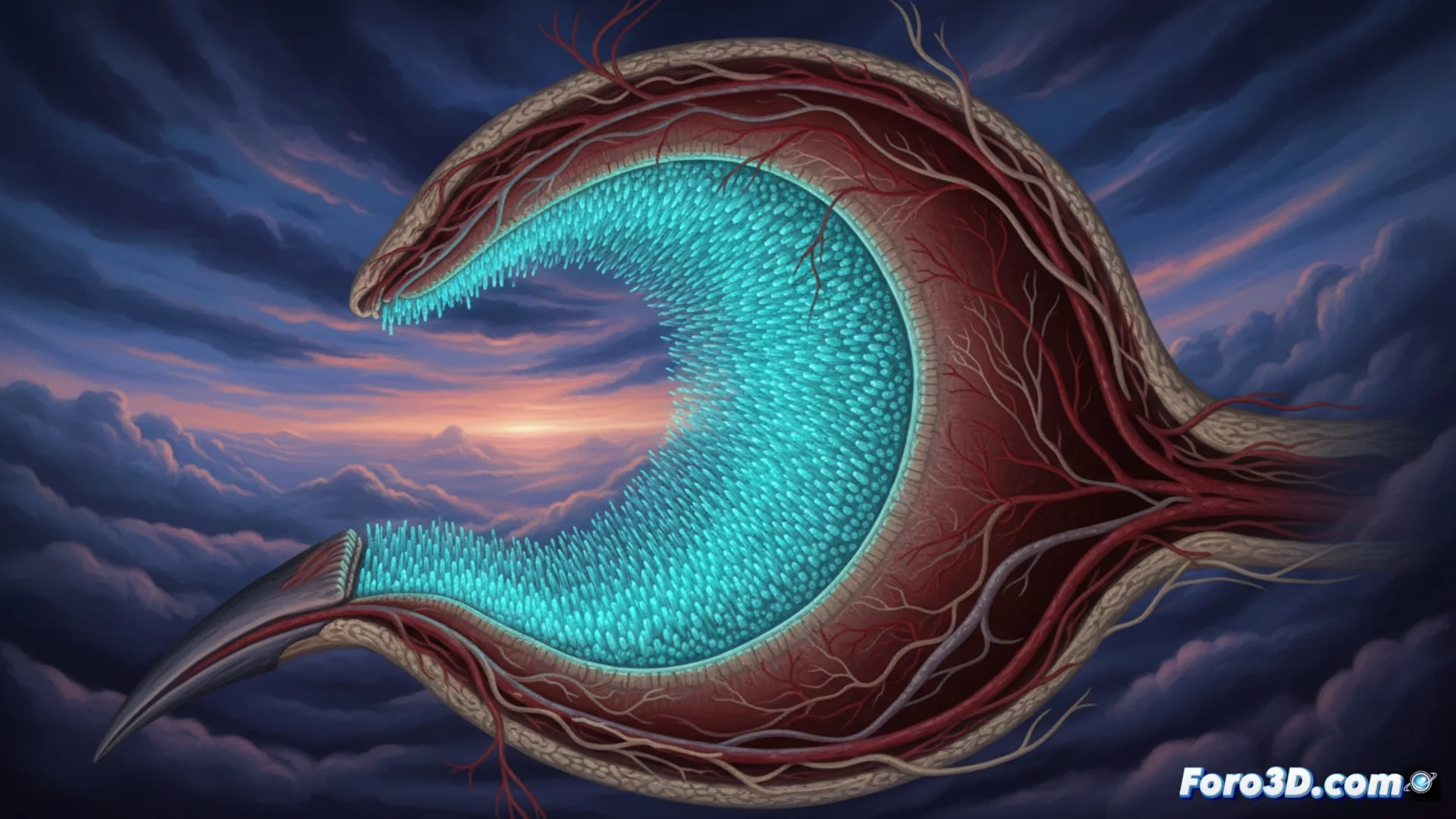
Bird retinas operate without oxygen and how it works is discovered
A new scientific study has discovered a fascinating process: the retina of some birds can continue functioning for several minutes in the total absence of oxygen. This mechanism allows them to maintain vision in environments with extremely low oxygen levels, such as those encountered when flying at high altitudes. 🦅
The metabolic secret behind vision in hypoxia
Researchers analyzed retinal tissue from chickens and quails to understand this phenomenon. The key lies in the fact that the photoreceptor cells of these birds can switch to an anaerobic metabolism mode. Instead of relying on oxygen to produce energy, these cells rapidly consume glucose reserves stored as glycogen, through a process called anaerobic glycolysis.
Characteristics of this unique mechanism:- Metabolic switch: The cells shift from aerobic metabolism to one that does not require oxygen.
- Energy source: They use stored glycogen to generate ATP quickly.
- Limited duration: It provides enough energy for the retina to operate temporarily during the hypoxia episode.
Understanding how birds protect their vision without oxygen opens a pathway to imitate this process in human medicine.
Potential applications in human health
This discovery is not just a biological curiosity. It has direct implications for medicine, particularly in ophthalmology. Understanding this process could inspire new ways to protect the human retina when it suffers from a lack of oxygen, a condition known as ischemia.
Possible areas of medical impact:- Ocular strokes: Therapies could be developed to minimize damage during an ischemic event in the eye.
- Cell protection: Learning from the bird mechanism to safeguard human retinal cells in critical situations.
- Ongoing research: Scientists continue to explore how to translate this biological knowledge into practical clinical applications.
A final perspective on animal adaptation
This study underscores the incredible adaptations that have evolved in the animal kingdom. The next time you see a bird staring intently, it might be leveraging this surprising physiological mechanism to perceive its surroundings clearly, even when holding its breath is a necessity. Nature continues to offer valuable lessons for science and technology. 👁️🔬