Biomimetics in 3D Printing: How the Mosquito Revolutionizes Additive Manufacturing
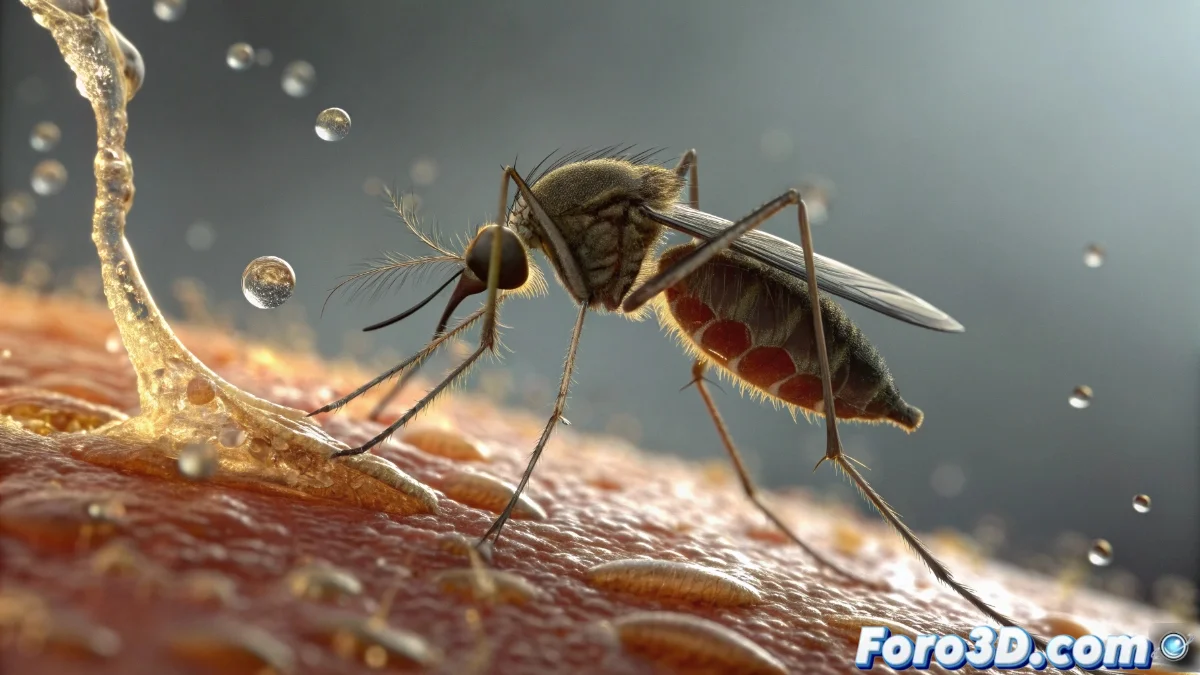
3D printing is experiencing a silent revolution thanks to a pioneering study from Harvard University that has unraveled the secrets of the mosquito's feeding mechanism. These small insects possess an extraordinarily efficient micro-needle system that pierces tissues with minimal force and maximum precision, a principle that researchers have masterfully adapted to develop innovative printing nozzles. This biomimetic approach is enabling the fabrication of complex structures with unprecedented resolutions, opening unsuspected horizons in regenerative medicine and microelectronics 🦟✨
The Art of Micro-Perforation Applied to Manufacturing
The key to the breakthrough lies in the mosquito's mouth structure, composed of multiple elements that work coordinately to achieve nanometric precision in tissue penetration. Engineers have successfully replicated this sophisticated design using multi-material nozzles capable of alternating between different types of filament during the printing process. This versatility allows creating objects with variable properties in a single operation, eliminating subsequent assemblies and drastically reducing production times.
Key advantages of biomimetic technology:- Nanometric precision in material deposition
- Multi-material printing capability in a single pass
- Significant reduction in waste and operating costs
"Nature has always been the best engineer, and now we are learning to emulate its most efficient designs" - Harvard Research Team
Transformative Applications in Strategic Sectors
The practical implications are especially relevant in the medical field, where this technology enables the fabrication of drug delivery devices with virtually painless needles. In the industrial sector, it facilitates the creation of electronic components with circuits integrated directly into the product structure. The system also demonstrates significant advantages in printing composite materials, as the precision of the micro-nozzles optimizes resource use and improves the structural integrity of the final parts.
Priority fields of application:- Controlled drug delivery medical devices
- Electronic components with integrated circuits
- High-strength composite structures
From Parasite to Technological Pioneer
It is paradoxical that one of the most annoying insects for humanity ends up providing the inspiration for one of the most significant advances in additive manufacturing. This research brilliantly demonstrates that even the most irritating creatures can hide exceptional technological solutions, reminding us that innovation can arise from the most unexpected sources. Biomimetics thus continues its path as a transformative discipline, connecting the natural world with the most advanced technologies 🌿🔬