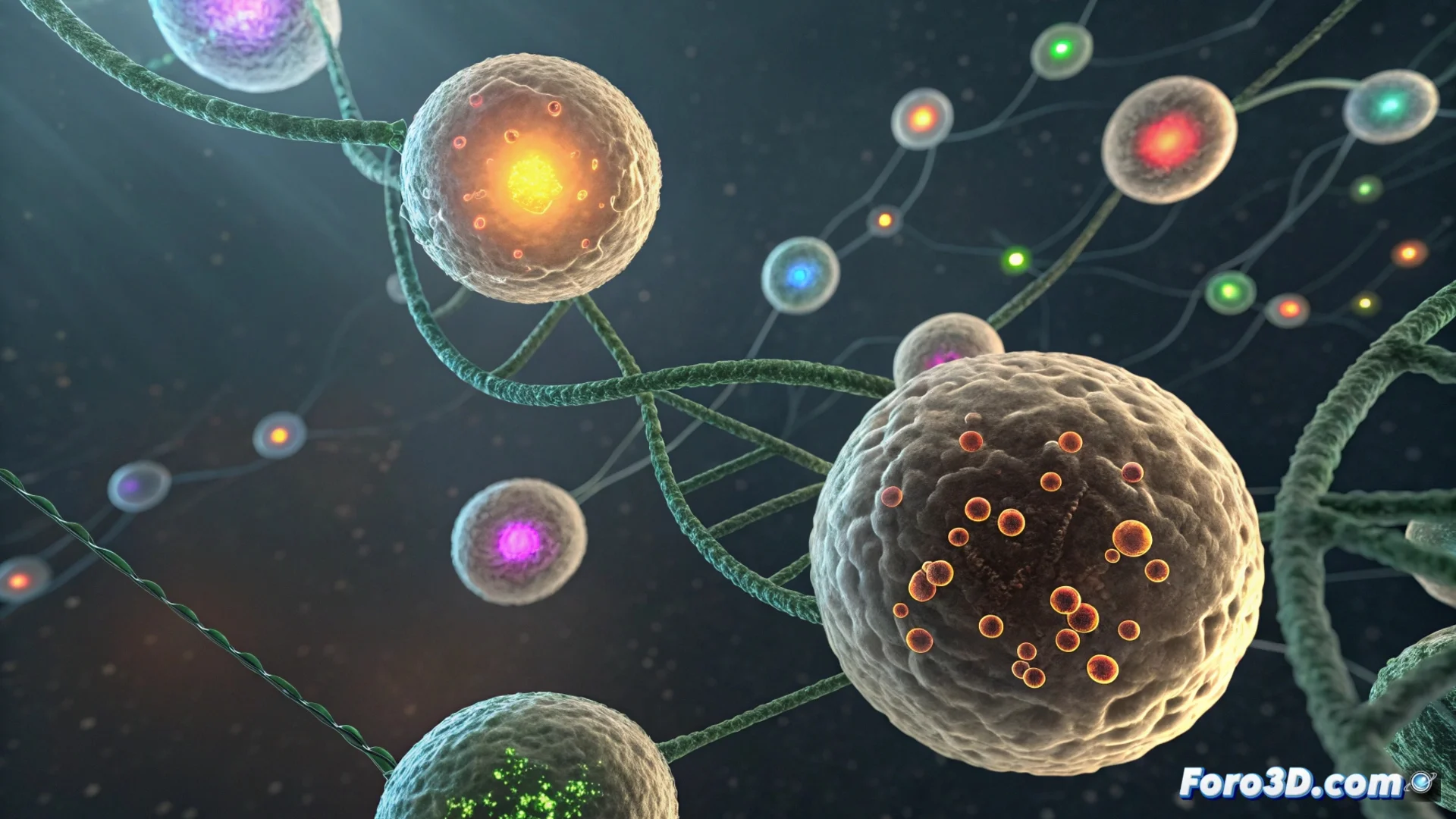
Biology Redefines What a Cell Type Is
For decades, biology has tried to answer a fundamental question: how is a cell type really defined? 🧬 A practical answer in the lab is to analyze what messenger RNA each cell contains, as these are the direct messages from genes to produce proteins. With modern single-cell transcriptomics methods, we can now read these messages on a large scale and group cells according to their similar gene expression patterns.
A Functional Snapshot of the Cell
This method does not classify cells by their appearance or where they are located, but by their molecular activity at a precise instant. By sequencing RNA, researchers obtain a photograph of which genes are actively transcribed. This reveals the cell's functional identity and current state, allowing the discovery of previously unseen cell subtypes and tracing developmental lineages with extraordinary precision.
Advantages of this molecular approach:- Allows grouping cells according to their real function, not just their morphology.
- Discovers new cell subtypes that traditional methods overlook.
- Facilitates tracing with precision how cells develop and differentiate.
What we group today as a cell type, tomorrow we might divide into more specialized subtypes as our tools improve.
From Fixed Category to Dynamic Spectrum
The concept of "cell type" has evolved. It is no longer a static list, but a dynamic spectrum influenced by context, environment, and developmental stage. The original question persists, but now it is answered with massive data that capture the living complexity of organisms.
Characteristics of the new definition:- It is dynamic and changes according to physiological context.
- It is constantly refined with better technical resolution.
- It captures the real complexity and diversity of biological systems.
A New Molecular Criterion
In this landscape, evaluating a neuron does not depend on its characteristic arboreal shape, but on the content of its "RNA mailbox". This molecular criterion, which prioritizes function over form, represents a paradigm shift in how we understand the basic components of life. Cell biology is redefined with data, showing that identity is more fluid and complex than previously thought. 🔬