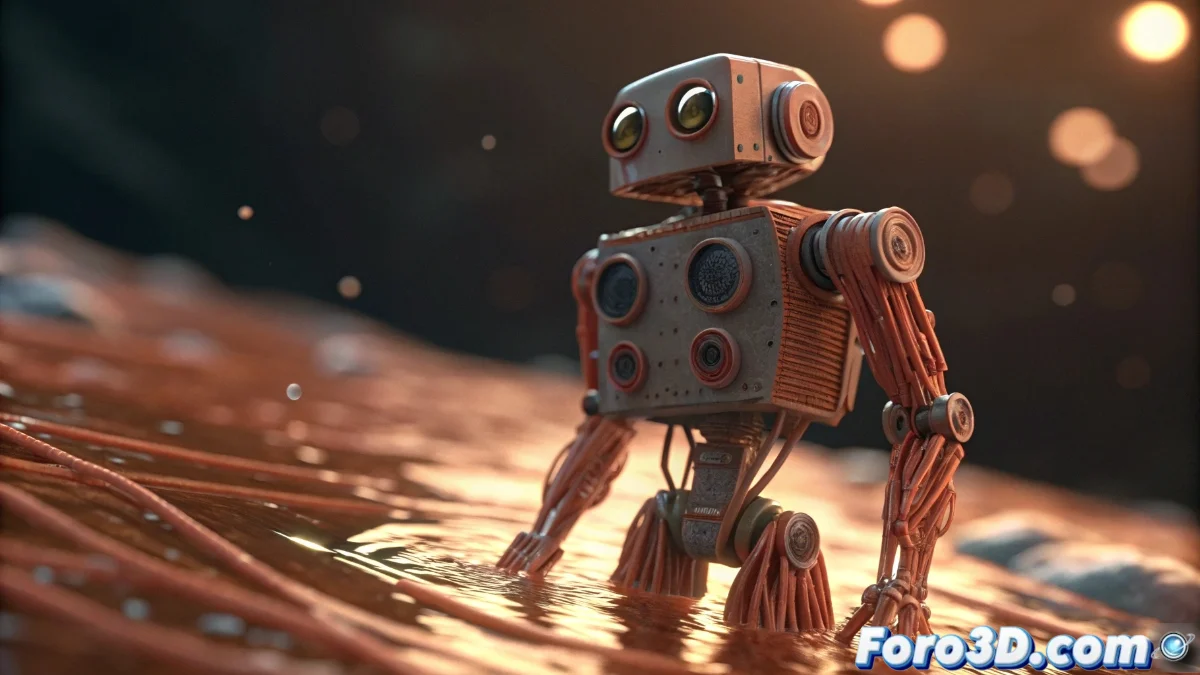
Bio-hybrid Robots: the Revolution in Engineering with Living Tissues
The boundary between biology and robotics is blurring with the emergence of machines that incorporate living muscle tissues as a source of movement. These systems represent a paradigm shift in the design of autonomous devices, leveraging the natural properties of cells to create more efficient and versatile mechanisms 🦾.
Fundamentals of Integrated Bio-robotics
The creation of these artificial organisms begins with the cultivation of functional muscle tissue from specialized stem cells. Researchers develop three-dimensional scaffolds through 3D printing using biocompatible materials that allow perfect integration between the biological and the synthetic. This symbiosis enables the generation of complex movements such as swimming or terrestrial displacement with an insignificant energy consumption compared to conventional robotic systems.
Essential Components of Bio-robots:- Hydrogel and biodegradable polymer structures that serve as an artificial skeleton
- Muscle tissue cultivated in vitro with controlled contraction capacity
- Electrical or chemical stimulation systems to activate movement
The true innovation lies in how these systems convert simple signals into complex behaviors thanks to the intrinsic properties of living tissue
Control Mechanisms and Adaptability
The precise control of these devices is achieved through externalized stimuli that trigger specific muscle responses. The latest advances demonstrate that these robots can modify their behavior according to environmental conditions, showing adaptation capabilities that emulate natural biological processes. The incorporated sensory feedback allows real-time adjustments during microscopic manipulation tasks or navigation in complex environments.
Recent Technological Advances:- Artificial vascularization systems to maintain tissue viability
- Smart scaffolds that respond to pH or temperature changes
- Machine learning algorithms to optimize stimulation patterns
Application Horizons and Ethical Considerations
The potential of bio-hybrid robots extends from revolutionary medical procedures to the exploration of inaccessible spaces. In the healthcare field, they could perform millimeter-precision surgical interventions or administer drugs in specific areas of the body. For industry, they represent the ideal solution for inspection and maintenance in confined spaces where current technology is insufficient. Pending challenges include the scalability of systems and the extension of the biological component's lifespan outside its natural environment 🧬.