Let's imagine a building. We all know its construction is a long and complex process, right? Now, imagine if we could see that building before a single stone is even laid. Thanks to technology, it is now possible to create 3D models of construction projects that not only show how the building will look but also allow us to manage the entire process, from design to maintenance.
What is BIM?
BIM, or Building Information Modeling, is a technology that allows for the creation of a digital model of a building or infrastructure. This model is not just a visual representation; it contains detailed information about the structure, materials, costs, timelines, and maintenance.
Advantages of BIM
- Improves collaboration: Architects, engineers, and builders can work together on a digital model in real-time.
- Cost savings: By identifying errors before construction, unforeseen costs are reduced.
- Time optimization: Projects are executed faster thanks to detailed planning.
- Comprehensive management: The BIM model is used not only for design but also for managing maintenance throughout the building's entire lifecycle.
How Does BIM Work?
With BIM, the design process is not limited to creating blueprints. A 3D digital model is generated where details such as the building's geometry, spatial relationships, inventories, materials, budgets, and even the future maintenance of facilities can be added.
Impact on the Construction Industry
The use of BIM completely transforms the way we manage construction. From blueprints to repairing electrical systems, everything can be done through this digital model. Furthermore, it allows for improving public spending efficiency and ensuring the project is executed within budget.
Real-World Applications
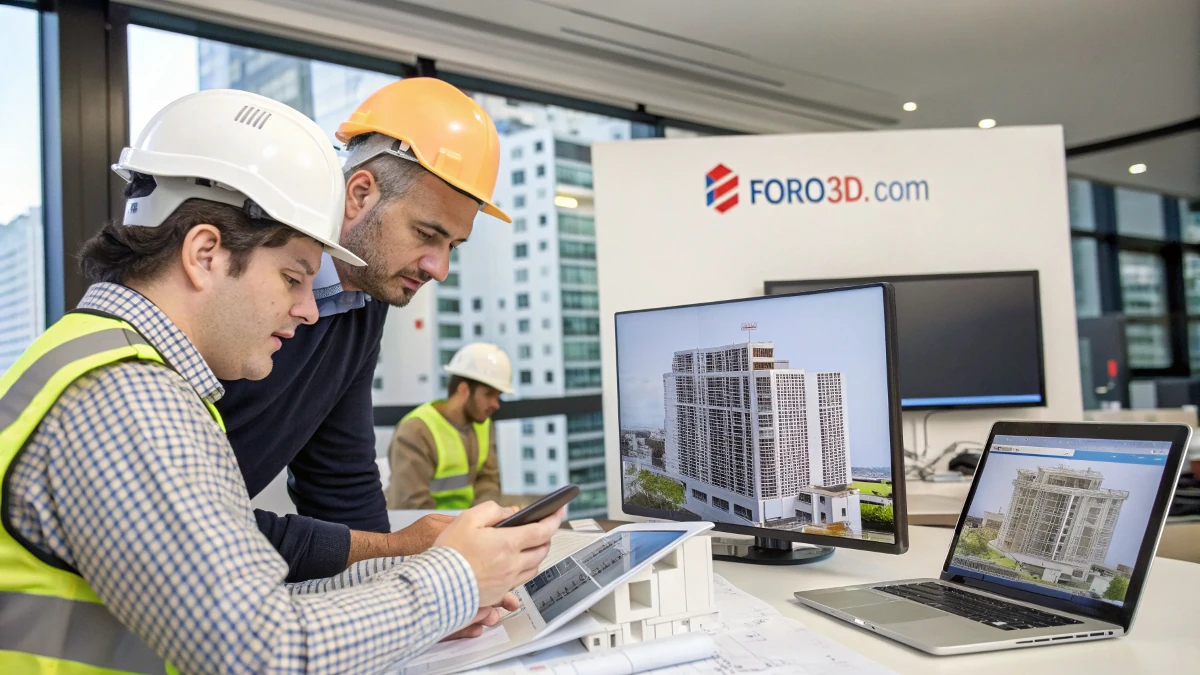
Instead of working with paper blueprints, designers, architects, and builders can interact with the 3D model on their computers or tablets. This facilitates error detection before construction and the optimization of resources.
"BIM technology not only improves design but transforms the entire construction process, making it faster and more efficient."
BIM in the 3D World
The fascination with the 3D world is not limited to movies or video games. BIM technology uses tools very similar to those we use to create 3D models in other areas. The difference is that, instead of creating characters or landscapes, we are creating entire buildings and structures.
If you are part of the foro3d.com community, you are surely already familiar with 3D modeling. Now imagine applying those same skills to the design and management of a real building. The potential is enormous!
Conclusion
In summary, BIM is a technology that transforms the way we design, build, and manage projects. From the design phase to building maintenance, BIM offers tools that improve efficiency and reduce costs. And the most exciting part is that it has great potential to be used by those who already master the 3D world!