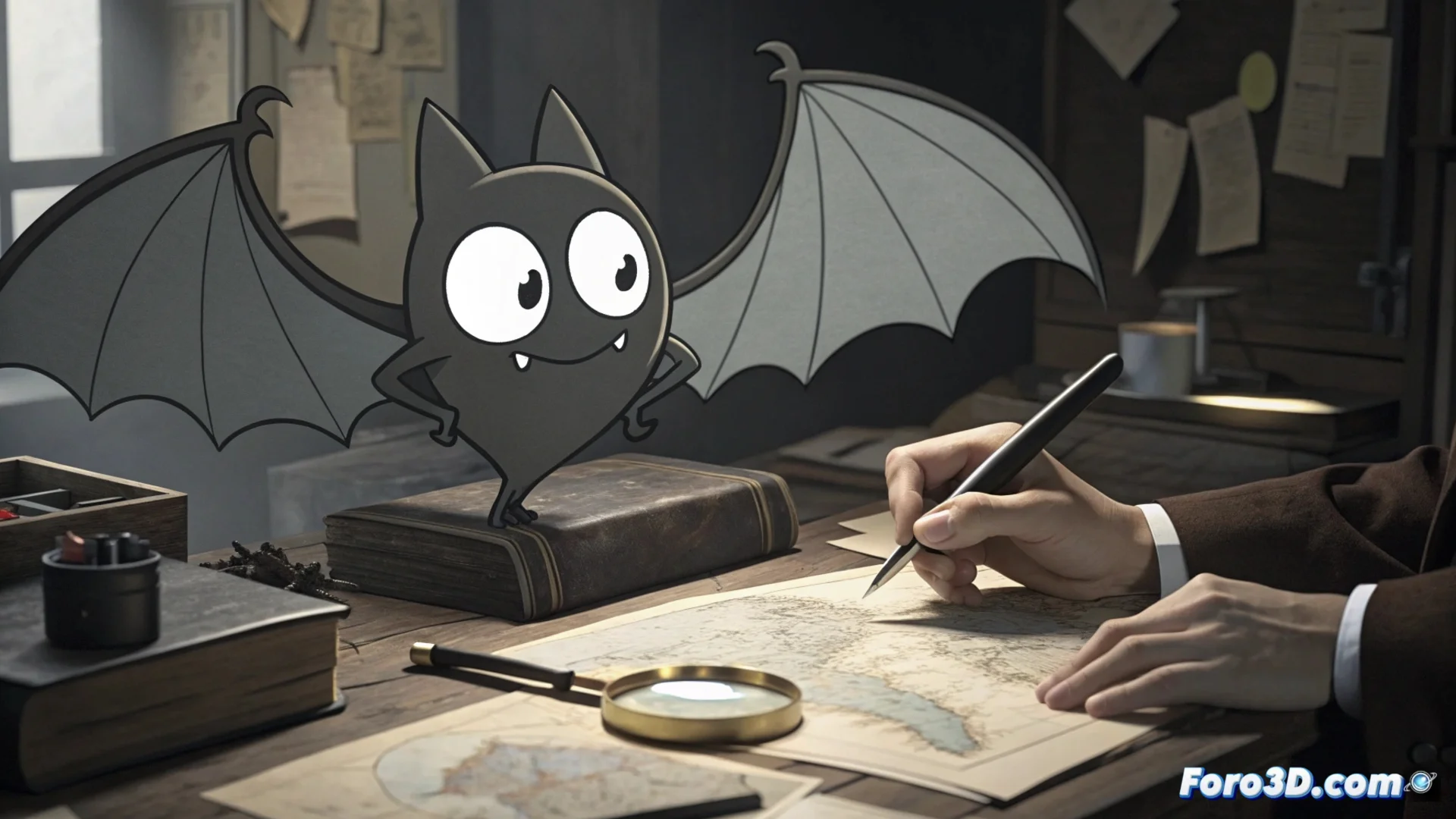
Billy Bat: the bat conspiracy that spans history
In 1949, the artist Kevin Yamagata designs Billy Bat, a comic icon. A trip to Japan reveals an unsettling truth: an almost identical image of his bat has existed for centuries. This discovery triggers an investigation that connects his creation with political assassinations, ancient prophecies, and the fate of figures like Jesus Christ or John F. Kennedy, suggesting that a hidden force guides humanity 🦇.
A visual clash that defines the narrative
Naoki Urasawa employs a realistic line to narrate the thriller, which deliberately contrasts with the panels of Billy Bat itself, drawn in the simple aesthetic of classic cartoons. This graphic contrast underscores the central conflict: the apparent innocence of a popular icon versus the brutality of the conspiracy it represents. The device explores how symbols are manipulated and their power.
Key elements of the graphic style:- Detailed drawing: Urasawa uses meticulous realism for historical and conspiracy scenes.
- Cartoonish aesthetic: Billy Bat is shown with a simple and lively design, typical of its fictional era.
- Visual narrative: The clash between both styles acts as a narrative axis that guides the reader.
The line between reality and fiction within the story itself constantly blurs.
A plot that weaves centuries of history
Yamagata's investigation serves as the thread for a narrative that jumps between eras and continents. The work posits that the Billy Bat symbol is an entity or idea that various groups have used to control crucial events. The plot intertwines the fates of CIA agents, Buddhist monks, and other characters, all linked to the conspiracy.
Pillars of the conspiracy in Billy Bat:- Historical connection: The bat links key moments, from antiquity to the 20th century.
- Network of characters: Secondary characters with crossed destinies expand the plot's scope.
- Questioning authorship: The work investigates the true origin of ideas and cultural symbols.
The legacy and final doubt
Billy Bat transcends the comic genre to propose a reflection on hidden influence in culture. In the end, Urasawa succeeds in making the reader question the reality around them, taking the intrigue beyond the pages. The work demonstrates how an apparently simple symbol can hide a complex narrative that challenges our perception of history and fiction 🤔.