Billet Labs Fuses a Victorian Radiator with Modern Liquid Cooling for PCs
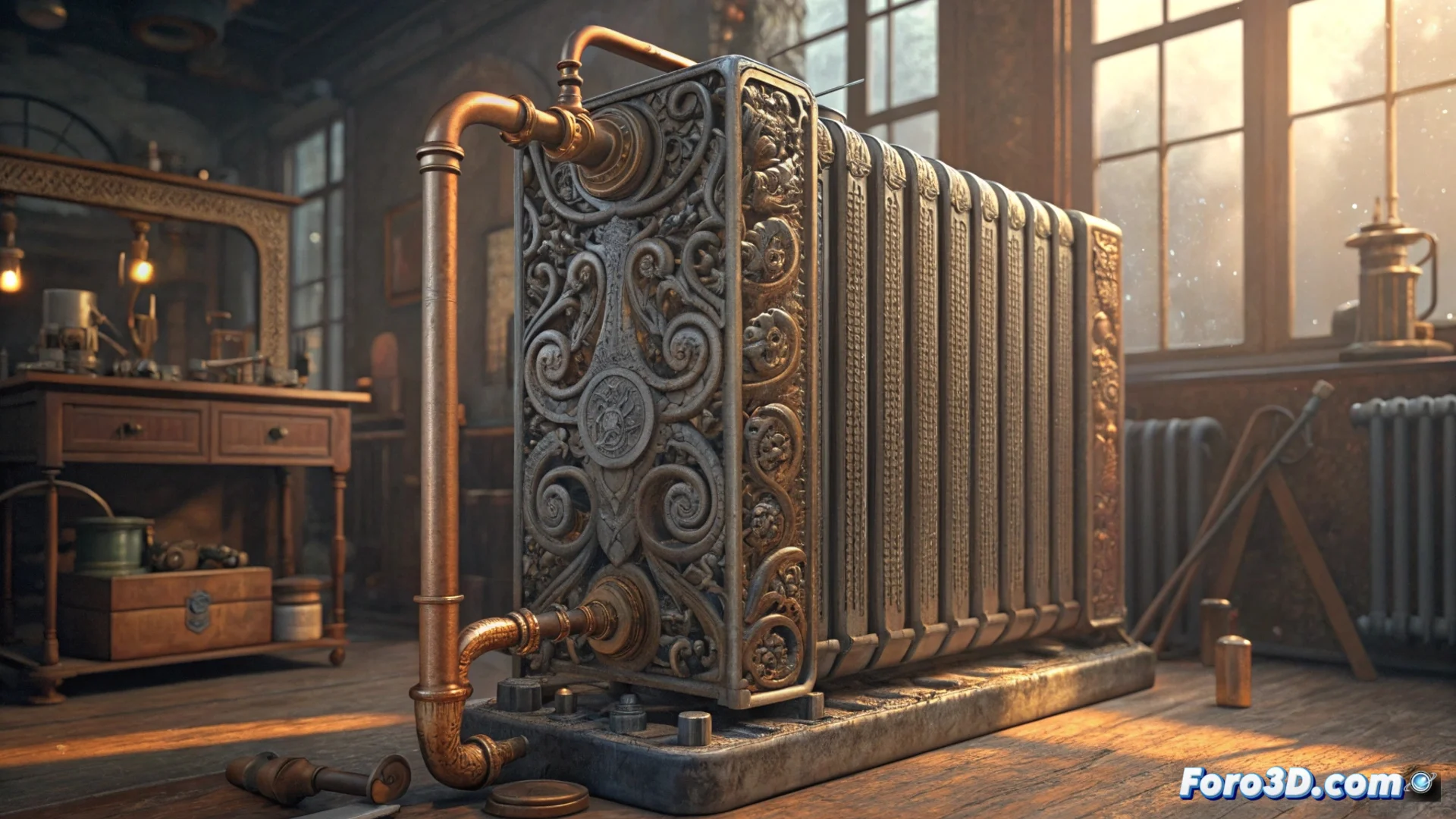
The company Billet Labs has created a concept that challenges conventions: a liquid cooling system for computers with an authentic Victorian-era cast iron radiator at its heart. This project blends industrial history with high-performance technology in a visually striking way. 🛠️
A Historical Core with Contemporary Function
The central element is not a replica, but an original piece weighing over 50 kilograms. Its industrial aesthetic and mass contrast radically with the computer components it serves. Billet Labs connects this radiator using polished copper tubes to a water block designed to cool probably the CPU or GPU. The company has not clarified whether the system operates fully passively or incorporates pumps to move the coolant.
Unconfirmed Technical Details:- Exact configuration of the equipment using this setup.
- Specific components it cools (processor, graphics card).
- Thermal efficiency data and real heat dissipation capacity.
A system like this ensures your PC doesn't overheat, though it might heat up the floor where you place it if it's not properly reinforced.
Priority on Aesthetics and Conversation
The project seems to focus more on creating a conversation piece and a decorative item with a pronounced steampunk style, rather than offering a practical solution for the common PC build. Its viability for the average user is limited due to the enormous weight and physical space required to install a component of these characteristics.
Key Features of the Assembly:- Original Victorian radiator as the main dissipator.
- Connection via visible copper piping.
- Integration with modern computer hardware.
A Unique Approach
This development by Billet Labs serves as a reminder of how aesthetics and engineering can converge in unexpected ways. While it leaves technical questions unanswered, it achieves its main goal: creating a unique assembly that fuses two technological eras into a single system. Its value lies more in the concept and craftsmanship than in mass application. ⚙️