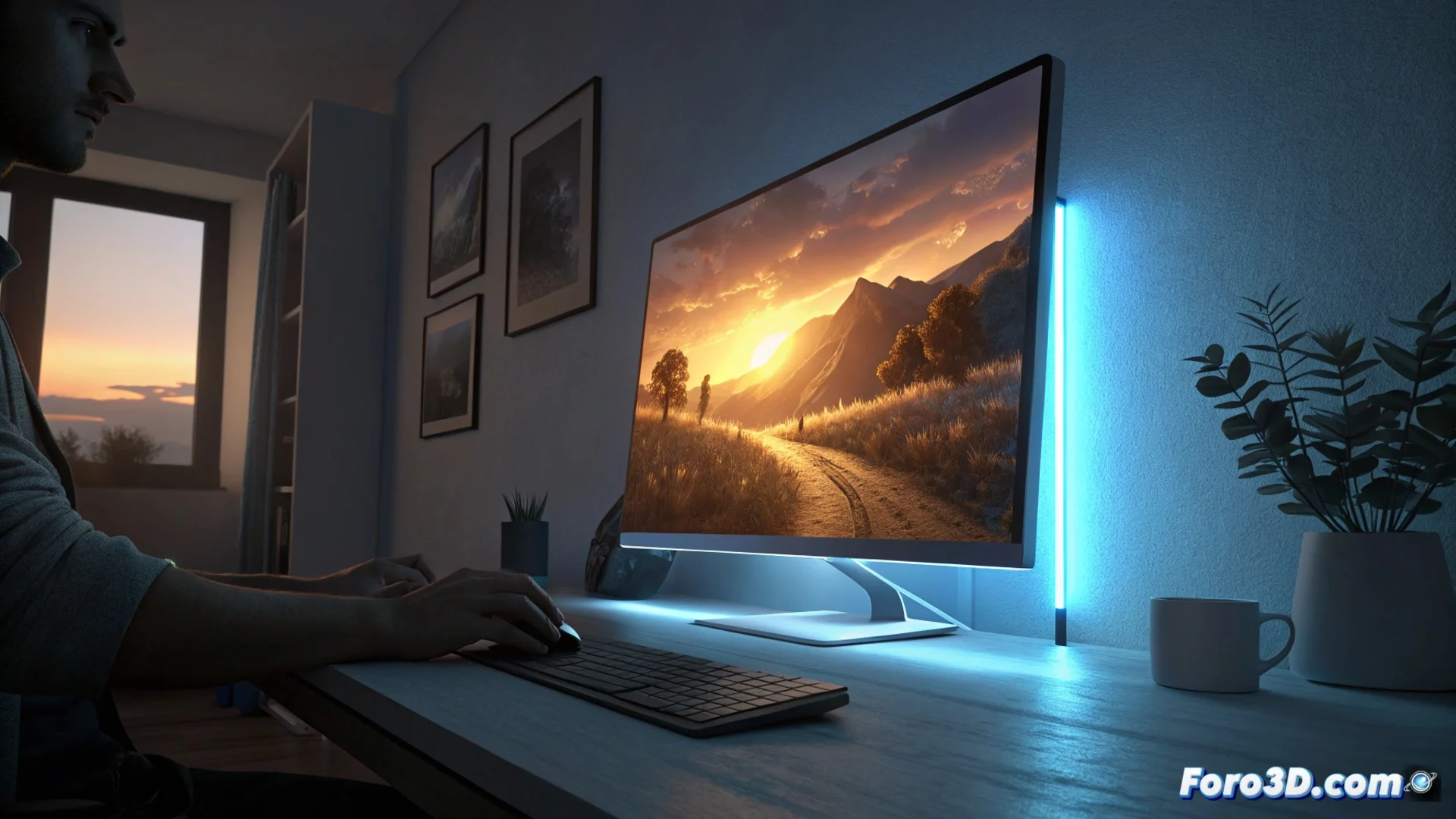
Disconnected Bias Lighting and How to Avoid It
In the field of ambient lighting, a common mistake is setting up bias lighting that does not harmonize with the scene. This happens when the light placed behind a screen differs in color temperature and direction from the main light source. The result is a disconnection that the brain interprets as false, degrading the visual experience. 🎨
Why the Brain Detects and Rejects Lighting Incoherence
Our visual system is designed to process light in a unified way. If the ambient light is cool (bluish) and the scene is illuminated with warm light from another angle, the brain receives contradictory signals. It interprets that there are two unnatural light sources in the same space, generating a sense of artificiality. This discordance forces the mind to work harder to reconcile the information, which can cause visual fatigue and significantly reduce the sense of immersion.
Consequences of poorly configured bias lighting:- The viewer perceives that something is wrong, even if they cannot identify the exact technical cause.
- The lighting stops complementing the composition and begins to compete with it.
- The spatial coherence sought by integrating ambient light is broken.
Ignoring lighting coherence can turn an elegant LED setup into something that looks like the waiting room of a low-budget spaceship.
Key Steps to Integrate Bias Lighting Correctly
To avoid creating this discordant effect, it is essential to analyze the main scene before setting up the ambient lights. The process must focus on imitating the parameters of the key light.
Practical Guide to Achieving Harmony:- Identify and measure the color temperature (in Kelvin) of the main light source illuminating the environment.
- Determine the precise direction from which that light comes.
- Adjust the bias lighting (e.g., RGB LED strips) to replicate that color temperature and simulate a similar or complementary direction.
The Result of a Coherent Configuration
By synchronizing the bias lighting with the scene's light, the element (such as a screen or monitor) integrates naturally into the space. The annoying "floating box" effect is eliminated, and a smooth visual transition is achieved that the brain accepts effortlessly. Immersion increases and the eyes do not tire, allowing enjoyment of the content for longer. The key is to observe and replicate, not to add light arbitrarily. ✨