Berlin by Jason Lutes: A Graphic Mosaic of the Weimar Twilight
The work Berlin, created by Jason Lutes, functions as an extensive visual chronicle that captures the pulse of the German capital during a decisive five-year period: from 1928 to 1933. 🏙️ This period, which saw the collapse of the fragile Weimar Republic and the rise of National Socialism, is narrated not through great figures, but through the intertwined lives of ordinary characters. The comic weaves a choral plot that prioritizes showing how a radical political and social change is perceived and lived from the street.
The Precise Line That Documents an Era
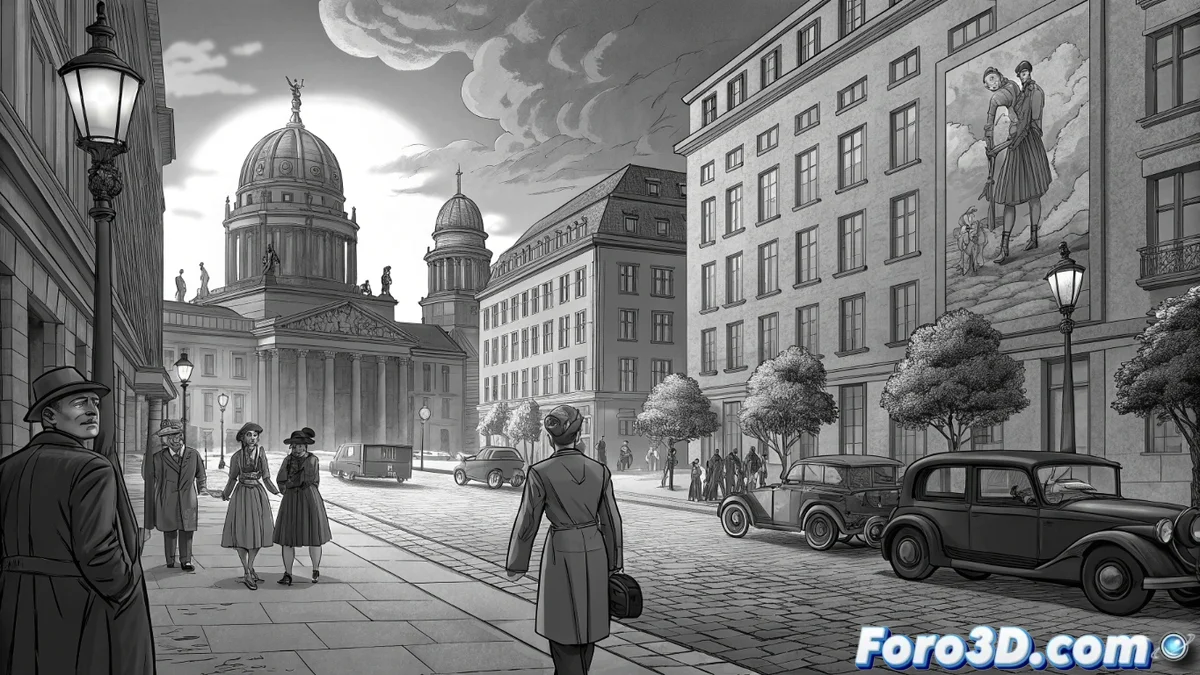
Jason Lutes opts for a clear line style in black and white, a graphic approach that seeks historical authenticity above all else. This clean and restrained method allows him to detail with extreme rigor the urban architecture, the fashion of the era, and everyday objects. Each panel is the result of meticulous research, immersing the reader in the streets, cafés, and homes of the city. The graphic realism does not decorate, but gives tangible weight to the story, reinforcing the sensation of a metropolis in constant ferment. ✒️
Pillars of His Visual Approach:- Rigorous Research: Every scene and visual element is based on precise historical references to reconstruct the atmosphere.
- Dynamic Composition: The visual rhythm and panel distribution reflect the energy and tension of a city on the brink.
- Environmental Narrative: The city of Berlin becomes another character, defined by its spaces and atmosphere.
To draw the fall of a democracy with such precision, Lutes needed an almost architectural discipline and years of methodical work, a contrast to the chaos he portrayed.
A Social Document Before a Simple Plot
Beyond following a linear story, Berlin operates as a record of the intellectual and political pulse of those crucial years. The work shows without judging the violent tensions between communists and National Socialists, captures the artistic effervescence of the cabarets, and exposes the poverty and anxiety of a population on the edge of the abyss. 🎭 Lutes documents the speeches, fears, and hopes that circulated, offering a multifocal perspective that explains the events and attitudes that led to a turning point in 20th-century history.
Key Aspects It Documents:- Political Conflict: Street clashes, demonstrations, and the growing polarization of society.
- Daily Life: Conversations in cafés, personal relationships, and the struggle for economic survival.
- Intellectual Climate: The debates, art, and culture that defined the last days of the Weimar era.
The Legacy of a Drawn Chronicle
Berlin by Jason Lutes transcends the comic genre to establish itself as a reference work for understanding a complex historical period. Its power lies in how it combines a human and choral narrative with a comprehensive commitment to visual precision. It offers no easy answers or moral judgments, but presents a mosaic of experiences that allows the reader to understand how a society can walk toward its own collapse. The work is a powerful testament to the power of sequential art to record and analyze history. 📚